Smart swaps
Breadcrumb Substitute for Coatings, Toppings, and Binding
Choose a breadcrumb substitute for patties, crunchy coatings, or pasta toppings. Compare crackers, panko, oats, and homemade crumbs, with texture and salt limits.
The useful answer
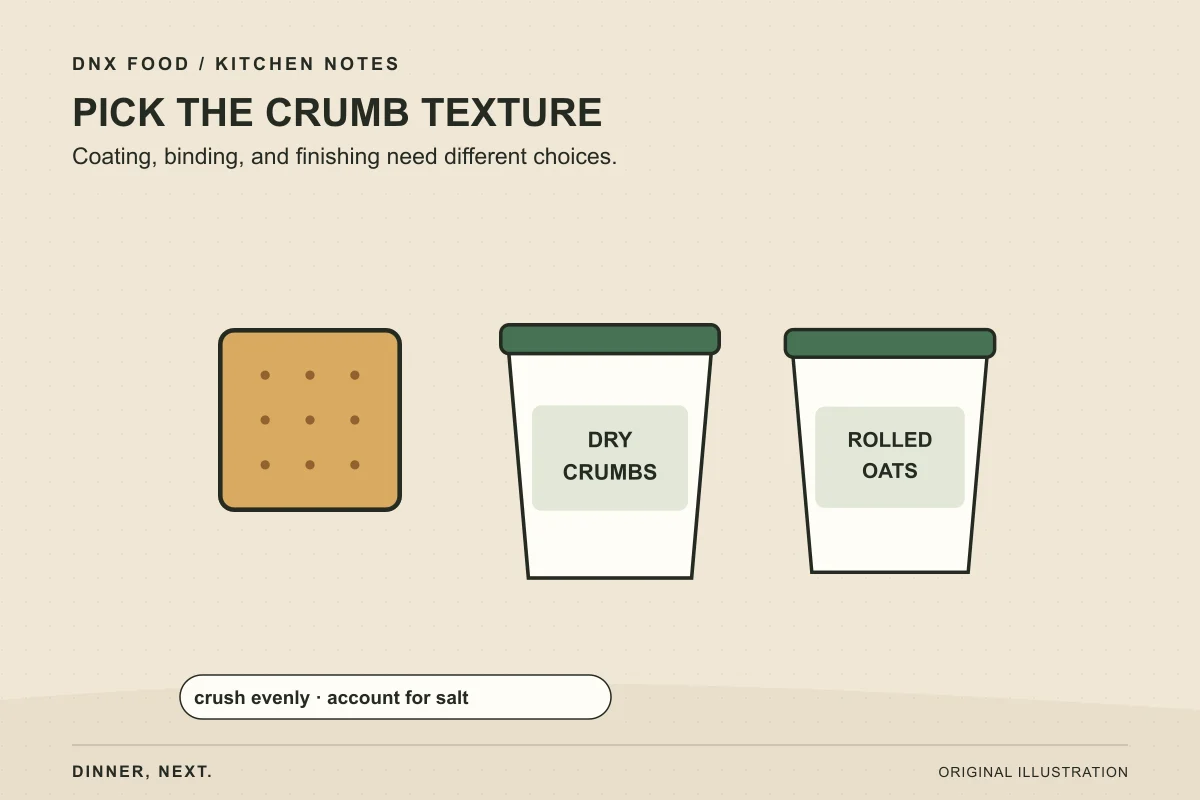
For a coating or topping, crushed crackers or suitable homemade dry crumbs can work. For binding, choose a finer texture and follow the recipe's moisture guidance. Panko, oats, and crumbs absorb and brown differently.
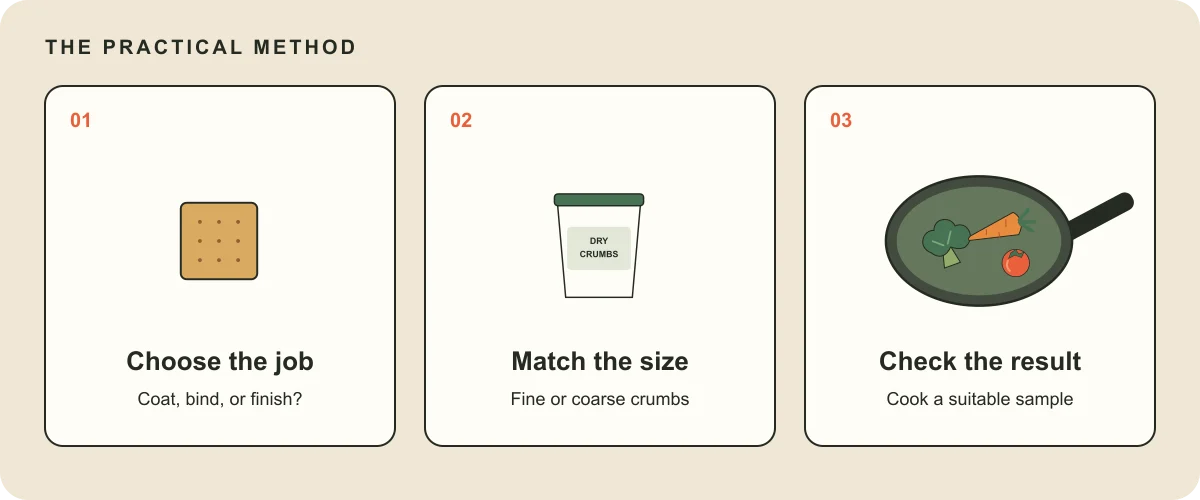
Breadcrumbs can help a patty hold together, give a piece of food a crisp coating, or finish a bowl of pasta with crunch. Those jobs need different textures. Before crushing the nearest cracker, read where the crumbs enter the recipe and what they are meant to do.
A topping gives you considerable freedom to choose flavor and particle size. A binding mixture needs more attention to absorption and moisture. Keep those decisions separate so the substitute helps the meal instead of creating a new texture problem.
Choose the texture first
| Alternative | Useful for | Starting approach | What changes |
|---|---|---|---|
| Homemade dry bread crumbs | Toppings, coatings, and compatible binding | Match the original fineness | Bread type affects flavor and absorption |
| Crushed plain crackers | Coatings and some binding recipes | Crush evenly and check recipe guidance | Often adds salt and fat |
| Panko | Crunchy coatings and toppings | Use a method that allows a coarse crumb | Larger pieces behave differently |
| Finely processed oats | Some savory binding mixtures | Follow a recipe developed for oats | Different absorption and chew |
| Crushed unsweetened cereal | Some crisp coatings | Check flavor and crush consistently | Sweetness and browning can vary |
Land O’Lakes’ substitution reference includes cracker crumbs as a breadcrumb alternative. Use the specific recipe’s advice for amounts, especially when the crumbs sit inside the mixture rather than on its surface.
Make crumbs from bread you already have
Choose suitable bread with a known storage history. Dry or toast it using an appropriate method, allow it to cool, and process to the required texture. Fine crumbs suit different tasks from the rough pieces you might scatter over a finished dish.
Check for strong flavors in the original bread. A seeded loaf can add a pleasant direction, while a sweet bread may change a savory coating. Decide whether those additions belong in dinner before turning the whole loaf into crumbs.
For a recipe that specifies dry crumbs, avoid assuming fresh soft bread has the same absorption. Follow its instructions for drying or choose an alternative it explicitly allows. Measure the prepared crumbs rather than judging the amount from the size of the original bread slice.
Crackers need a salt check
Crush crackers into a fairly consistent texture so you are not working with both powder and large shards. Read the seasoning on the packet. Cheese, herbs, sugar, and salt can remain noticeable after the coating is cooked.
If the recipe permits cracker crumbs, consider their seasoning before adding all the original salt. Taste only mixtures that are appropriate to taste. For a mixture containing raw meat or another raw ingredient requiring cooking, use the recipe’s guidance or a safely cooked test portion.
A small amount of crumbs can disappear into a flavorful patty, while a large coating makes their flavor much more obvious. Try a small amount of the cooked coating or finished mixture before preparing the entire batch when the method allows it.
Binding needs time and the right moisture
In a bean patty or similar mixture, crumbs can absorb liquid and help the ingredients hold together. Replacing them with a much coarser ingredient changes how quickly that happens. Follow any resting stage before deciding the mixture needs more dry material.
Oats can fit some binding recipes, but they should be introduced through a method designed for them. Whole flakes, ground oats, and breadcrumbs are not identical scoops. A binder that works in one bean mixture may leave another dense or chewy.
If the egg is also missing, use the egg substitution guide to identify its role. Adding more crumbs to compensate for every missing ingredient can make the finished food dry without solving the original binding problem.
Coatings need adhesion and pan space
Follow the chosen recipe’s coating sequence, including how the surface is prepared and what holds the crumbs in place. A suitable crumb cannot fix an uneven wet layer or a coating that was applied too heavily.
Cook in manageable batches. Give pieces enough room for the cooking method, and watch the coating as it colors. Different cracker and cereal formulations can brown at different rates, so follow appropriate doneness guidance for the food underneath rather than judging only the crumb color.
For a crisp finish, add a wet sauce at serving where practical. Leaving a coated ingredient submerged will soften the surface. Decide whether crunch or a saucy texture is the goal before combining everything.
Pasta and vegetable toppings offer the most flexibility
For a finishing crumb, choose a flavor that complements the dish. Toast suitable crumbs carefully in a little oil or butter if the method calls for it. Stir and watch them closely, then remove from the heat before they become too dark.
Add herbs, a little suitable cheese, or another seasoning after considering the salt already in the crumbs. Our Parmesan substitute guide compares cheese flavor with crunchy finishes that perform a different job.
Scatter the topping shortly before serving so the contrast is noticeable. Keep extra crumbs separate from a wet sauce. The chickpea dinner guide gives several formats where a small crisp finish can complement a soft main component.
Common questions
Are panko and ordinary breadcrumbs interchangeable?
Some recipes permit the swap, but the texture and coverage can change. Match the fineness and follow the method’s directions. A recipe built around a coarse coating may work differently with fine powdery crumbs.
Can I use a gluten-free replacement?
Choose a product labeled for the relevant requirement and check the entire recipe, including seasonings and the adhesive layer. Ordinary crackers, oats, and bread should not be assumed suitable from the ingredient name alone.
Can I leave a breadcrumb topping off?
Often a flexible pasta or vegetable dish can be served without it. Consider another suitable crunchy finish or simply let the sauce and vegetables provide the texture. For crumbs inside a binding mixture, follow recipe-specific guidance before omitting them.
Browse ingredient substitutions · Find dinner by ingredient
Our guides draw on the ingredient labels, manufacturer guidance, and food-safety references linked in each article. Original illustrations by DNX FOOD explain the ingredients and methods. Read our editorial and testing policy · Suggest a correction