Smart swaps
Parmesan Substitute for Pasta, Pesto, and Toppings
Choose a Parmesan substitute for grating, pasta sauce, pesto, or a dairy-free finish. Compare hard cheeses, nutritional yeast, and crumbs by their role.
The useful answer
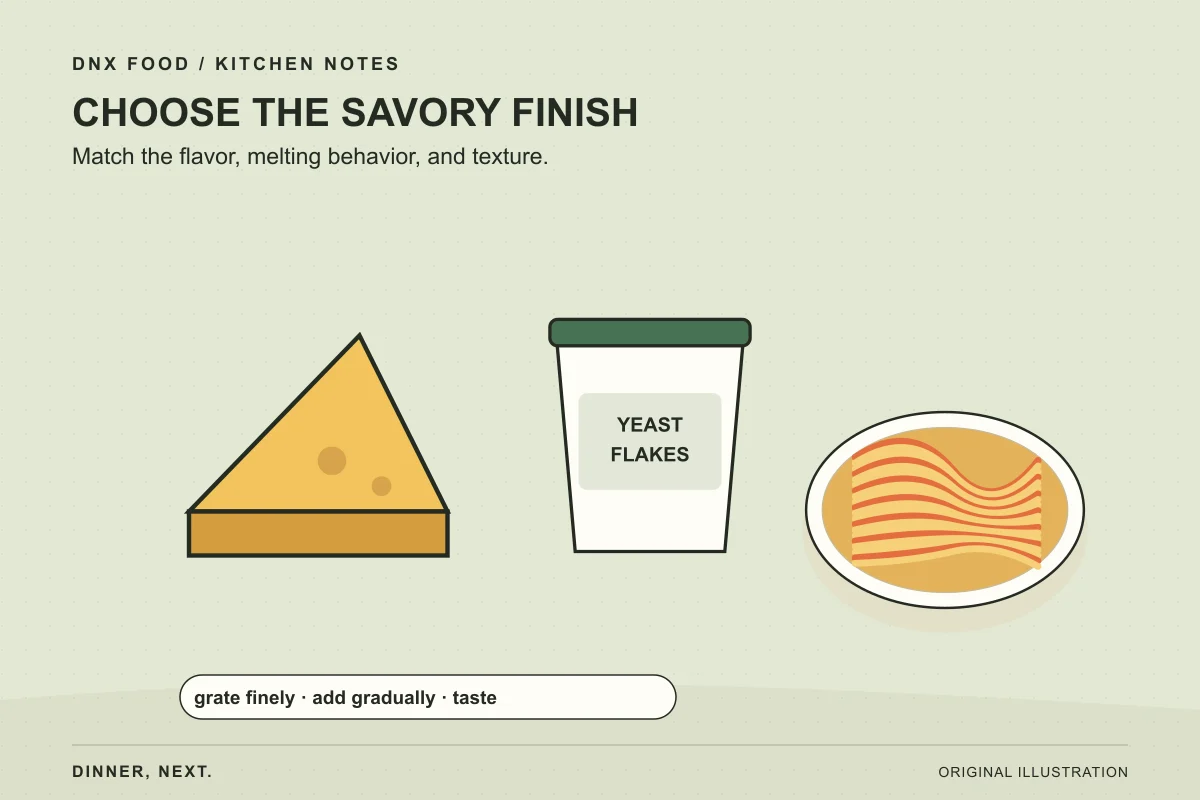
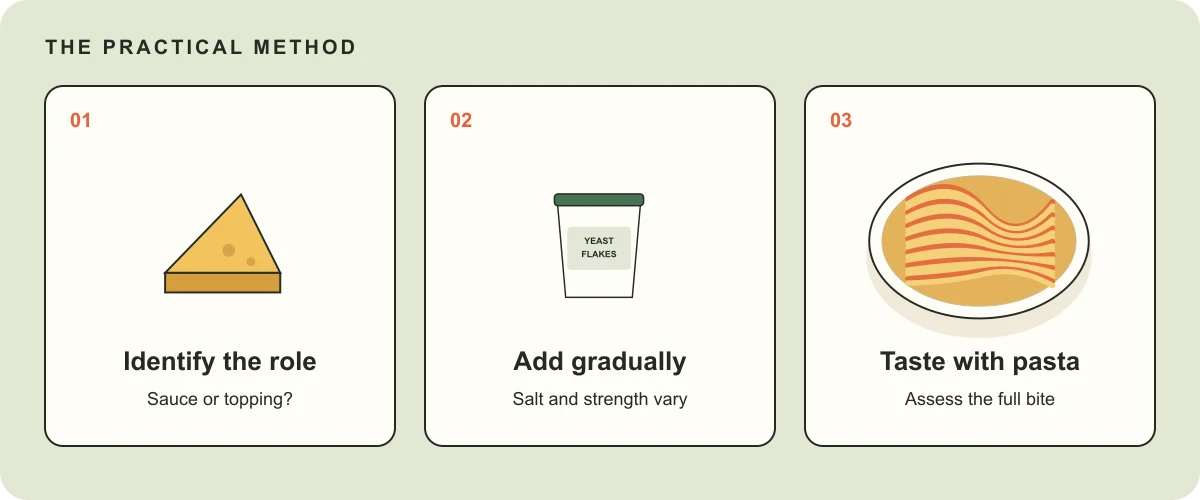
For grating over pasta, another suitable hard cheese can be useful, added gradually because salt and flavor vary. Nutritional yeast adds savory flavor for some dairy-free finishes but does not melt like cheese. Choose separately for sauce structure and topping texture.
Parmesan may be a final sprinkle, an ingredient blended into pesto, or part of the body of a pasta sauce. Those uses ask different things of a replacement. Start by checking whether the meal needs salty flavor, a fine grated texture, or a cheese-based sauce finish.
Another hard cheese can be convenient when dairy is suitable. For a dairy-free meal, choose a new finish that fits the food and check the ingredients. Trying to make one powder reproduce every function can leave the sauce or topping short of what it needs.
Choose the replacement for the job
| Alternative | Useful direction | How to start | Main difference |
|---|---|---|---|
| Grana Padano or another suitable hard grating cheese | Pasta, vegetables, and some sauces | Grate finely and add gradually | Flavor, maturation, and salt vary |
| Pecorino-style hard cheese | Robust pasta and vegetable finishes | Start with less and taste | Can taste sharper or saltier |
| Nutritional yeast | Savory dairy-free seasoning | Sprinkle modestly and taste with food | Does not melt like a hard cheese |
| A labeled plant-based grated alternative | Compatible toppings or sauces | Read the product’s usage guidance | Melting behavior differs by formulation |
| Toasted crumbs with seasoning | A crisp pasta or vegetable finish | Add at serving | Supplies crunch rather than cheese structure |
These directions are for flexible home cooking. If a recipe depends on a particular cheese for its sauce, follow that recipe’s substitution advice. Compare the result on a complete bite before deciding more seasoning is needed.
Hard cheese is a useful grating direction
Grate the replacement to a similar fineness so it distributes through the food. A large shaving and a spoonful of fine grated cheese can give a very different impression, even when the cheese itself is the same.
Start below the original amount when the replacement tastes stronger. Taste with the pasta or vegetables before adding more. A cheese that is sharp on its own may be balanced across a large bowl, while an already salty sauce may need only a light finish.
Check the label if vegetarian suitability, dairy, or another ingredient requirement matters. The Parmigiano Reggiano consortium’s FAQ lists milk, salt, and rennet for its cheese. Other products have their own formulations, so their names alone do not settle every dietary question.
A sauce needs attention to heat and texture
When cheese contributes to a pasta sauce, grate it finely and follow the recipe’s directions for introducing it. Keep suitable cooking liquid available, and add it in small amounts while combining. A substitute that works as a topping may behave differently when melted into the sauce.
Avoid forcing a grainy or oily mixture with a hard boil. Pause, lower the heat as appropriate, and assess what the sauce needs. More cheese can make a thick mixture heavier instead of restoring a coating texture.
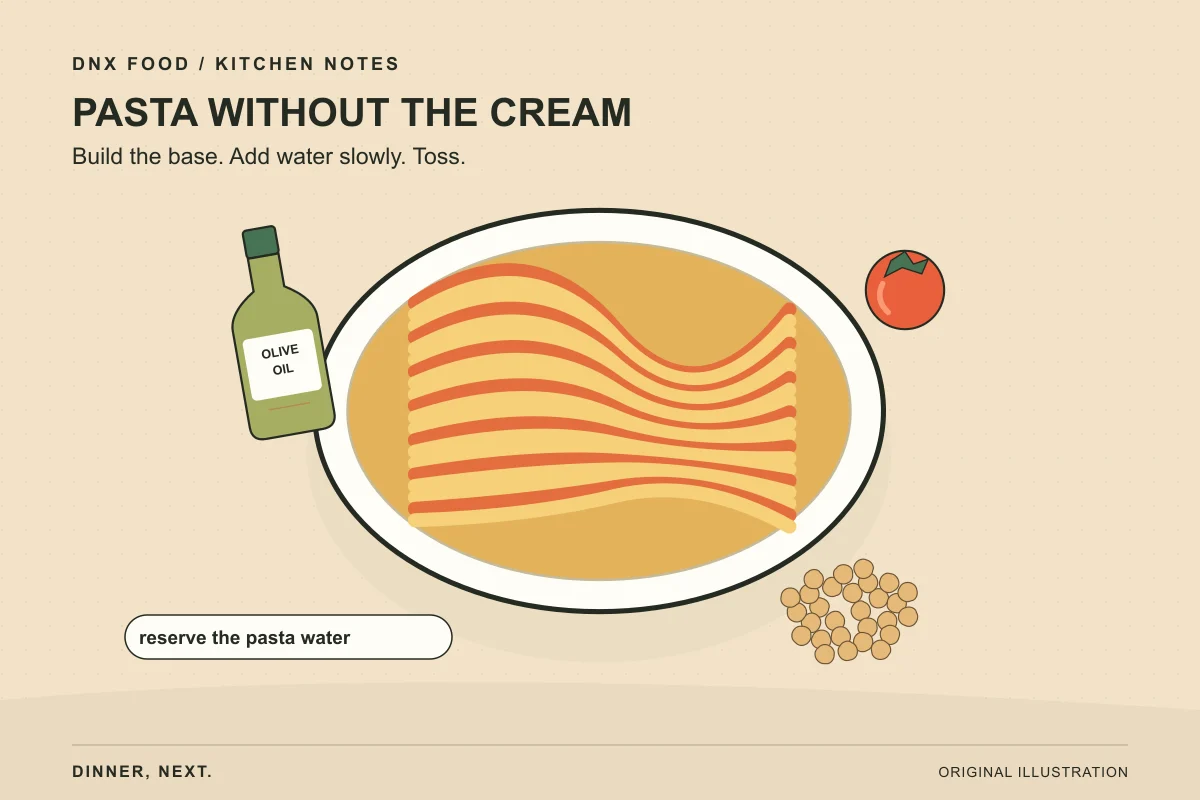
The pasta sauce without cream guide describes several ways to build a sauce base. If your available cheese does not suit the original method, changing the sauce direction can be easier than repeatedly correcting the same pan.
Nutritional yeast adds savory flavor
Nutritional yeast can provide a savory finish in a meal that suits its flavor. Start with a little and taste. It can work alongside herbs, a suitable fat, or another topping, depending on the dish.
It does not supply the same melting behavior as a hard cheese. If the original recipe uses cheese to help form a sauce, choose another way to provide body or use a recipe developed around nutritional yeast. Simply adding a larger quantity can make the sauce taste strongly of the seasoning.
For a dairy-free requirement, check the entire dish, including pasta, stock, and any packaged topping. A plant-based finish addresses only the cheese portion of the ingredient list. Keep the actual labels available while making the cooking plan.
Pesto needs its own balance
In a flexible pesto-style sauce, change the cheese in a small batch first. Herbs, nuts or seeds, oil, acid, and salty seasoning all affect the result. Try the sauce with the intended pasta or vegetables before adjusting the whole batch.
Hold back some salt if the replacement cheese is strongly seasoned. If using nutritional yeast or a packaged dairy-free alternative, assess its flavor before adding more. A change in the cheese may call for a different amount of oil or liquid to reach the texture the meal needs.
Use a recipe developed for the relevant dietary requirements when you need a reliable plant-based version. Follow its storage guidance, especially when the mixture contains fresh garlic and oil.
A crunchy finish can suit the meal
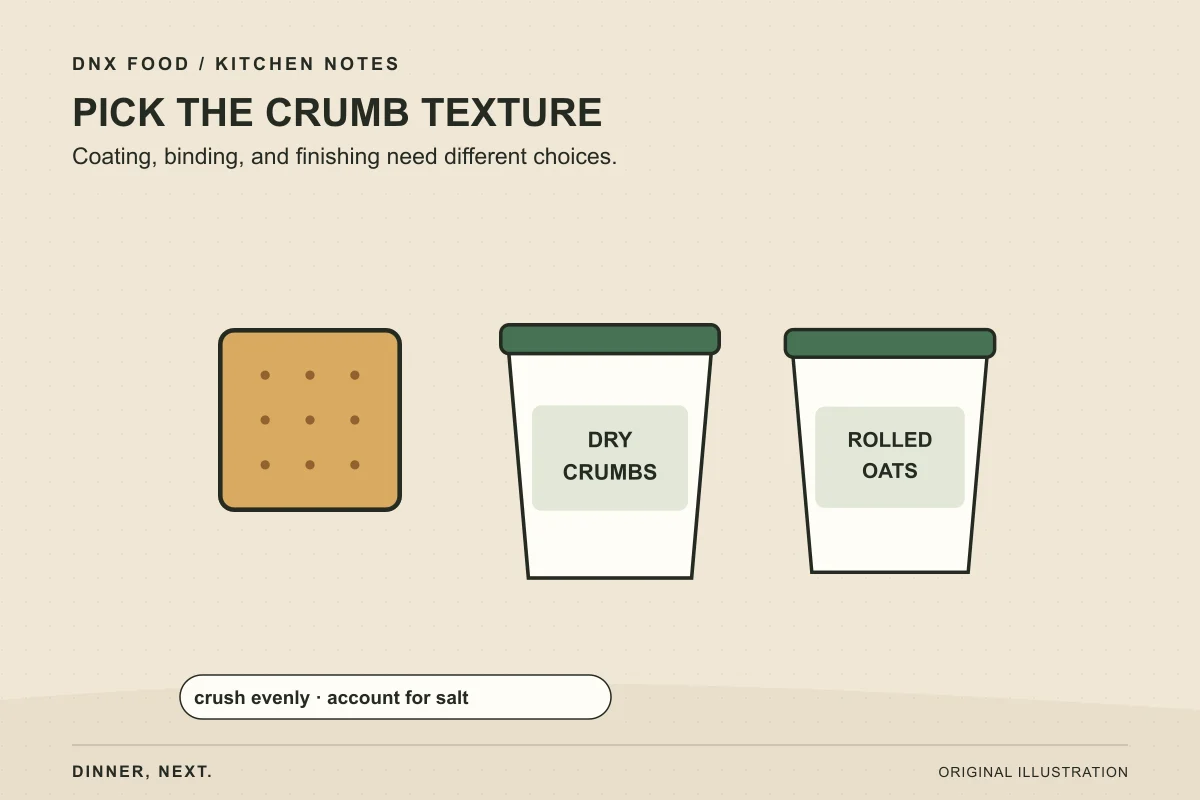
Some pasta dishes benefit from a crisp topping even when cheese is unavailable. Suitable toasted crumbs, herbs, and a little seasoning can add contrast to a soft sauce. The result has its own texture rather than the same cheese finish.
The breadcrumb substitute guide compares crumbs, crackers, and other options for this use. Add the topping shortly before serving so it stays distinct from the wet ingredients.
For a bowl of roasted or cooked vegetables, taste the food first. You may want a little lemon or another fresh element alongside the crunchy finish. Avoid stacking salty toppings on a sauce that was already fully seasoned.
Common questions
Can cheddar replace Parmesan?
It can make a different cheese direction in some meals, but texture, flavor, and melting behavior change. For a sauce designed around finely grated hard cheese, follow the recipe’s allowance or choose a cheddar-based method.
Can I omit cheese from pasta?
Often a flexible sauce can be served with another finish. Taste for moisture and balance. If cheese is central to the sauce’s structure, choose a developed alternative method rather than simply leaving a major ingredient out.
Should I use the same volume of a stronger cheese?
Start with less, grate to a comparable texture, and taste with the food. You can add more after combining, while a heavily salted finished bowl is harder to rebalance.
Put it to work
Creamy Pantry Pasta
Use starchy pasta water and a flavorful base to make a silky sauce from pantry staples.
Open the dinner blueprint →Browse ingredient substitutions · Find dinner by ingredient
Our guides draw on the ingredient labels, manufacturer guidance, and food-safety references linked in each article. Original illustrations by DNX FOOD explain the ingredients and methods. Read our editorial and testing policy · Suggest a correction