Cooking know-how
How to Make Pasta Sauce Without Cream
Make a coating pasta sauce with olive oil, tomato paste, white beans, vegetables, or cheese. Learn how much pasta water to add and how to fix a broken sauce.
The useful answer
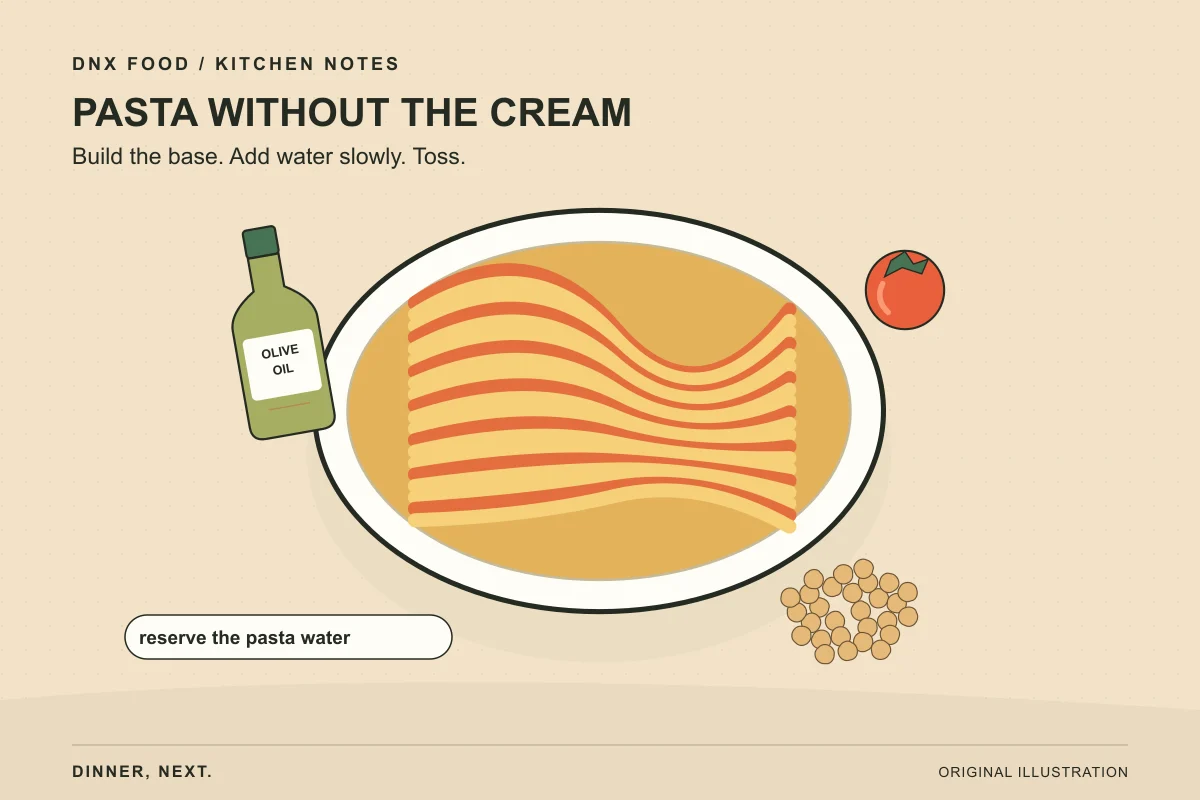
Choose a sauce base first: oil, tomato, mashed beans, vegetable puree, or cheese. Reserve pasta water, but add it gradually while tossing. Cream-free does not automatically mean dairy-free.
You do not need a carton of cream to make a pasta sauce that clings. You do need enough flavor in the base, a sensible amount of liquid, and a short finishing stage in the pan. Simply draining pasta and pouring milk over it rarely gets you there.
The word “creamy” can describe several textures. A white-bean sauce is thick and smooth. An oil-based sauce is glossy. A cheese sauce is rich and coating. Decide which one sounds right before choosing the method.
Pick a base from the cupboard
| Base | The result | What helps it work | Watch for |
|---|---|---|---|
| Olive oil and garlic | Light, glossy coating | A little pasta water and steady tossing | Burnt garlic or too much oil |
| Tomato paste or tomatoes | Savory, rounded sauce | Cooking the base before adding pasta | Excess water or harsh seasoning |
| Mashed white beans | Thick, substantial sauce | Enough liquid to loosen the puree | A dry, pasty finish |
| Cooked vegetable puree | Smooth sauce with its own flavor | Thoroughly cooked vegetables | A flavor that does not suit the pasta |
| Cheese and cooking water | Rich coating | Gentle heat and gradual mixing | Clumps and separated fat |
Use one main base first. Adding beans, cheese, tomatoes, and cream substitutes together can make the sauce heavy without making it clearer or better.
Save the water, then use less than you saved
Scoop out a mug of pasta cooking water before draining. Having more available prevents a scramble at the end; it does not mean all of it belongs in the pan.
Barilla explains how starchy pasta water helps sauces emulsify and coat pasta. In practice, start with a small splash, toss, and look at the result. Pasta water is still water, and a large pour can dilute the sauce.
Consider salt before reducing it. If the cooking water is heavily salted and the sauce contains cheese or another salty ingredient, use plain hot water for part of the adjustment. You can add salt after tasting; removing it is much harder.
Olive oil and garlic: keep the heat controlled
Warm sliced or chopped garlic in a modest amount of olive oil until fragrant. Do not wait for it to become dark brown. Add the cooked pasta and a little reserved water, then toss so the liquid and oil form a light coating.
Finish with herbs, pepper, lemon zest, chili flakes, or toasted breadcrumbs. Choose a direction rather than every topping in the cupboard. A fresh vegetable or beans can make this more substantial without requiring a separate sauce.
If oil collects at the bottom, add a little water and toss again. If the pan becomes soupy, stop adding liquid and let the pasta finish with the sauce for a short time. The goal is a coating, not a puddle.
Tomato paste: give the base its own cooking time
Tomato paste needs an introduction to the pan rather than being squeezed directly over drained pasta. Warm an aromatic in oil, stir in the paste, and cook briefly while moving it so it does not scorch. Loosen with water or stock to form a sauce.
Add pasta and adjust the consistency with reserved water. If using canned tomatoes instead, allow their excess liquid to cook away before the pasta goes in. A spoonful of plain yogurt or grated cheese can change the finish, but neither is required.
Taste before sweetening. A sauce that seems sharp may need salt, a little fat, more cooking, or a different tomato product next time. Sugar should be a deliberate seasoning rather than an automatic step.
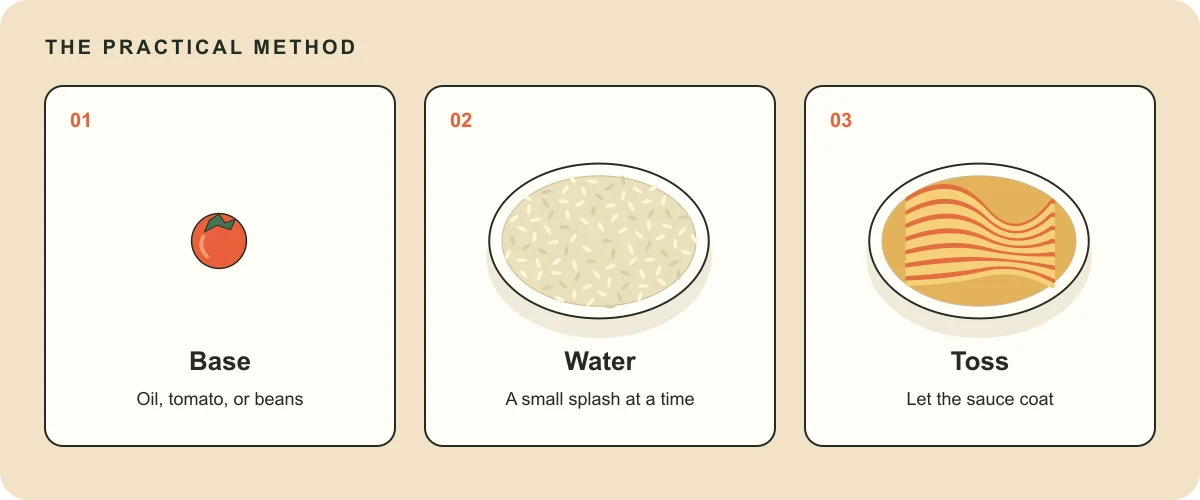 *Reserve generously, add cautiously, and judge the sauce on the pasta.*
White beans or vegetables: thickness with substance
Blend or mash drained white beans with a little warm water or stock. Add garlic, herbs, or lemon according to the rest of the dish. Stir the puree into a pan and loosen it before adding the pasta. Beans can absorb more liquid than expected, so keep extra water nearby.
Cooked squash, cauliflower, carrots, or roasted peppers offer another route. Blend until smooth enough for the texture you want. Each contributes flavor and color; none is a flavorless stand-in for cream.
These sauces are particularly useful with short pasta and small vegetables. If adding frozen peas or spinach, account for the liquid they bring. Our frozen-vegetable guide explains when to squeeze or drain first.
Cheese: cooler is often easier
Take the pan off strong heat before working in finely grated cheese. Add it gradually and toss, loosening with a little warm water as needed. Large cold clumps of cheese added to a very hot, nearly dry pan are difficult to incorporate smoothly.
Different cheeses behave differently, and pre-grated products may contain anti-caking ingredients. For a dish in which the cheese is the entire sauce, use a developed recipe for that specific cheese rather than expecting one method to fit every product.
Cream-free cheese sauce still contains dairy. If you need a dairy-free meal, use an oil, bean, or vegetable base and check every packaged ingredient.
Fix the sauce before serving
Too thick: add warm water a spoonful at a time and toss. Do this before adding another rich ingredient.
Too watery: let the pasta and sauce cook together briefly, or remove some excess liquid if the pasta is already done. More cheese is not always the right repair because it also adds salt.
Greasy or split: lower the heat, add a little water, and toss. An emulsion may come back together, but a large amount of separated oil may need to be removed.
Flat: taste a bite with pasta. It may need salt, acidity, or a fresh finish. Do not judge the concentrated sauce alone.
Pasta-sauce questions
Can I use milk instead of cream?
Milk is much thinner. It can work in a sauce built to use it, such as one thickened with a roux, but it does not automatically replace cream at the same amount.
What if I already drained away the pasta water?
Use a little warm water and work with the sauce base you have. Bean and vegetable purees already provide body, so the missing starch does not cancel dinner.
Will the sauce stay the same after it sits?
Usually not. Pasta keeps absorbing moisture. Serve promptly and loosen leftovers during reheating as appropriate, following safe storage and reheating guidance.
Put it to work
Creamy Pantry Pasta
Use starchy pasta water and a flavorful base to make a silky sauce from pantry staples.
Open the dinner blueprint →Illustrations by DNX FOOD. These guides explain adaptable cooking methods; they do not represent documented kitchen testing. How we make our guides · Suggest a correction