Dinner ideas
Frozen Vegetables Can Be the Start of Dinner
Match frozen peas, broccoli, spinach, or mixed vegetables to pasta, rice, soup, curry, and tray dinners without ending up with a watery meal.
The useful answer
Use small frozen vegetables near the end of soups and pasta cooking, squeeze thawed spinach when the dish needs to stay dry, and give larger vegetables space when roasting. Follow the package's cooking instructions.
The freezer can solve dinner, but a bag of vegetables needs a job. Peas behave well in rice. Chopped spinach can disappear neatly into a sauce. Large broccoli florets need more space and time. Treating all three the same way is how a convenient ingredient becomes a watery disappointment.
Look at the bag before opening it. A plain frozen vegetable mix is different from one with butter, sauce, salt, or a steam-in-bag preparation. Package directions matter, particularly when a product needs thorough cooking rather than simple thawing.
Start with the shape and the water
Freezing changes texture. University of Minnesota Extension explains that ice crystals can damage plant cell walls, so thawed produce may be softer than fresh produce. That helps explain why frozen vegetables suit some cooking methods better than others. It does not mean every bag needs thawing first.
| Vegetable | Useful dinner jobs | Moisture plan |
|---|---|---|
| Peas or corn | Fried rice, pasta, omelets | Add a modest quantity; avoid pooling meltwater |
| Broccoli or cauliflower | Roasting, curry, pasta | Allow room and cook larger pieces fully |
| Chopped spinach | Pasta sauce, bean skillet, eggs | Thaw and squeeze for dry fillings; add directly to a loose sauce |
| Mixed diced vegetables | Soup, rice, noodle broth | Choose a dish that can accommodate some liquid |
| Green beans | Skillet, curry, tray dinner | Follow cooking directions and avoid a packed pan |
If the bag is mostly ice rather than vegetables, separate the loose ice where practical. Do not compensate by turning every burner to maximum; give the moisture somewhere to evaporate.
Dinner one: pasta with peas and a pantry sauce
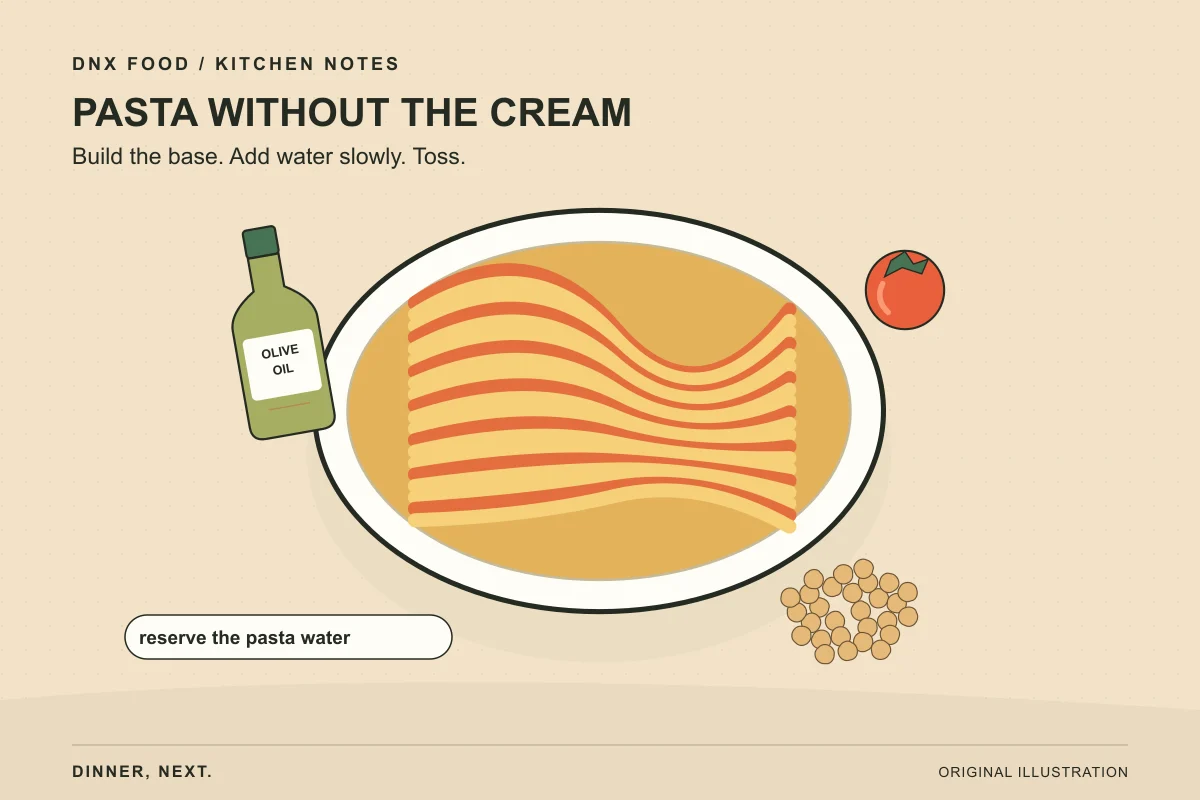
Choose a pasta shape that can catch small vegetables, such as shells, fusilli, or short tubes. Cook the pasta according to its instructions and add peas at a point that allows them to cook for the time their package requires. Reserve some cooking water before draining.
In a separate pan, warm garlic in oil, add the pasta and peas, and loosen with a little pasta water. Finish with grated cheese, lemon zest, herbs, or pepper. If you prefer a more substantial sauce, mash white beans or use a spoonful of pesto.
The important detail is how much water you add after draining. Start with a splash. A wet pan of pasta does not become creamy just because the liquid came from the pasta pot. See pasta sauce without cream for several sauce bases.
Dinner two: a curry that uses the whole bag
Broccoli, cauliflower, green beans, and peas can all fit a curry, but they do not necessarily finish together. Start the sauce first. Add larger or firmer pieces before the quick-cooking vegetables, using the bag’s instructions to judge what each needs.
Keep the sauce slightly thicker than you want at first because the vegetables may release water. Do not pour in extra stock automatically. Once the vegetables are cooked, decide whether the dish needs more liquid, a short uncovered simmer, or simply a bowl of rice underneath.
Chickpeas or tofu give the curry more substance. A little lime at the end can make the flavor clearer without adding more curry paste. Our chickpea curry blueprint is one possible starting point.
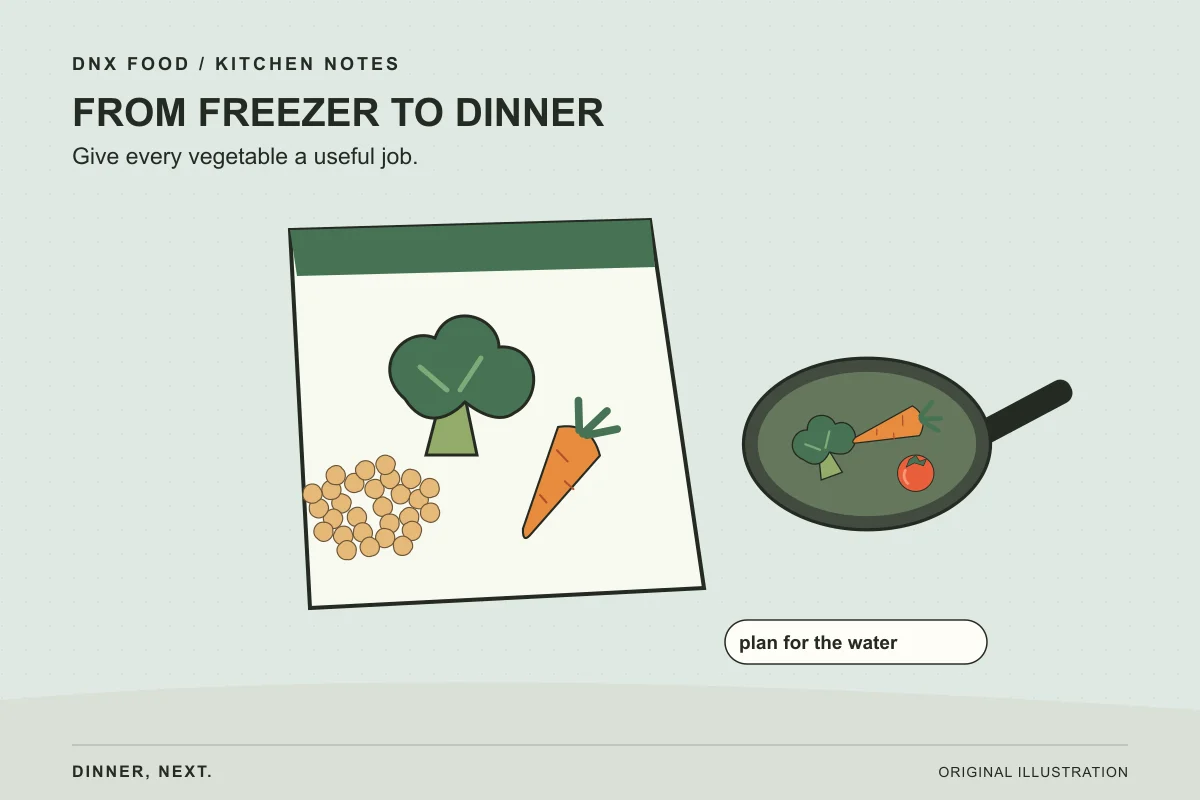
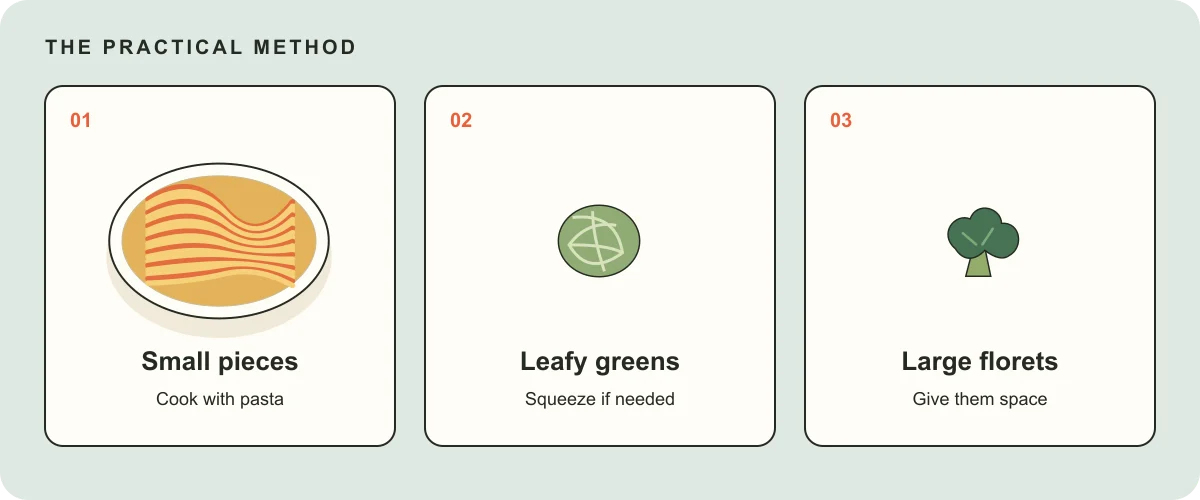 *Small pieces, leafy vegetables, and large florets need different handling.*
Dinner three: rice with vegetables and eggs
Small peas, corn, and diced carrots are convenient additions to rice, but too much frozen food cools a skillet quickly. Cook the vegetables separately before combining them with rice when there is visible water in the pan.
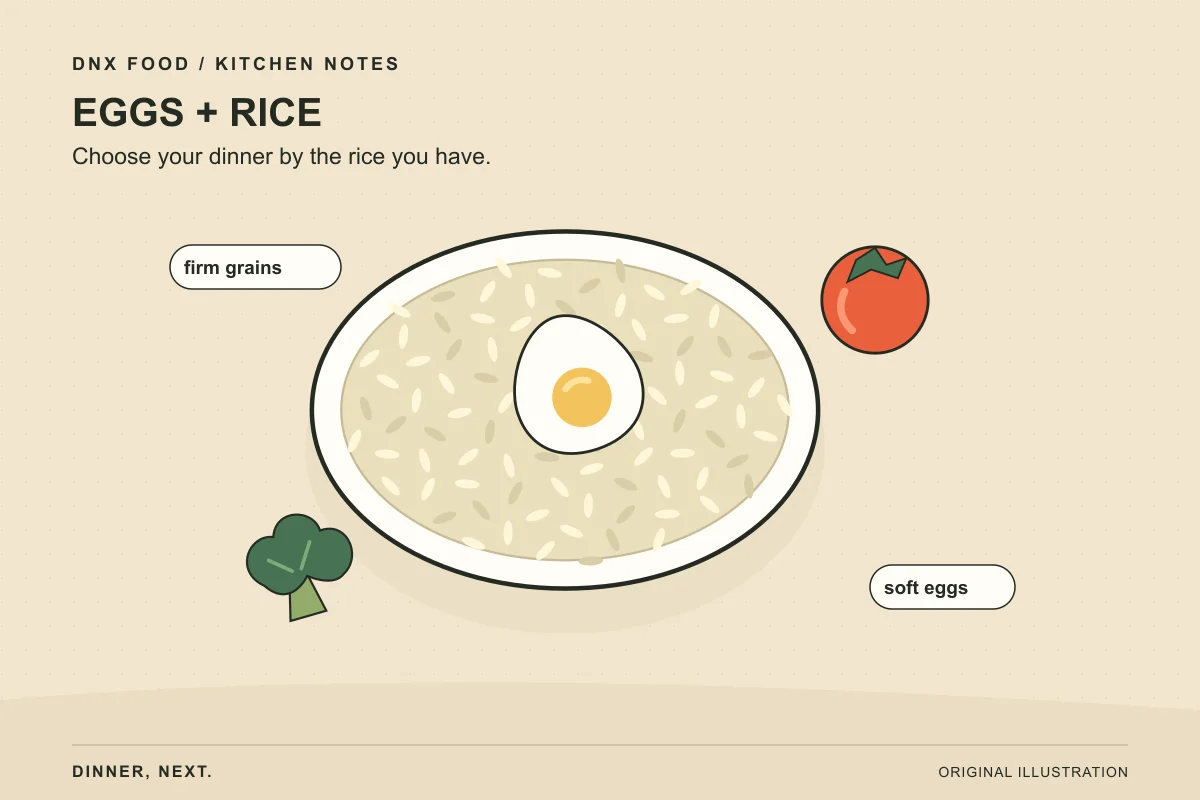
For fried rice, use a wide pan and a manageable amount. Cook the eggs, remove them, heat the vegetables, then add rice. Return the eggs once the rice is hot and season at the end. Do not keep adding soy sauce while waiting for water to disappear.
If you have just cooked the rice, serve the vegetables and eggs over it instead. You still get dinner, and there is no need to force moist grains into a crisp-fried result. The eggs-and-rice guide explains that choice.
Dinner four: a soup that welcomes extra liquid
Soup is a good home for a mixed bag that would be awkward to roast. Soften onion or garlic, add stock and beans, then add the frozen vegetables. Let each ingredient cook through before finishing with lemon, herbs, or a little oil.
To make the soup feel more substantial, add cooked pasta, potatoes, or a grain. Keep an eye on noodles: they continue absorbing liquid after the heat is off. If you expect leftovers, cooking or storing the noodles separately can preserve a better balance of broth and solids.
You can also mash some beans in the pot for body. This is often easier than adding a thickener to compensate for an oversized pour of stock.
Dinner five: a tray of vegetables with a separate base
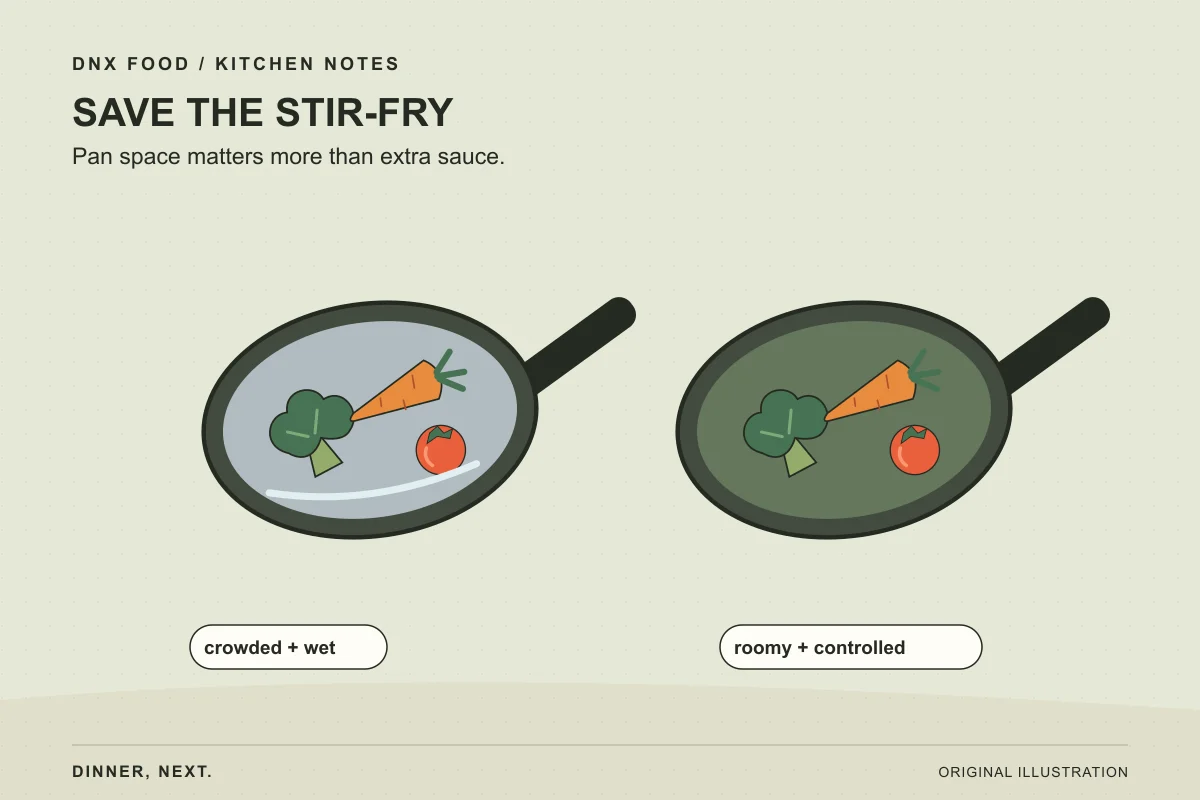
A crowded tray steams. Spread vegetables out, coat lightly with oil, and use a hot oven within the product’s cooking guidance. Turn or rearrange them as necessary. Large pieces need more time than small ones, so check the actual vegetables rather than relying only on browned edges.
Put the cooked vegetables over a baked potato, rice, or another base. Add chickpeas, tofu, or a protein you have prepared safely. Dress the plate after roasting; a watery dressing added at the start can work against the dry heat you were trying to create.
When thawing helps, and when it adds work
Thawing is useful when you need to squeeze water out, especially for spinach in an omelet filling or a thick sauce. It is less useful when the vegetable is headed into simmering soup anyway. A bag with specific thawing or cooking instructions takes priority over a general rule.
Do not assume frozen vegetables are ready to eat because they look cooked. Follow the product’s directions. Keep unused frozen portions in the freezer rather than repeatedly warming the whole bag while deciding how much to use.
Common frozen-vegetable questions
Can frozen vegetables go straight into a pan?
Often, if the package permits it. Use a method that can handle the temperature drop and released water. A small amount in a roomy skillet behaves differently from a whole bag in a small saucepan.
Why are my vegetables soft rather than crisp?
The freezing process changes texture, and excess water encourages steaming. Choose sauces, soups, or fillings when a crisp result is unlikely instead of cooking longer until everything becomes mushy.
What should I keep in the freezer first?
Choose vegetables you already eat in several dishes. A bag of peas for pasta and rice may be more useful than a large specialty mix with no planned meal.
Put it to work
Any-Vegetable Stir-Fry
A timing-first method that works with almost any mix of firm and tender vegetables.
Open the dinner blueprint →Illustrations by DNX FOOD. These guides explain adaptable cooking methods; they do not represent documented kitchen testing. How we make our guides · Suggest a correction