Cooking know-how
Why Your Stir-Fry Turns Watery, and What to Do Next
Diagnose a crowded pan, wet vegetables, frozen ingredients, or too much sauce. Rescue a watery stir-fry without overcooking the vegetables.
The useful answer
If vegetables are sitting in a puddle, remove the cooked pieces and deal with the liquid separately. Next time, dry the ingredients, cook smaller batches, and add a modest amount of sauce after the vegetables have cooked.
The pan started with a promising sizzle. A few minutes later, the vegetables are sitting in liquid and the sauce looks like broth. Turning up the heat may help a little, but the food can overcook before the water disappears.
The quickest useful response is to separate the two problems: the vegetables need to stop cooking, while the liquid needs attention. Move cooked ingredients out of the pan, then decide whether to reduce the liquid, thicken a small amount, or discard some excess before rebuilding the sauce.
Diagnose the puddle before adding anything
| What happened | Likely contributor | What to change |
|---|---|---|
| The sizzle stopped when everything went in | Too much food for the pan and burner | Cook in smaller batches |
| Mushrooms, zucchini, or greens released water | Moisture-rich vegetables cooked together | Give them their own stage or batch |
| Frozen vegetables left meltwater behind | Ice and a large temperature drop | Heat them separately or choose a saucier dish |
| Vegetables were wet after washing | Surface water went into the pan | Drain and dry before cooking |
| The pan was fine until the sauce arrived | Too much liquid or a weak sauce | Mix a smaller, more concentrated amount |
| A lid was on the pan | Steam condensed back into the food | Leave uncovered when browning is the aim |
Several causes can happen at once. A crowded pan of wet mushrooms needs more than a stronger burner setting.
Rescue tonight’s stir-fry in four steps
- Stop adding ingredients. More vegetables, soy sauce, or stock usually makes the diagnosis harder.
- Lift out the cooked food. Use a slotted spoon if there is a lot of liquid. Keep it nearby while finishing the sauce.
- Deal with the liquid. Reduce it if it tastes balanced. If it is already very salty, remove some rather than concentrating it further. Use a suitable thickener only when you actually want a thicker coating.
- Return the food briefly. Toss just long enough to coat and heat it. Add fresh herbs or scallions after turning down the heat.
If the vegetables are already very soft, accept a different result. Serve the mixture over rice as a saucy dinner. Continuing to fry until everything is dry is likely to produce vegetables that are both mushy and over-seasoned.
Pan capacity is not the same as pan volume
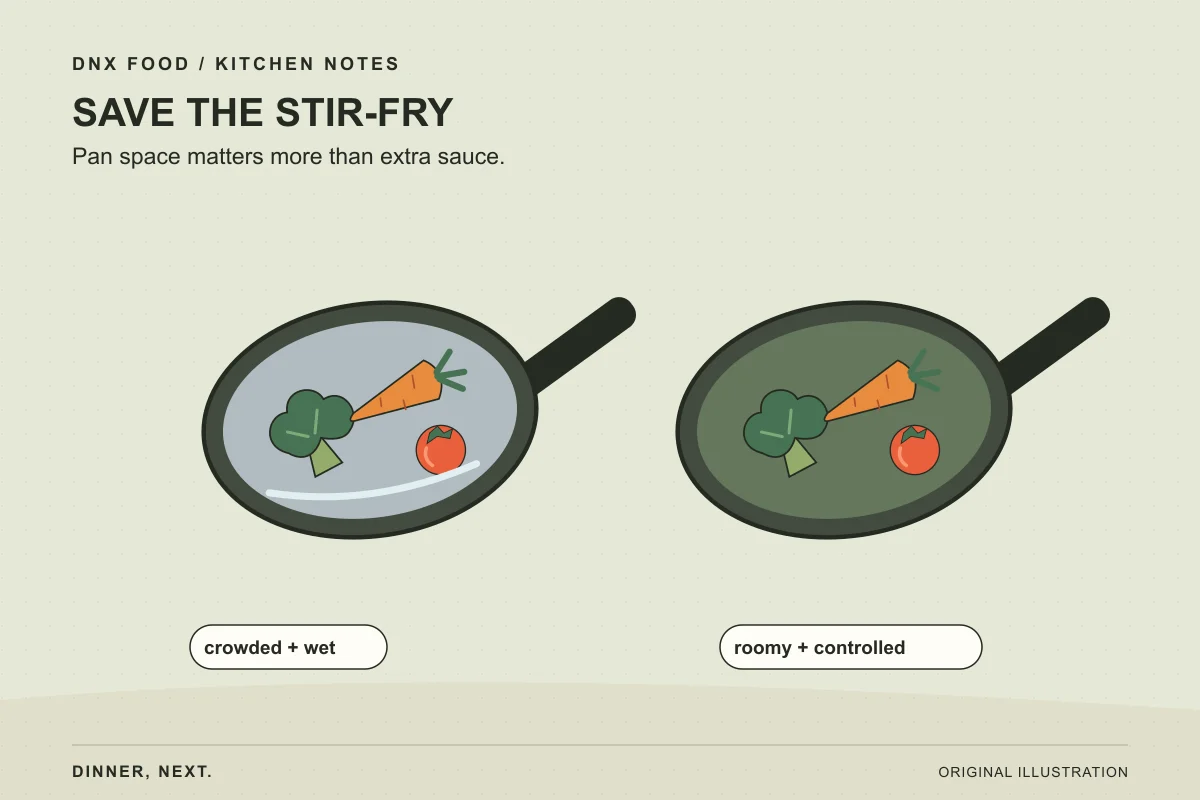
A deep pan can hold a large amount of food, but the burner can only deliver so much heat. When a large cold load goes in, the surface cools and released water may accumulate faster than it evaporates.
Use enough empty space that ingredients can contact the pan rather than sitting in a thick pile. Cook in batches if necessary, then combine everything at the end. A wide skillet can be more useful on a home stove than a deep wok that does not match the burner well.
Respect the limits of your cookware. “Hotter” does not mean overheating an empty nonstick pan or ignoring the manufacturer’s instructions. Use a method your pan and burner can sustain.
Sort vegetables by behavior as well as cooking time
Carrots and broccoli may need an earlier start than peas or tender greens. Mushrooms can release a considerable amount of liquid, so cooking them separately gives you better control. Zucchini and leafy vegetables also deserve room rather than being buried under everything else.
Cut pieces to roughly compatible sizes. A thick carrot coin and a thin shred do not finish together simply because both are carrots. Keep the chopped ingredients in separate piles until they enter the pan.
Salt and bottled seasonings introduce another variable. If soy sauce is waiting in the finishing sauce, there may be no reason to season every vegetable heavily at the start. Taste before adding the final amount.
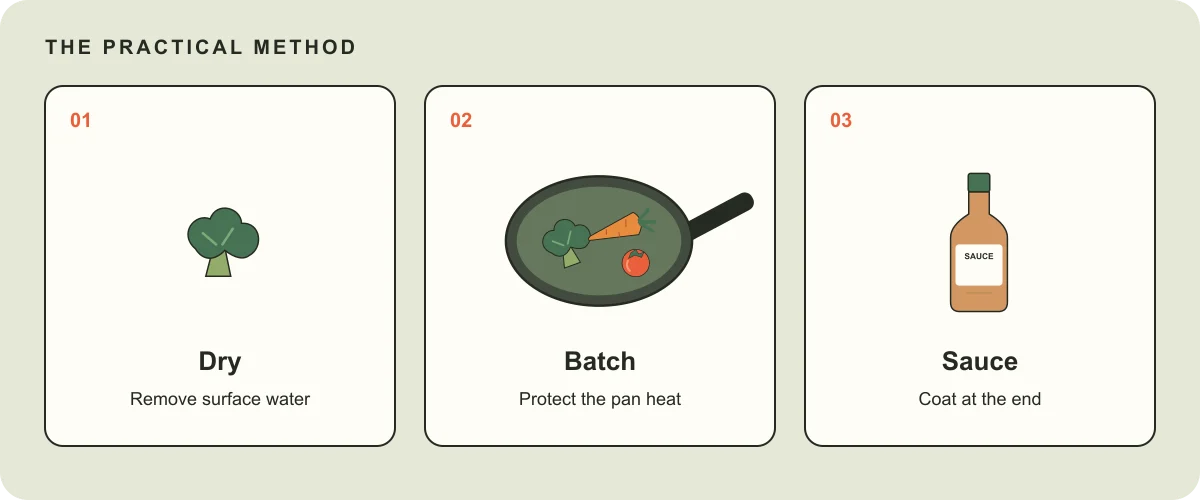 *Prepare dry ingredients, protect the pan's heat, then add the sauce.*
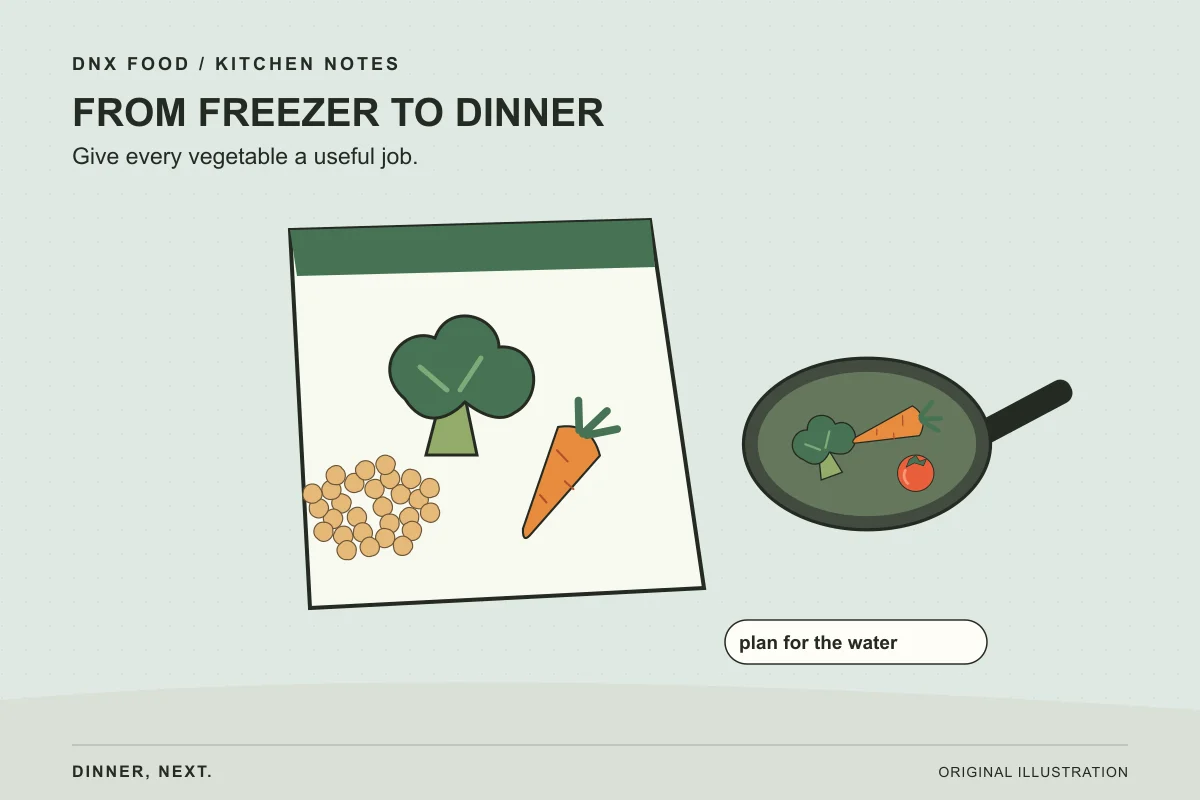
Frozen vegetables need a moisture plan
Freezing can damage plant cell structure, making thawed vegetables softer and more prone to releasing water. University of Minnesota Extension describes this texture change during freezing. It explains part of the problem, but the cooking method still matters.
For a small amount of peas or corn, the pan may cope easily. For a large bag of mixed vegetables, heat them separately and manage visible liquid before combining them with the rest of dinner. Follow their package instructions for cooking.
If the vegetables are better suited to curry or soup, changing the dinner plan may give you a better result than trying to recreate the texture of fresh stir-fried vegetables. See frozen-vegetable dinner methods.
Make less sauce than you think you need
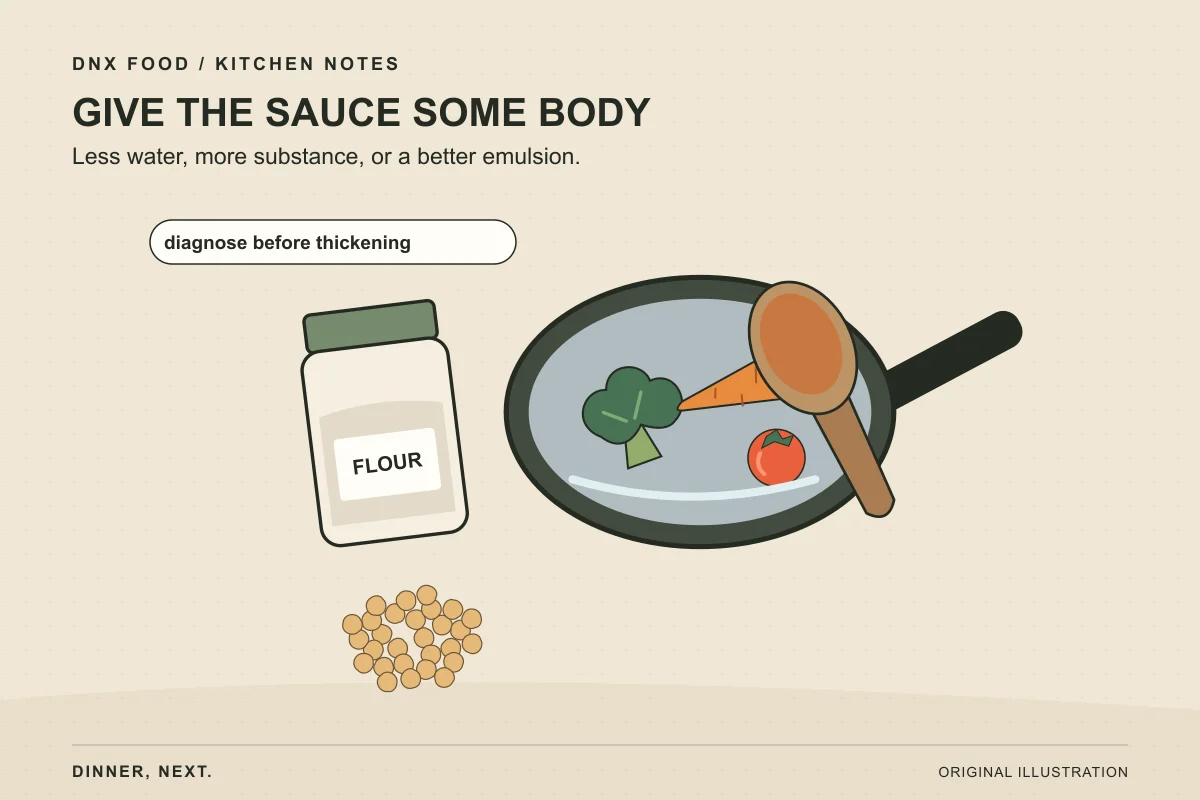
The sauce should coat the food, not submerge it. Mix it before cooking so you can taste the balance and add it in stages. A pan that looks dry for a moment may need only a spoonful, not another half cup.
If using starch, stir the mixture again just before adding it because some starches settle. Allow the sauce to heat and thicken before deciding it needs another addition. Too much thickener produces a gluey coating without fixing overcooked vegetables.
Without cornstarch, choose a different sauce style or use a suitable alternative. Our thickening guide explains why flour, reduction, and purees give different finishes.
Questions about watery stir-fries
Will a wok solve the problem?
Not by itself. A wok still needs a compatible burner, manageable quantities, and sensible ingredient order. More cookware is not a substitute for controlling moisture.
Should I drain the pan while cooking?
You can remove excess liquid if it is stopping the vegetables from cooking as intended. Remember that it may contain seasoning, so taste again before finishing. Do not pour hot oil or liquid carelessly into a sink.
Can I use a lid to cook firm vegetables first?
Yes, if you deliberately want a short steaming stage. Remove the lid and let the excess moisture leave before adding the final sauce. Steaming and browning can both be useful when you control the sequence.
Put it to work
Any-Vegetable Stir-Fry
A timing-first method that works with almost any mix of firm and tender vegetables.
Open the dinner blueprint →Illustrations by DNX FOOD. These guides explain adaptable cooking methods; they do not represent documented kitchen testing. How we make our guides · Suggest a correction