Cooking know-how
How to Thicken a Sauce Without Cornstarch
Choose reduction, flour, mashed beans, vegetable puree, pasta water, or a finishing emulsion. Match the fix to your sauce and avoid lumps or excess salt.
The useful answer
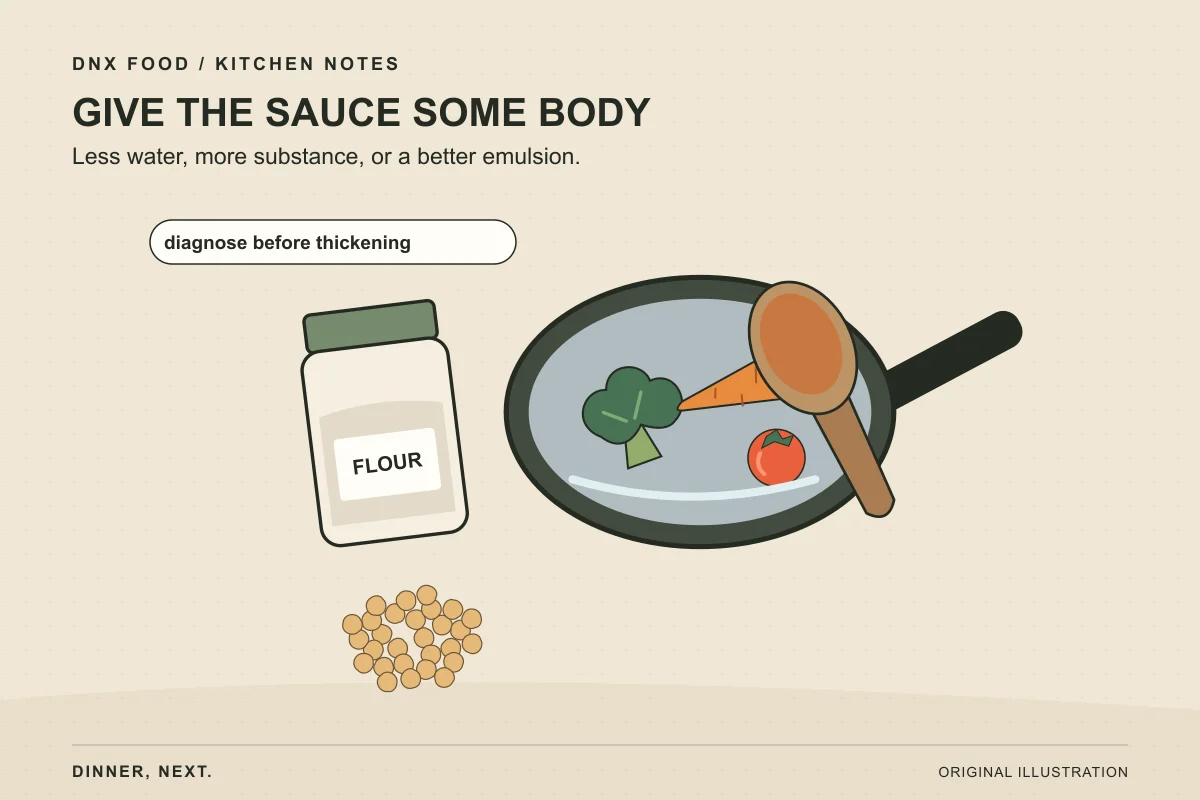
Start by deciding whether the sauce has too much water or simply lacks body. Reduce a watery sauce if its salt level allows it; use a flour mixture, mashed beans, or vegetable puree when it needs substance. Never dump dry flour into a hot pan.
A thin sauce does not always need a replacement starch. Sometimes it has too much water. Sometimes the liquid and fat are separated. Sometimes it is meant to be spooned over rice and does not need to cling like gravy at all.
Before fixing it, put a little sauce on a plate and let it cool briefly. Many sauces feel thicker away from the burner. Then taste it. If it is already salty, reducing it aggressively can trade one problem for a worse one.
Match the fix to the sauce
| Method | Useful for | Avoid when | What changes |
|---|---|---|---|
| Uncovered simmer | Tomato sauces and watery pan sauces | Sauce is already too salty | Flavor becomes more concentrated |
| Flour mixture | Gravy and some creamy sauces | A clear, glossy finish matters | Sauce becomes more opaque |
| Mashed beans | Bean skillets, soups, vegetable curries | A delicate smooth sauce is needed | Adds substance and mild bean flavor |
| Vegetable puree | Soups and vegetable-based sauces | The vegetable clashes with the dish | Adds its own flavor and color |
| Pasta water plus tossing | Sauces being finished with pasta | You simply need less liquid | Helps a suitable sauce coat pasta |
| A finishing emulsion | Some butter- or oil-based sauces | You need a large amount of thickening | Adds richness; needs careful heat |
None of these methods is a universal one-for-one replacement for cornstarch. Choose by the result you want rather than assuming every thickener works identically.
Method one: reduce the liquid without overcooking dinner
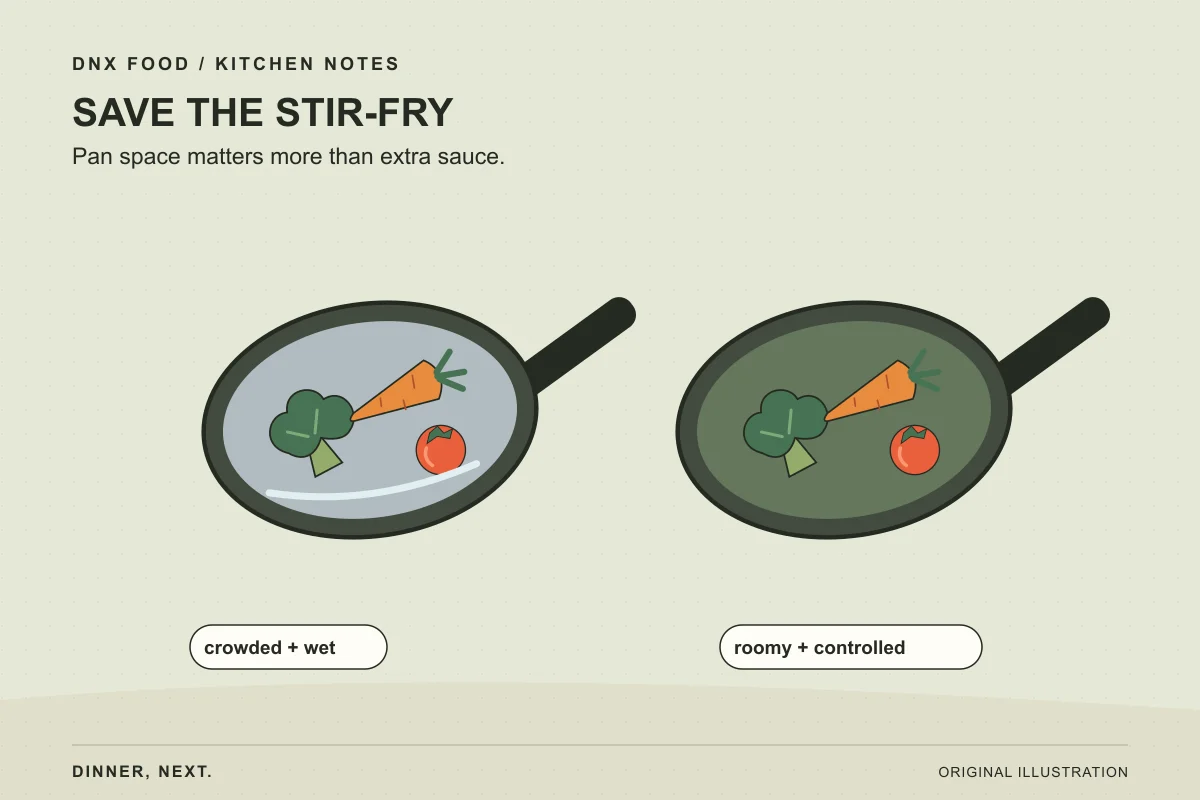
Use a wider pan and simmer uncovered. A broad surface gives water more room to evaporate than a tall, narrow saucepan. Stir as needed and lower the heat when the sauce begins to catch around the edges.
If the vegetables or protein are already cooked, move them to a plate first. Reduce the liquid separately, then return the food just long enough to heat through. This avoids sacrificing the texture of the meal while chasing a thicker sauce.
Stop before the sauce looks completely dry. It will continue to change as it cools and as rice or pasta absorbs some moisture. Taste again after reduction, before adding any more salt.
Method two: flour, handled deliberately
Flour is useful in gravy and other sauces where a slightly opaque finish is acceptable. It is less concentrated in starch than cornstarch, so direct volume-for-volume substitution is not always useful. King Arthur’s thickener guide explains that general difference, though its detailed amounts are for fruit fillings rather than dinner sauces.
For an existing sauce, whisk a small amount of flour with cold water until completely smooth. Add some of that mixture to the simmering sauce while stirring. Allow it to cook, then assess the thickness and taste before adding more. A raw, floury flavor means the job is not finished.
If you are building a sauce from the beginning, a roux is another option: cook flour with fat, then gradually whisk in liquid. King Arthur’s gravy method shows that sequence in a developed recipe. Use that kind of tested formula when you need precise proportions, rather than borrowing a thickener amount from an unrelated dish.
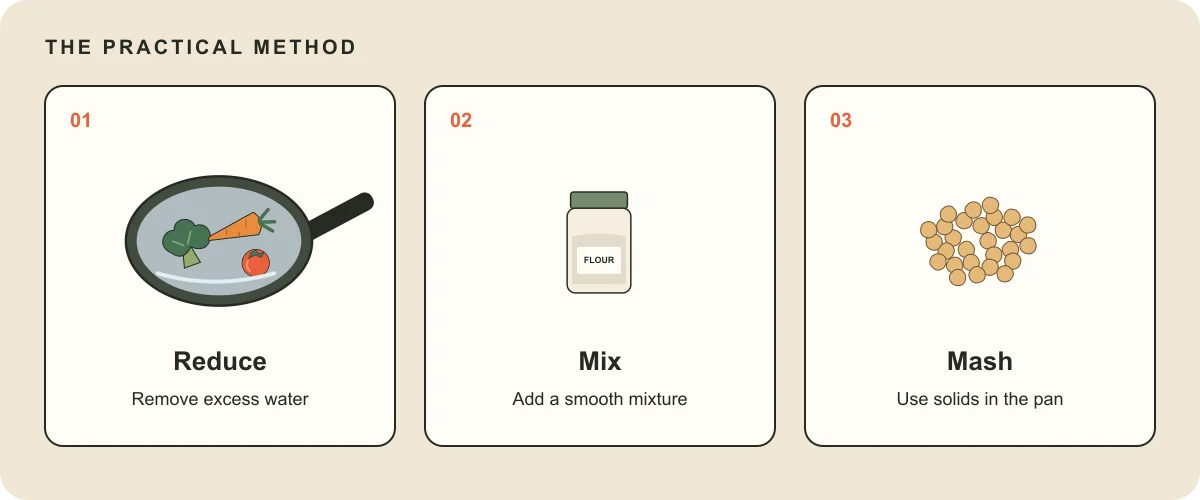 *Remove water when there is too much; add body when there is too little.*
Method three: use the beans already in the pan
Take out a small spoonful of beans or chickpeas, mash them thoroughly, and stir them back into the sauce. Add more only after seeing the effect. This works especially well in a tomato-bean skillet or a curry because the thickening ingredient already belongs in the dish.
For a smoother result, blend a small portion of the sauce and return it. Follow your blender’s instructions for hot liquids; do not seal a container of very hot liquid and assume it is safe to blend.
The result will be more substantial than glossy. That is a useful tradeoff in soup or a bowl topping. It is less suitable when you want a clear, shiny stir-fry coating.
Method four: vegetables can supply the body
Cooked potato, squash, carrot, cauliflower, or onion can be blended into a sauce if their flavors make sense there. Begin with vegetables already cooked until tender. Adding raw pieces to a finished sauce means restarting the cooking process.
Use a small portion first. Potato can make a sauce heavy; carrots bring sweetness and color; cauliflower has its own flavor. A vegetable puree is an ingredient choice, not an invisible repair.
This is a particularly good way to make a soup feel fuller without introducing flour. It can also use up a few cooked vegetables that would otherwise be too small a portion for a side dish.
Methods five and six: pasta water and fat need the right setting
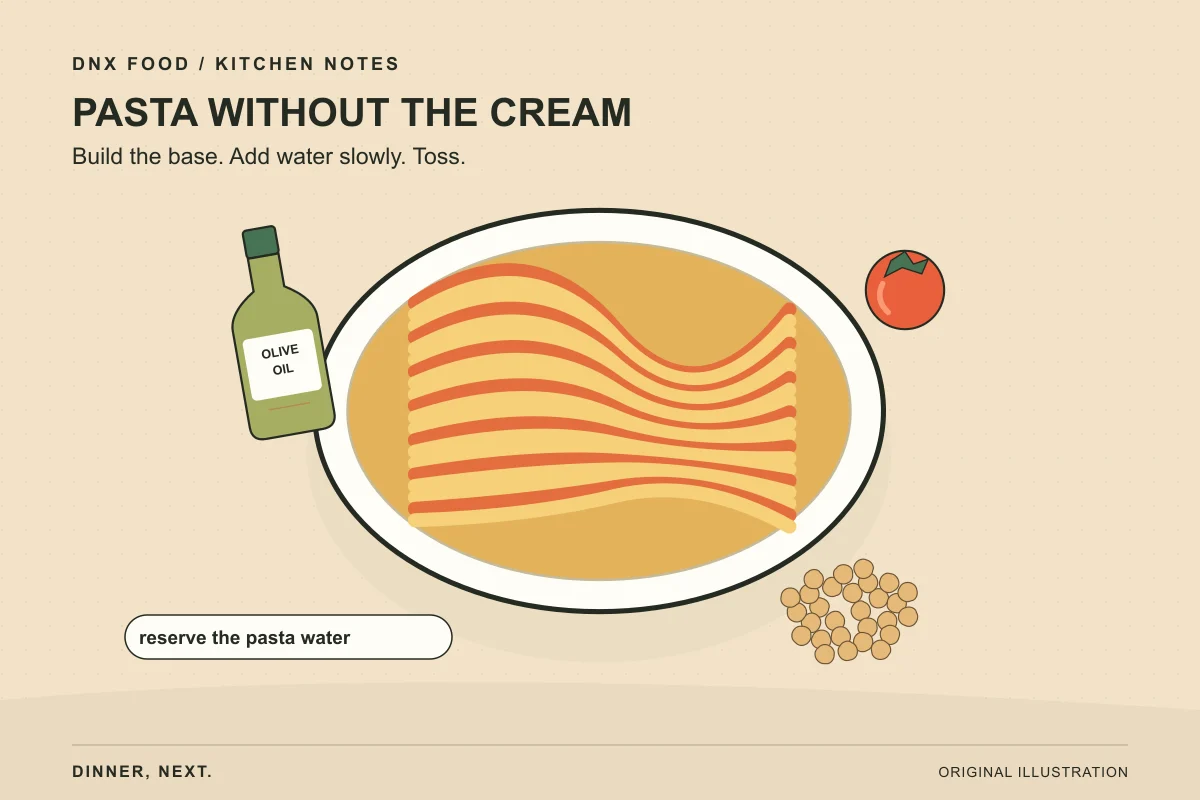
Starchy pasta water is useful when pasta and sauce are being tossed together. Add a little and keep moving the pasta so the sauce coats it. It is not a concentrated thickener: a large pour can make the dish wetter. Our cream-free pasta guide explains how to build the sauce around that limitation.
Some sauces gain body when a little butter or oil is worked into a suitable amount of liquid. Use gentle heat and add gradually. More fat is not a good solution to a whole cup of unwanted water. Reduce or remove that water first if the sauce allows it.
Troubleshooting after the first attempt
Lumps: stop adding thickener. Whisk, strain, or blend the sauce if its ingredients and your equipment allow it. Dry flour added directly to hot liquid tends to form little pockets that are difficult to dissolve.
Too thick: loosen with water or unsalted stock a little at a time. Do not immediately add a strongly flavored liquid that will change the seasoning.
Too salty after reduction: add an unsalted component or make more sauce without salt. A potato is not a selective salt sponge; it becomes part of the dish and absorbs liquid along with seasoning.
Sauce-thickening questions
Can I use baking powder?
It is a leavening mixture, not a sensible substitute for sauce starch. Choose a thickening method suited to the sauce instead.
Can I add extra cheese?
Sometimes, if the sauce is designed for it. Cheese adds salt and fat as well as body, and it can clump under strong heat. It is not a neutral thickener.
Should I thicken every sauce until it coats a spoon?
No. A broth for rice, a light tomato sauce, and gravy have different jobs. Judge it with the food you are serving, not against one ideal thickness.
Put it to work
Creamy Pantry Pasta
Use starchy pasta water and a flavorful base to make a silky sauce from pantry staples.
Open the dinner blueprint →Illustrations by DNX FOOD. These guides explain adaptable cooking methods; they do not represent documented kitchen testing. How we make our guides · Suggest a correction