Smart swaps
No Coconut Milk for Curry? Replace the Job It Does
Choose coconut cream, yogurt, cream, nut butter, or blended beans for curry. Understand the changes in flavor, richness, texture, and when to add each one.
The useful answer
Coconut milk supplies liquid, fat, and coconut flavor. Unsweetened coconut cream is the closest option when diluted; yogurt, dairy cream, nut butter, and blended beans create different styles of curry. Add delicate dairy gently rather than boiling it hard.
An empty coconut-milk shelf does not have to cancel curry, but it changes the plan. Coconut milk is doing several things at once: carrying liquid, softening the impact of spices with richness, and contributing its own flavor. A replacement may do one of those jobs well and another badly.
Before choosing a substitute, taste the curry base and look at its thickness. A loose, strongly flavored sauce needs a different correction from a dry pan of aromatics. Resist pouring in a full carton of another liquid just because the recipe called for a can.
Check whether you have a closer coconut product
Unsweetened coconut cream is thicker and richer than coconut milk. It can be diluted gradually with water until the sauce has a useful consistency. Thai Kitchen’s product guidance distinguishes unsweetened cream and notes that it may separate before use.
Sweetened cream of coconut, coconut water, and refrigerated coconut drinks are different products. Sweetened cocktail cream can make a savory curry much too sweet. Coconut water supplies very little of the richness you were trying to replace. A thin drinking product may need another ingredient for body.
Choose a substitute by the curry you want
| Substitute | What it contributes | How to introduce it | Main tradeoff |
|---|---|---|---|
| Unsweetened coconut cream plus water | Coconut flavor and richness | Dilute gradually in the sauce | Easy to make too rich |
| Plain yogurt | Tang and body | Temper with warm sauce; add over low heat | Changes acidity and may split |
| Dairy cream plus stock or water | Richness with neutral flavor | Add a little at a time near the end | Dairy; no coconut flavor |
| Smooth nut or seed butter plus water | Body and a nutty or toasted flavor | Whisk separately, then stir in | Allergen and flavor considerations |
| Blended white beans plus stock | Thickness and mild flavor | Blend smooth, then warm through | Less glossy; not a rich coconut taste |
| Unsweetened plant milk | Liquid and a little body | Use cautiously with another thickening ingredient | Many products are thin or flavored |
This table is for adaptable home cooking. It does not promise that each version will taste like the original dish. A specific regional curry may depend on coconut in a way that a flexible chickpea skillet does not.
Yogurt: useful tang, gentler heat
Plain yogurt is a good choice when a tangier sauce sounds appealing. Use an unsweetened product, and check how thick it is before adding it. A thin yogurt supplies more water than a strained one.
Lower the heat and mix a spoonful of warm sauce into the yogurt in a separate bowl. Add another spoonful, then stir the loosened yogurt back into the pan. Avoid a hard boil. This reduces the temperature shock, though it cannot guarantee that every yogurt formulation will stay smooth.
Taste before adding lime or lemon because the yogurt has already supplied acidity. If the sauce turns grainy, lower the heat and stop chasing smoothness with more acid. It may remain usable even when its appearance is less polished.
Nut butter: start with a small bowl
Peanut, cashew, almond, or seed butter can make a sauce feel fuller, but each has a distinct flavor. Use a smooth, unsweetened product. A heavily sweetened spread introduces a different problem.
Whisk a spoonful with warm water or stock until smooth before putting it in the curry. Add liquid gradually; the mixture can tighten before it loosens. Stir it into the sauce, check the texture, and add more only if needed.
This method is particularly suited to flexible chickpea, tofu, or vegetable dinners where a nutty flavor is welcome. It is a poor choice if you are trying to preserve a delicate coconut flavor. Check allergies and labels before preparing food for someone else.
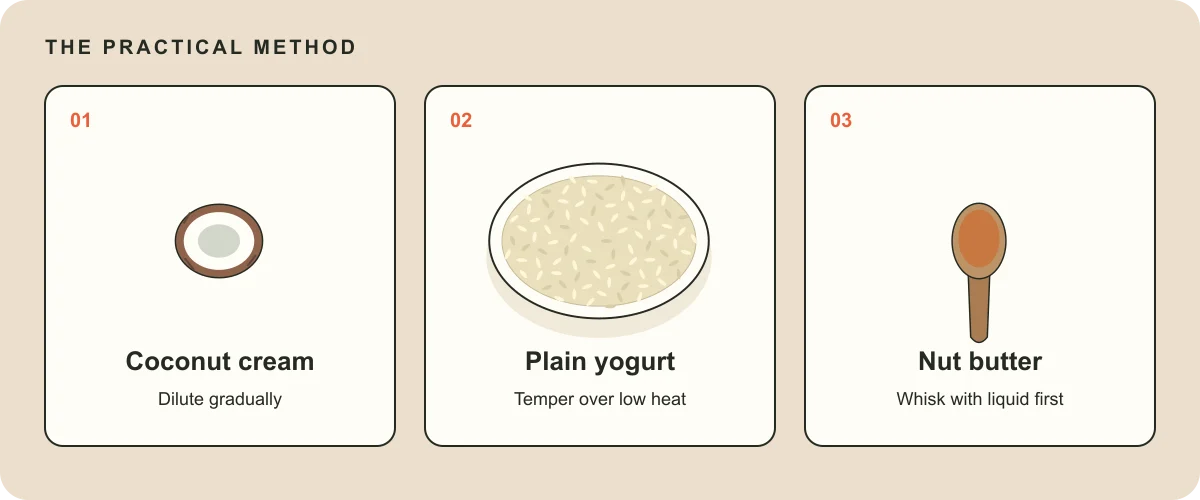 *Different substitutes need different handling, especially at the point where they meet the hot sauce.*
Beans and plant milk: body matters more than the name
White beans can be blended with stock or water to thicken a sauce. Start with a small amount, blend thoroughly, and strain if you need a smoother finish. The result is more like a bean-enriched curry than a coconut curry, which can still be a sensible dinner.
Unsweetened oat or soy drinks can provide liquid, but the label matters. Vanilla flavor and added sugar are rarely helpful in a savory curry. If the drink is very thin, add less than the coconut-milk quantity and judge whether the vegetables will release more water.
Do not assume that every non-dairy drink is suitable for every allergy or dietary restriction. The ingredient list, rather than the word “plant,” determines what is in the product.
Adjust the existing sauce before changing everything
For a sauce that is too thin, simmer uncovered briefly if the vegetables can tolerate more cooking. If they are already done, remove them first. Alternatively, mash some chickpeas or blend a little of the sauce. Our thickening guide helps distinguish these options.
For a sauce that is too thick, add water or unsalted stock in small amounts. Coconut cream and nut butter can both tighten a sauce quickly. Check salt after adjusting the consistency; reducing a sauce concentrates its seasoning.
If the curry is too sharp, yogurt may worsen the problem. If it is already very rich, dairy cream may be the wrong correction. Choose the substitute that addresses the sauce in front of you, not the one that merely looks closest in the cupboard.
A practical example: chickpeas and greens
Imagine a pan with onion, garlic, curry seasoning, chickpeas, and tomatoes. Without coconut milk, you could make a tangy version by loosening the base with stock and finishing with yogurt over low heat. Or make a nutty version by stirring in a separately whisked peanut-butter mixture.
Keep the greens until the sauce is close to its final thickness. Taste at the end before adding citrus. The same base can support either version; you do not need to add yogurt, cream, and nut butter together to compensate for one missing ingredient.
Coconut-milk substitution questions
Can I use ordinary milk?
It can supply liquid, but it is much thinner and less rich than canned coconut milk. Use a smaller amount first and expect a different sauce. Acidic ingredients and strong heat can also affect dairy texture.
Can I use water alone?
Yes, if you are comfortable making a lighter, brothier curry. You may want to mash beans or reduce the sauce for body. Water does not reproduce coconut richness.
Is coconut cream the same as cream of coconut?
Do not rely on the names alone. Check whether the product is unsweetened and intended for savory cooking. A sweet cocktail product can change the whole meal.
Put it to work
Chickpea Coconut Curry
A forgiving curry framework built around canned chickpeas, aromatics, and coconut milk.
Open the dinner blueprint →Illustrations by DNX FOOD. These guides explain adaptable cooking methods; they do not represent documented kitchen testing. How we make our guides · Suggest a correction