Smart swaps
Fish Sauce Substitute: Choose by the Dish
Find a fish sauce substitute for stir-fries, curries, and dipping sauces. Compare cautious starting amounts, vegan options, salt levels, and flavor changes.
The useful answer
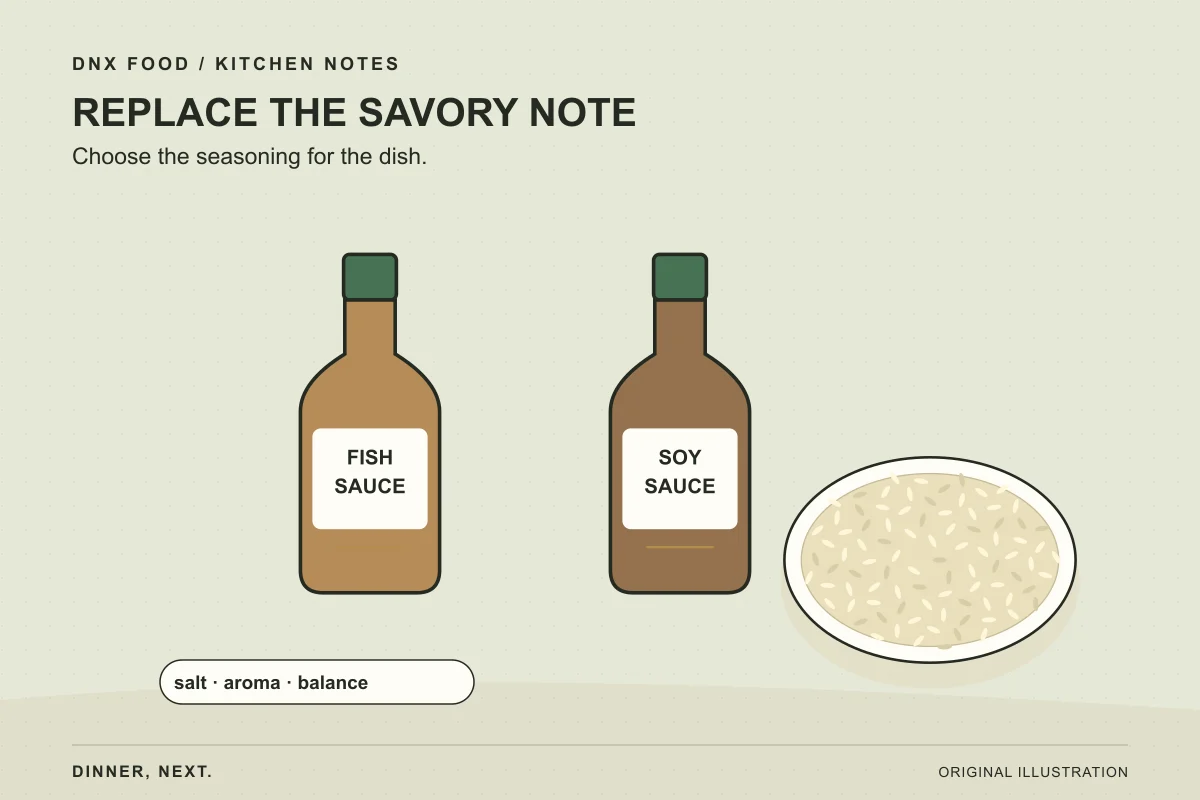
For everyday cooked dishes, start with a smaller amount of ordinary soy sauce or tamari and taste before adding more. A labeled vegan fish sauce is useful when avoiding fish. None of these recreates the aroma of fermented fish exactly.
The fish sauce bottle is empty and the vegetables are already in the pan. Before reaching for another brown sauce, check how much the dish needs and where it goes. A teaspoon in a pot of curry is easier to replace than the main seasoning in a dipping sauce.
Fish sauce contributes salt, savory depth, and a distinct fermented aroma. A substitute can keep dinner moving, but choosing by those jobs works better than treating every condiment as an equal-volume replacement. The suggestions below are starting points for flexible savory cooking. Adjust them to your bottle and the food in front of you.
Quick fish sauce substitution table
For each tablespoon of fish sauce in an adaptable cooked dish, consider these cautious starting amounts. Reserve the rest until you have tasted the sauce with the food.
| What you have | Start with | Useful for | What changes |
|---|---|---|---|
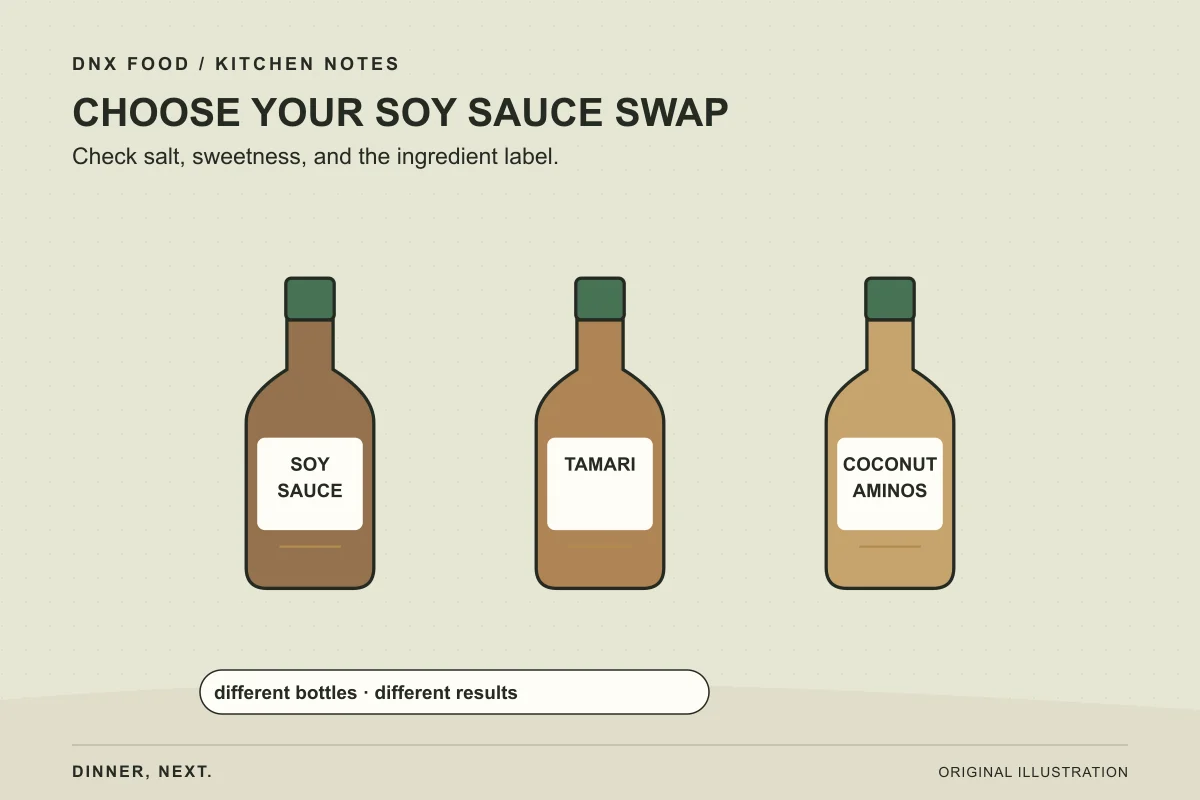
| Ordinary light or all-purpose soy sauce | 2 teaspoons | Stir-fries, noodle sauces, soups | Darker color and a different fermented flavor |
| Tamari | 2 teaspoons | Cooked sauces and rice bowls | Usually a fuller soy flavor; check salt and wheat labeling |
| Labeled vegan fish sauce | Follow its substitution directions | Plant-based curries and dipping sauces | Mushroom, seaweed, or other flavors vary by product |
| Coconut aminos | 2 teaspoons, then assess seasoning | Mild vegetable sauces | Often sweeter and less salty; formulation varies |
| Unsalted mushroom broth with separate salt | A small splash to fit the sauce | Soups and flexible curries | Less concentrated; adds water |
These amounts leave room for adjustment. They are not a sodium conversion chart. A particular soy sauce may need less, while a mild alternative may need more seasoning. If the original recipe already contains soy sauce, include it in your total before adding a replacement.
Soy sauce works best when fish sauce has a supporting role
In a stir-fry or a broad-flavored curry, ordinary soy sauce can provide a useful salty, savory direction. Mix a little into a sample of sauce first. Taste it with a vegetable or a spoonful of rice so you can judge the meal, rather than the concentrated condiment alone.
Avoid automatically choosing dark soy sauce. Some dark varieties add pronounced color or sweetness, and the result can become muddy before it tastes sufficiently seasoned. Check the bottle. If it is a thick or sweet product, choose another direction or use much less while adjusting the rest of the sauce separately.
The soy sauce substitute guide explains those differences in more detail. If your sauce also needs vinegar, replace that separately using the rice vinegar guide. Missing salt and missing acidity are different adjustments.
Vegan replacements need a label check
Traditional fish sauce commonly contains fish. For example, Red Boat lists anchovy and sea salt for its 40°N product. If the reason for substituting is avoiding fish, dilution or mixing it with another sauce does not solve that requirement.
A product explicitly labeled vegan fish sauce can be convenient because it is designed for that seasoning role. Read its ingredient list and directions. Mushroom-based and seaweed-based versions can taste quite different, and a sweeter formulation may change a dipping sauce more than a soup.
Tamari and soy sauce bring soy into the dish. Some contain wheat. For gluten avoidance, choose a bottle specifically labeled for that need instead of relying on the name tamari. Kikkoman’s gluten-free tamari is one example of a product with an explicit gluten-free designation, though it still contains soy.
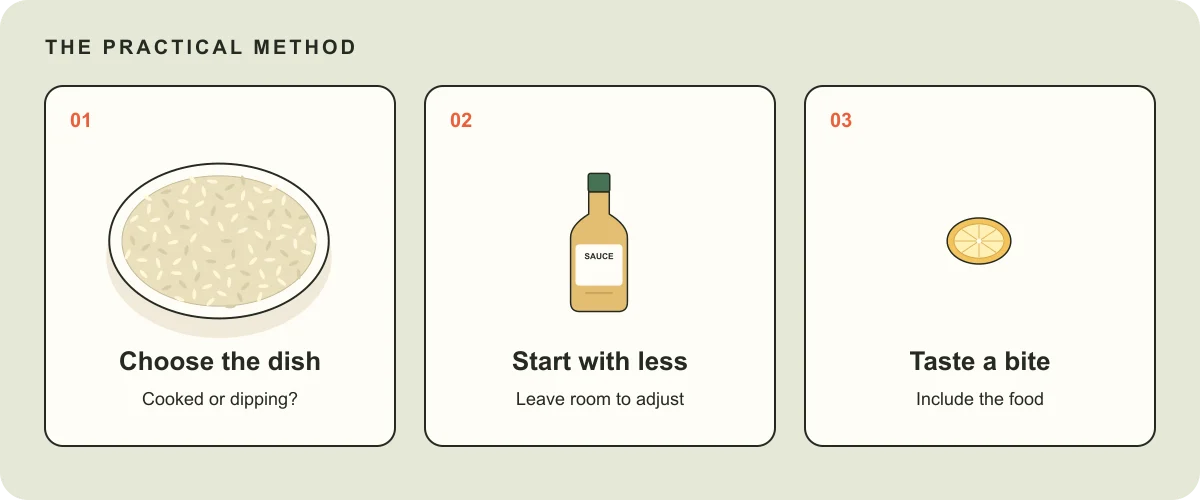
Dipping sauces expose the difference
When fish sauce is the main liquid in a dipping sauce, its replacement becomes much easier to notice. Soy sauce changes the color and aroma. Coconut aminos can shift the sweetness. A thin mushroom broth can leave the sauce weak even if you add enough salt.
Make a small portion first and try it with the food it will accompany. Adjust water, acid, sweetness, and salty seasoning in separate steps. Keep the original recipe’s balance in mind, but accept that you are making a different sauce. For a dish whose identity depends on fish sauce, obtaining the intended ingredient may give a more satisfying result.
In curry, account for the sauce already in the pan
Taste the curry before making the swap. Curry paste, stock, and other bottled seasonings may already contribute substantial salt. Add a little replacement only after the base is combined, then taste again near serving. A curry that simmers down can become stronger without another drop of seasoning.
If coconut milk is also missing, choose that replacement separately. The coconut milk curry guide discusses body and richness. Adding extra soy sauce will not replace coconut milk’s texture, and adding extra cream will not provide fish sauce’s salty flavor.
Fixing a substitute that tastes too strong
Stop adding condiments and test a small portion of the sauce with an unseasoned component. Depending on dinner, that might be a little unsalted broth, another portion of vegetables, or more of the unseasoned sauce base. Work on the sample before changing the whole pan.
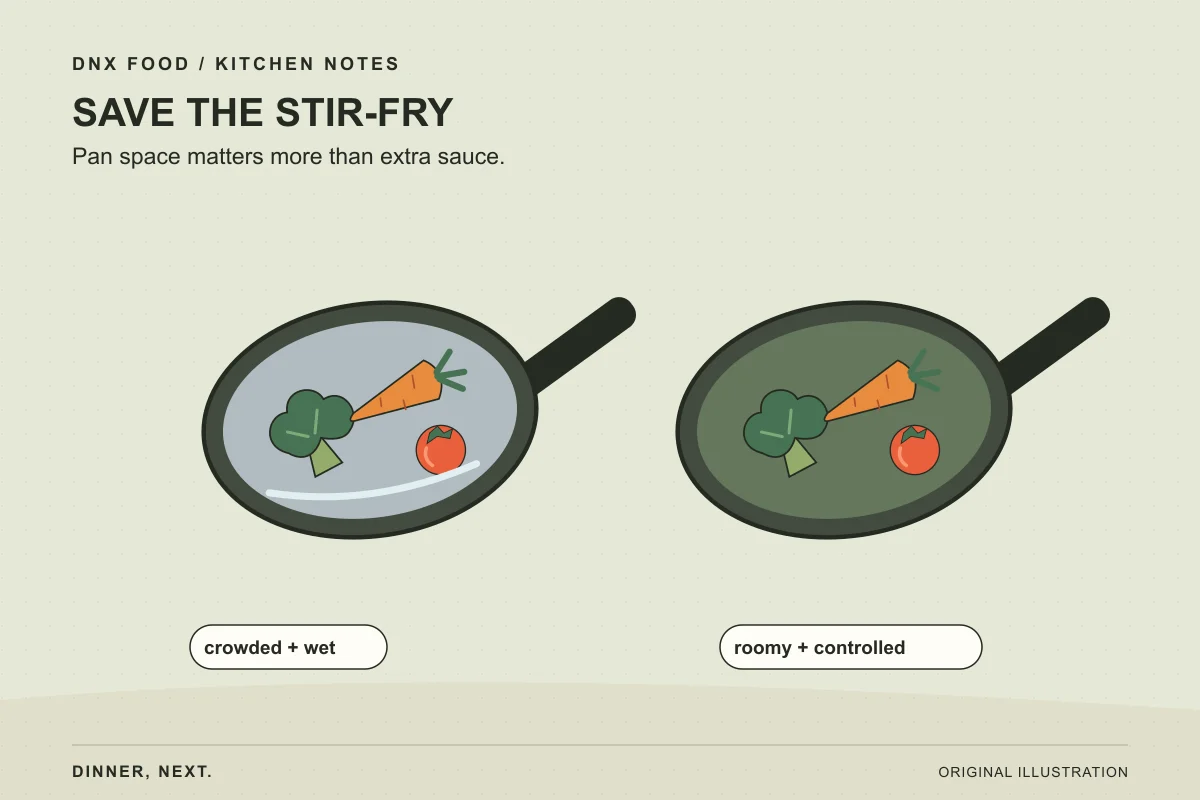
Sugar and lime can change your perception of the sauce, but they do not remove excess salt. Likewise, reducing a watery, heavily seasoned sauce makes its flavor more concentrated. If the pan is flooded, remove cooked vegetables while you decide how much of the liquid to retain. The watery stir-fry guide explains that recovery step.
Common questions
Can I leave fish sauce out entirely?
Sometimes, especially when it is a small finishing amount and other savory ingredients are present. Taste before deciding. A dipping sauce based mainly on fish sauce will need a new plan rather than simple omission.
Does Worcestershire sauce work?
It can suit some robust cooked dishes, but it adds a different sweet, sour, spiced direction. Many versions contain fish. Check the label and try a little in a sample before committing it to a delicate curry or dressing.
Should I add lime to soy sauce?
Only when the finished dish needs acidity. Lime changes the balance but does not reproduce fermented fish flavor. If the sauce already contains lime or vinegar, taste it before adding another acid.
Put it to work
Any-Vegetable Stir-Fry
A timing-first method that works with almost any mix of firm and tender vegetables.
Open the dinner blueprint →Browse ingredient substitutions
Illustrations by DNX FOOD. These guides explain adaptable cooking methods; they do not represent documented kitchen testing. How we make our guides · Suggest a correction