Smart swaps
Soy Sauce Substitute: Match the Bottle to Dinner
Choose a soy sauce substitute for stir-fry, fried rice, marinades, or dipping. Compare tamari, coconut aminos, fish sauce, and cautious starting amounts.
The useful answer
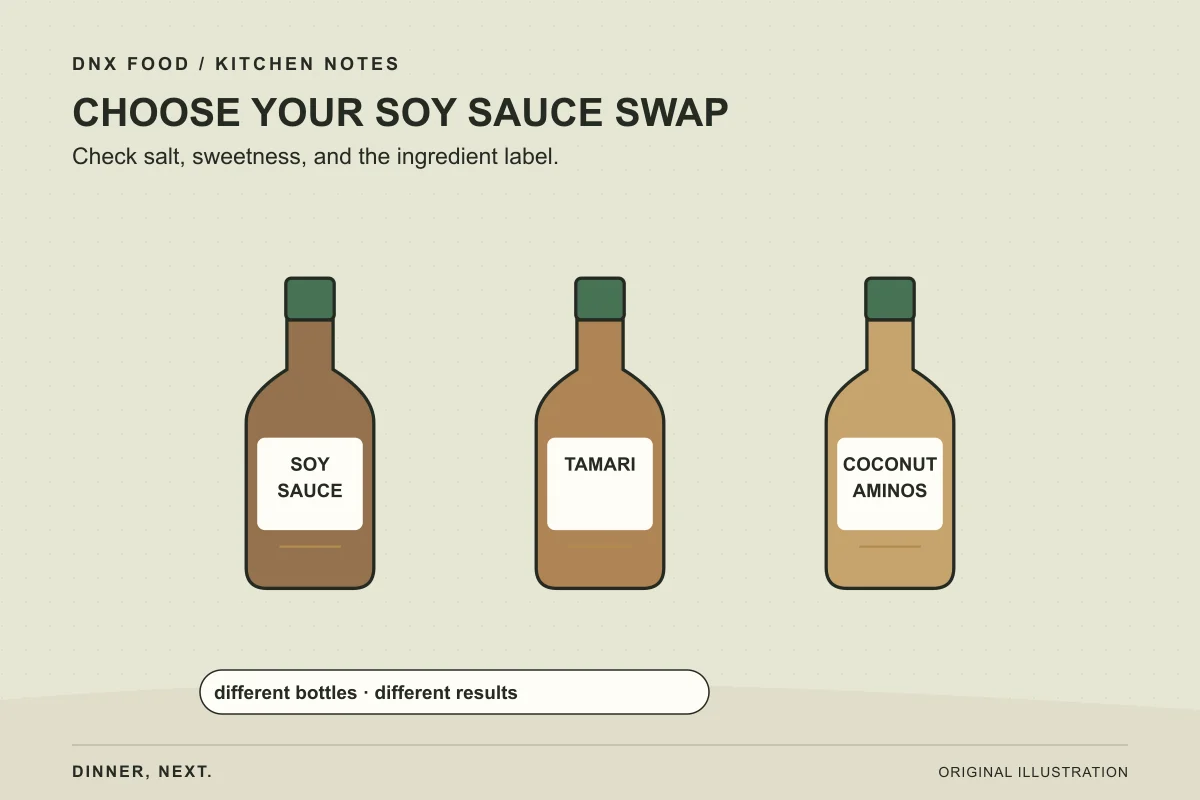
Tamari is a useful first option for ordinary soy sauce when soy is suitable. Start with slightly less, then taste. Coconut aminos changes sweetness and salt, while fish sauce changes aroma and requires a smaller starting amount.
A soy sauce substitute needs to fit both the dish and the reason you are replacing the bottle. An empty cupboard calls for a practical flavor adjustment. Avoiding wheat, soy, or a particular ingredient calls for a label check before the cooking decision.
Start by identifying the original product. This guide concerns ordinary all-purpose or light soy sauce in flexible dinner cooking. Dark soy sauce, sweet soy sauce, and reduced-sodium products have different roles. A tablespoon of each does not contribute the same color, sweetness, or saltiness.
Choose a starting amount
Use this table when a savory dinner calls for one tablespoon of ordinary soy sauce. Start cautiously, combine the sauce, and taste a bite of the food before deciding whether it needs the remainder.
| Alternative | Starting amount | Useful setting | Main limitation |
|---|---|---|---|
| Tamari | 2 teaspoons, then adjust | Fried rice, stir-fry, dipping | Contains soy; wheat and salt depend on the product |
| Coconut aminos | 2 teaspoons, then adjust | Mild bowls and vegetable sauces | Can be sweeter and less salty |
| Liquid aminos | Follow the label, starting below the full amount | Cooked savory sauces | Ingredients and sodium vary; many contain soy |
| Fish sauce | 1 teaspoon, then taste | Robust stir-fries and soups | Fish allergen and a distinct aroma |
| Miso loosened with water | A small spoonful made into a thin mixture | Saucy bowls and soups | Adds solids and cloudiness; contains soy in many versions |
The table is a tasting guide, not an exact equivalence between brands. Reduced-sodium soy sauce is another possible option if it meets your needs, though it may require a different amount for flavor. Do not interpret the words light soy sauce as a promise of lower sodium.
Tamari is often the closest pantry direction
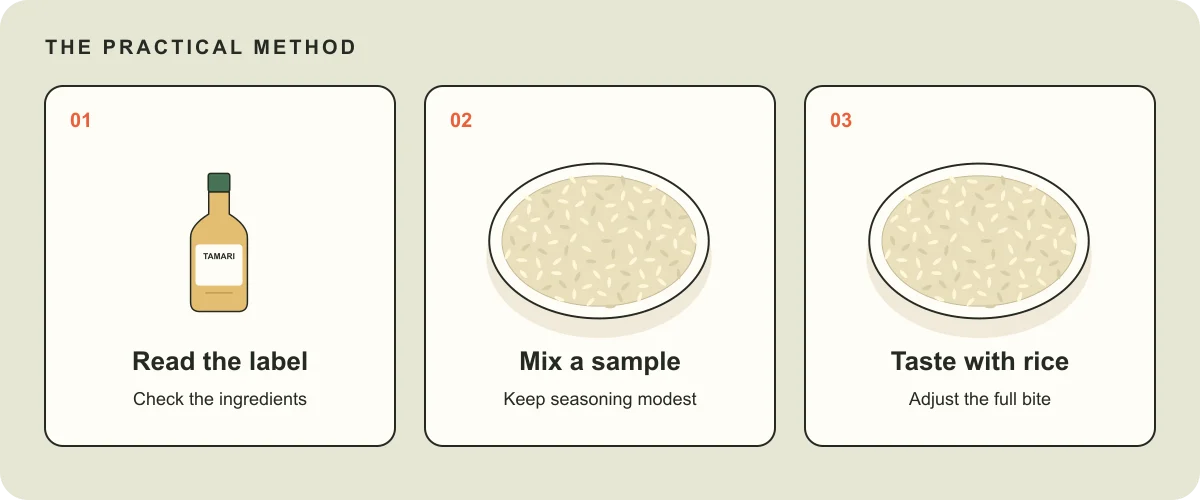
Tamari provides a fermented soy flavor that fits many dishes already designed around soy sauce. Try it first in a sauce mixture rather than pouring the full measured amount straight into hot rice. There is room to add more after tossing, but removing it is much harder.
For a dipping sauce, taste it with the dumpling, vegetable, or other food you plan to serve. Straight tamari can seem more forceful than a small amount spread across a whole bite. Water, vinegar, or another ingredient may already be part of the original dipping sauce, so finish that mixture before judging it.
Kikkoman’s gluten-free tamari lists soybeans and carries an explicit gluten-free designation. That illustrates why the bottle matters. The word tamari alone should not be your evidence that a product suits a gluten-free requirement, and it does not make a soy-based product suitable for avoiding soy.
Coconut aminos changes the balance
Coconut aminos is useful when its ingredient list fits your needs and its sweeter flavor suits the dish. Start with a small amount and assess both salt and sweetness. Adding more to chase saltiness may make the sauce sweeter than intended.
If the recipe includes sugar, honey, or sweet chili sauce, hold back part of that ingredient while you taste. You can then restore it if needed. This is especially helpful in a simple bowl dressing where each spoonful of seasoning is noticeable.
Read the nutrition and ingredient panels on your actual bottle. Do not assume every coconut-based seasoning has the same sodium level, or that a generic substitution meets a medical dietary target. Use the labeled product information for that decision.
Fish sauce needs a lighter hand
Fish sauce can provide strong savory seasoning, but its aroma moves dinner in a different direction. Use a smaller starting amount in a robust cooked dish and taste before adding more. It is especially conspicuous in a plain dipping sauce.
It also introduces fish. For example, Red Boat’s product label identifies anchovy. If you need a plant-based dinner, choose another option. For the reverse situation, the fish sauce substitution guide explains how soy sauce behaves when replacing fish sauce.
Avoid compensating for every difference at once. Adding fish sauce, sugar, vinegar, and extra salt in quick succession makes it difficult to identify the correction the meal actually needed. Mix and taste a small sample first.
Fried rice needs seasoning without extra water
When rice is already wet or clumped, a large splash of a thin substitute can make it harder to fry. Break up suitable cooked rice, work in manageable batches, and add enough seasoning to coat. Additional liquid is not a solution to a pan that needs more space.
Our eggs and rice guide helps choose between fried rice, a saucy topping, and other formats. Fresh soft rice may be happier under tomato eggs than being forced through a high-liquid fried-rice rescue.
Marinades and dressings need a complete taste check
Replace the soy sauce in a separate bowl before adding the mixture to raw ingredients. This lets you assess sweetness, acidity, and concentration while the mixture is still appropriate to taste. Once a marinade has contacted raw meat or fish, do not taste it as a seasoning sample.
Consider the quantity of the other liquids. A thinner substitute can change how a marinade clings, and a sweeter one can change how food browns. Keep heat under control and watch the surface rather than following the original timing blindly. For a dressing, test it on the intended vegetables or grains.
Common questions
Can salt and water replace soy sauce?
They can supply salty liquid, but they leave out fermented flavor and color. In a complex soup that may be enough to finish dinner. In a simple dipping sauce, choose a different sauce direction or obtain a suitable soy-style condiment.
Is dark soy sauce a direct replacement?
Check the label and recipe. It may add much more color or a different sweetness. Begin with a small amount rather than replacing ordinary soy sauce spoon for spoon.
What if the finished dish tastes flat?
Taste a representative bite before adding salt. It may need a little acid or a fresh topping instead. The rice vinegar guide helps adjust acidity separately from salty seasoning.
Put it to work
Fridge-Clearout Fried Rice
A fast framework for turning cooked rice, one egg, and a handful of vegetables into dinner.
Open the dinner blueprint →Browse ingredient substitutions
Illustrations by DNX FOOD. These guides explain adaptable cooking methods; they do not represent documented kitchen testing. How we make our guides · Suggest a correction