Cold rice + odds and ends15 min
Fridge-Clearout Fried Rice
A fast framework for turning cooked rice, one egg, and a handful of vegetables into dinner.
Dinner, next.
Skip the recipe rabbit hole. Pick a few ingredients and get a flexible, practical plan for tonight.
Built for real-life ingredients
02Flexible, not fussy
03No fake reviews or ratings
Use what you have
Pick at least one ingredient. We’ll rank flexible dinner ideas that make sense tonight.
Your best matches will appear here.
Flexible by design
Each blueprint gives you a reliable formula, a sensible order of operations, and swaps that keep dinner moving.
A fast framework for turning cooked rice, one egg, and a handful of vegetables into dinner.
A timing-first method that works with almost any mix of firm and tender vegetables.
Use starchy pasta water and a flavorful base to make a silky sauce from pantry staples.
A better way to decide
Choose the ingredients that need using, not the perfect picture you need to recreate.
We rank flexible ideas by ingredient match, time, and food preference.
Use clear formulas and substitutions to make the plan fit what is actually on hand.
The weeknight toolkit
Quick answers for the moment when a missing ingredient or unfamiliar measurement threatens the plan.
Smart swaps
Kitchen tools
Useful things to know
Ingredient ideas, sensible substitutions, and fixes for the things that go wrong halfway through cooking.
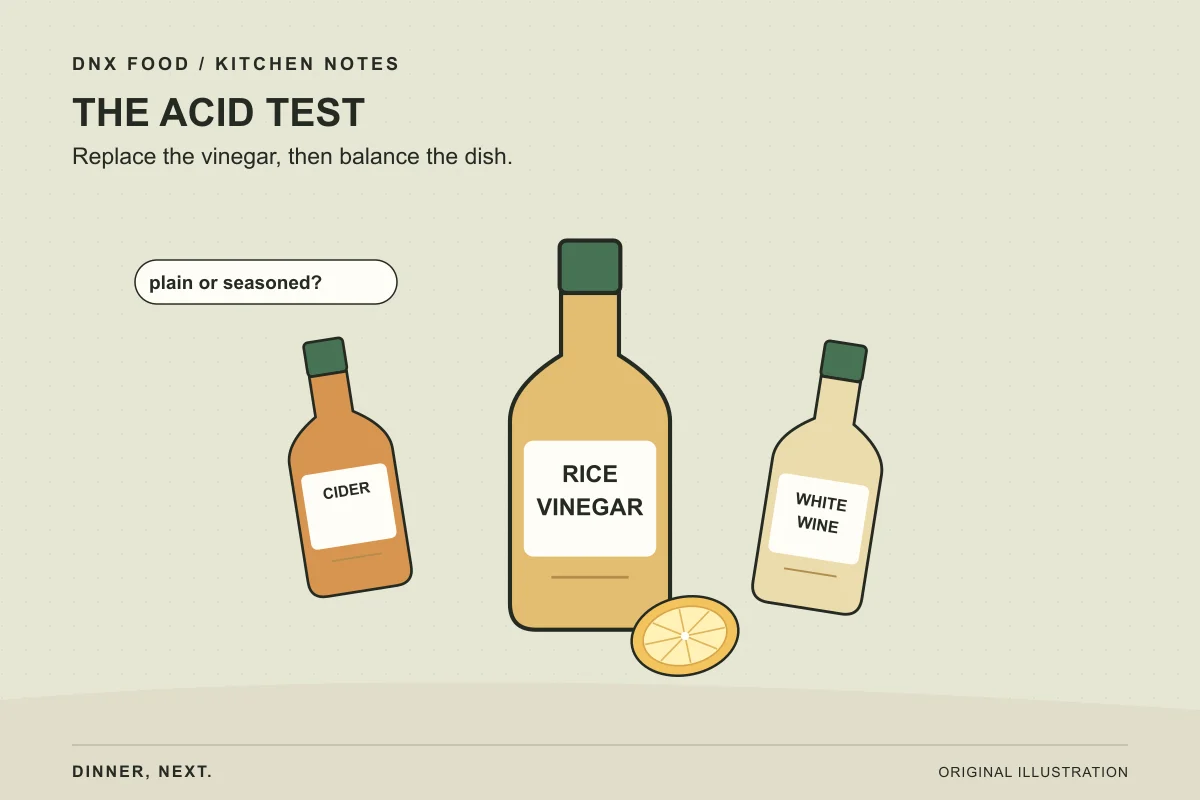
Choose a rice vinegar substitute for dressings, sauces, and dinner bowls. Learn when to use white wine vinegar, cider vinegar, citrus, or seasoned rice vinegar.
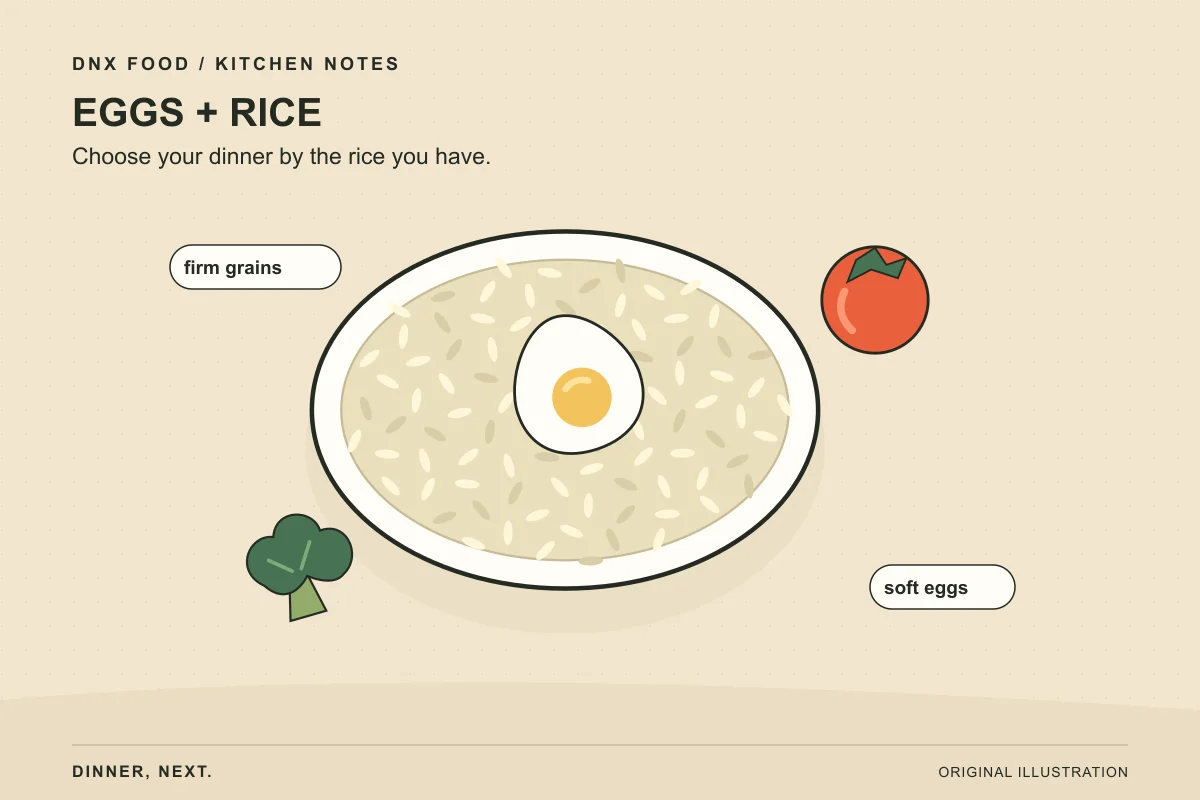
Read the guideChoose fried rice, a tomato-egg bowl, crispy rice, egg-drop soup, or a rice omelet based on the rice you have and the texture you want.
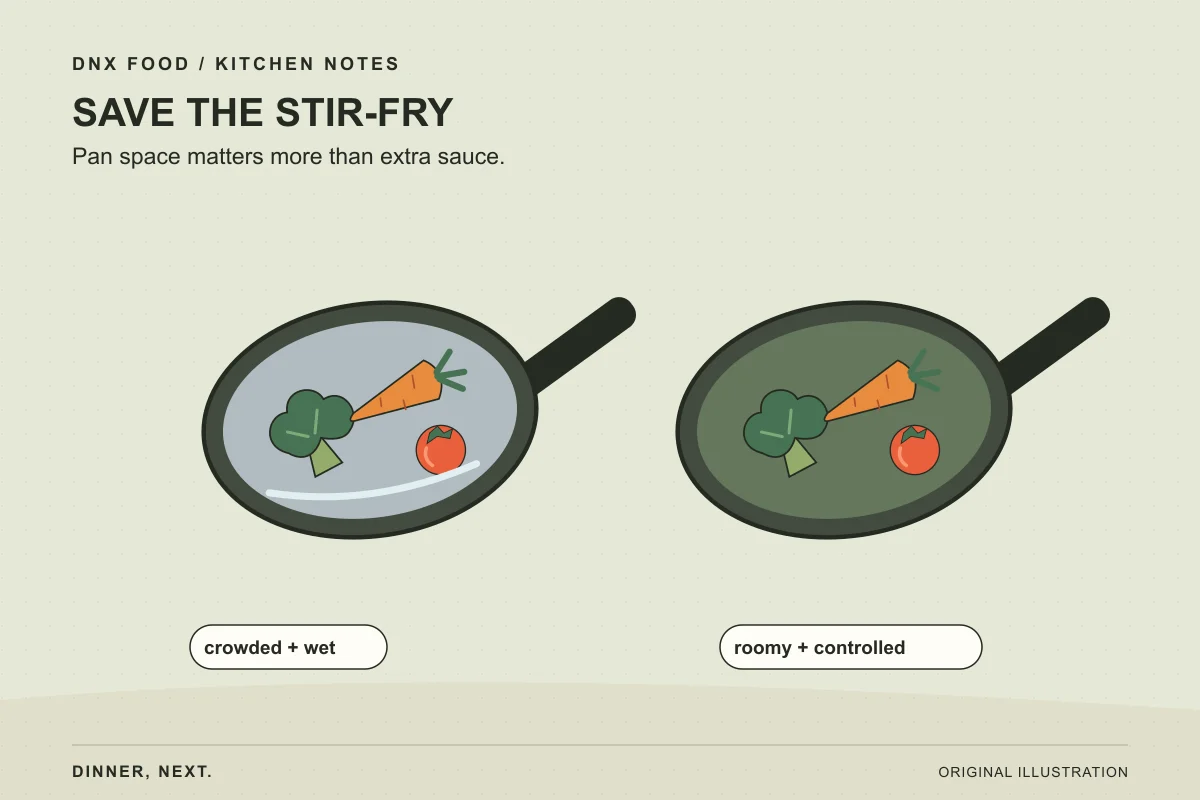
Read the guideDiagnose a crowded pan, wet vegetables, frozen ingredients, or too much sauce. Rescue a watery stir-fry without overcooking the vegetables.
Read the guideStart with the food that needs a job tonight. Choose a base such as rice, noodles, potatoes, or bread, then something substantial such as eggs, beans, or tofu. Add vegetables and a sauce or finishing ingredient that makes the combination pleasant to eat. You do not need every component in equal amounts. A small quantity of chickpeas may fit toast more comfortably than a large skillet, while a generous bowl of vegetables can become the main part of a noodle dinner.
Select the ingredients you actually want to use, then choose your available time and food preference. The matcher ranks our existing blueprints by overlapping ingredients and the filters you select. Open a result to see the full formula and cooking order. A match gives you a place to start, so check the ingredient list, swaps, and method against your own kitchen before heating the pan. If the results are narrow, a longer time allowance or another ingredient may give you a more useful direction.
Freshly cooked rice works well underneath a saucy topping, while firm, safely stored rice can suit frying. Tomatoes and eggs make a useful topping when you keep enough tomato juice to moisten the bowl. If the rice is soft, choose a spoonable meal instead of forcing the grains to separate. Our rice, eggs, and tomatoes plan compares those decisions. For a wider choice, see dinner ideas with eggs, including a skillet, an omelet, and a bowl.
A can of chickpeas can become a warm topping, a rough mash, or part of a sauce. Canned tuna can fit pasta, toast, or a rice bowl depending on the rest of dinner. Frozen vegetables are useful when you choose a method that accounts for the water they release. Soup can absorb that liquid more comfortably than a crowded frying pan. Browse all ingredient dinner plans to choose a format, then use the linked guides for the cooking details.
Choose a substitute for the job it needs to do. Soy sauce supplies salty seasoning, vinegar supplies acidity, and a thickener changes texture. Replacing several bottles together can move the dish in a new direction, so mix a small sample and taste it with the intended food. The ingredient substitutions reference links detailed comparisons for sauces, dairy products, coatings, and baking ingredients. Check the limits as well as the suggested amount, especially when a recipe depends on whipping, setting, or a particular leavening method.
A dry bowl may need moisture or a juicy topping. A flooded skillet may need less liquid and more space. Adding more bottled sauce can make a watery meal saltier without solving its texture. Set aside food that is already cooked while you assess the remaining liquid, then combine only what the dish needs. Our stir-fry troubleshooting guide and sauce-thickening guide help choose a practical correction before dinner becomes overcooked.
If a recipe uses half the cabbage or part of a container, give the rest another destination. Keep a suitable portion undressed or lightly seasoned so it can fit a different meal. Write down what remains and follow the ingredient's storage instructions. Cooked rice needs a specific cooling and storage plan, or you can cook it fresh for the next dinner. The shared-ingredient dinner plan shows how the same groceries can become a bowl, curry, and toast while changing method and texture.
Open the fridge