Smart swaps
Heavy Cream Substitute: Cooking, Baking, and Whipping
Choose a heavy cream substitute for pasta, soup, curry, or baking. Compare half-and-half, evaporated milk, yogurt, and coconut cream, including whipping limits.

The useful answer
For flexible sauces and soups, try evaporated milk, half-and-half, or a suitable unsweetened cream alternative, adding gradually. Whipped toppings and set desserts need a product or recipe designed for that job. Milk with butter is a cooking mixture, not dependable whipping cream.
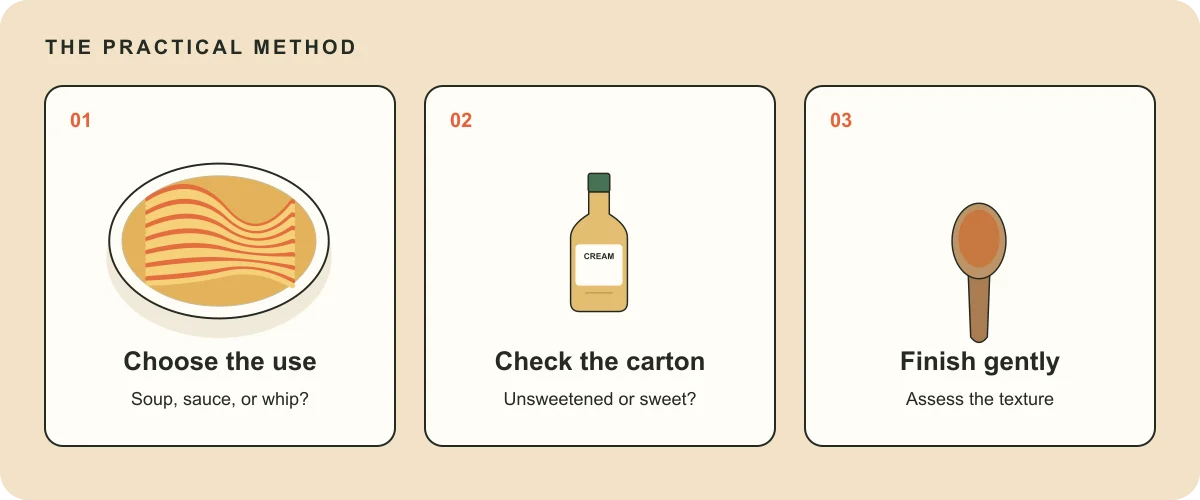
An empty cream carton can mean several different kitchen problems. A soup may only need a little richness. Pasta needs a sauce that coats. A whipped topping needs enough structure to hold air. Choose the replacement for that particular job before deciding how much to pour.
In a flexible savory dish, there is room to adjust liquid and texture as you cook. A cake formula, ganache, ice cream, or set dessert gives you much less room. For those, use substitution guidance from the original recipe or choose a version developed with the ingredient you have.
Compare the practical options
| Substitute | Where to consider it | Starting approach | Main difference |
|---|---|---|---|
| Evaporated milk | Soup and some savory sauces | Add a little less than the called-for cream, then assess | Less richness and a cooked-milk flavor |
| Half-and-half | Gentle pan sauces and soup | Add gradually near the finish | Thinner and less rich |
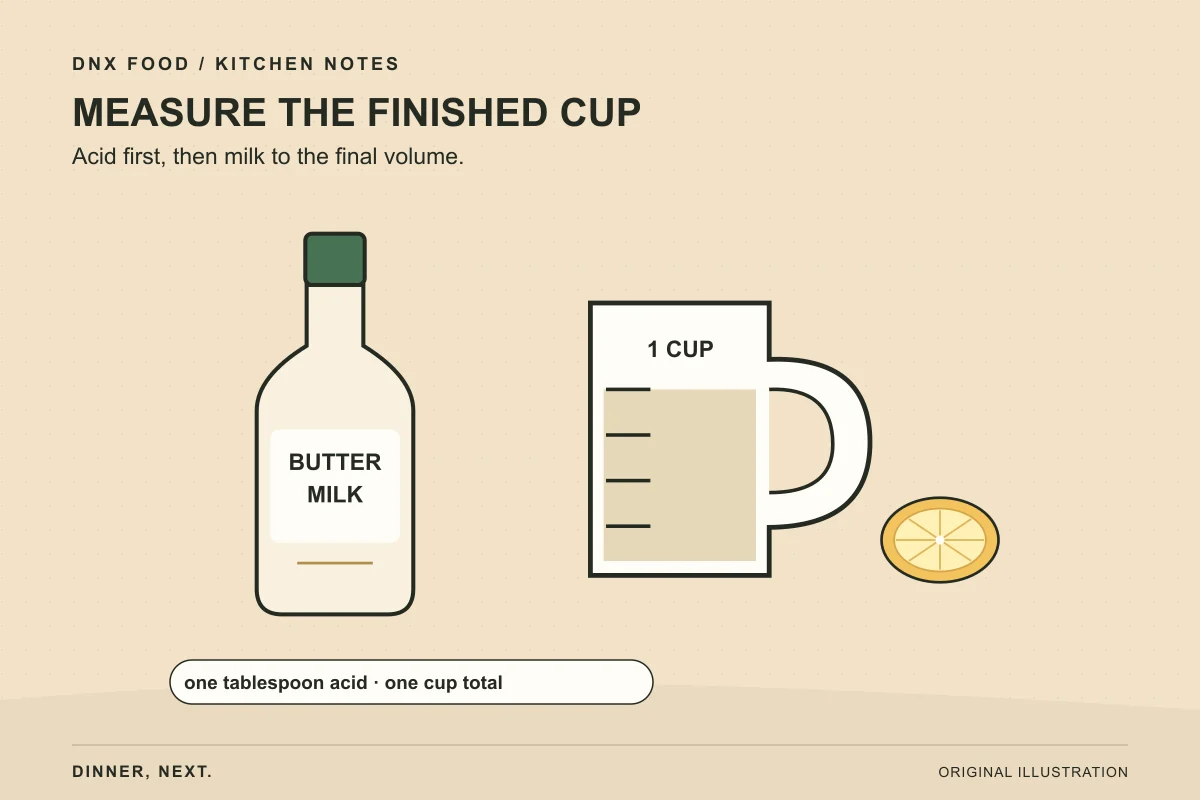
| Whole milk with butter | Some cooked sauces | Use a method designed for the mixture | Adds fat but may remain thin or separate |
| Plain yogurt | Tangy sauces and curry | Temper, then add gently over low heat | More acidity and a risk of splitting |
| Unsweetened coconut cream | Coconut-friendly soups and curries | Loosen with water as needed | Distinct coconut flavor |
| Unsweetened plant cooking cream | Dishes compatible with its ingredients | Follow product directions | Thickness and heat stability vary |
These are choices for adaptable dinner cooking, not interchangeable formulas for every recipe. Land O’Lakes’ ingredient reference describes cream and other dairy products, while its half-and-half guidance explains limits in whipping and high-fat applications.
Pasta needs coating as well as richness
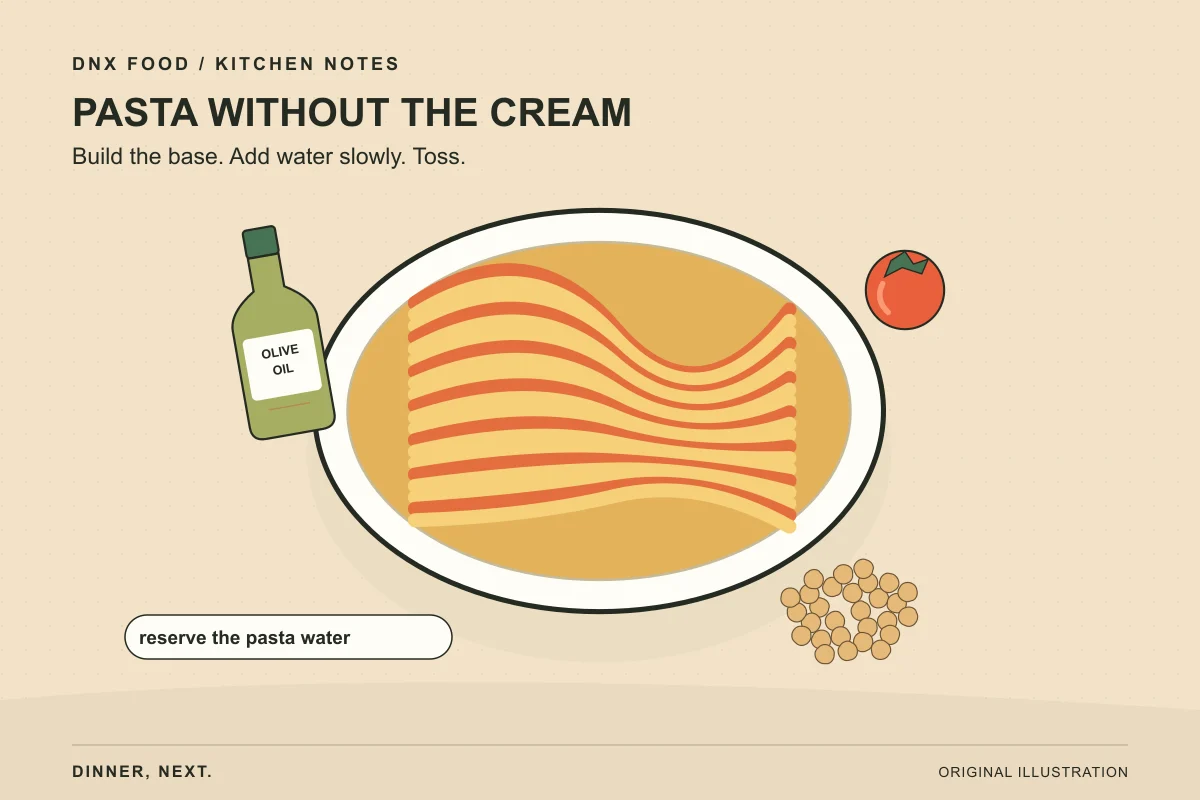
Milk or half-and-half poured over drained pasta can leave a thin puddle. Build the sauce base first, then combine the pasta and sauce while there is room to adjust. Add additional liquid in small amounts and toss until the coating suits the meal.
If you have evaporated milk, use the unsweetened product and read its label. Sweetened condensed milk is a different ingredient and would change a savory sauce dramatically. Start below the original cream quantity so the sauce does not become too loose before you judge it.
You can also choose a different sauce altogether. Mashed white beans, tomato, vegetables, cheese, or an oil-based emulsion each gives pasta its own character. Our pasta sauce without cream guide explains those methods when copying the cream sauce is less practical than changing direction.
Soup gives you more room to adjust
Taste the cooked soup base before enriching it. You may need less substitute than the recipe’s cream quantity if the vegetables already provide thickness. Blend an appropriate portion of the soup if you want more body, then add your chosen dairy or plant-based ingredient gradually.
A lighter substitute can make a soup feel less rich even when the consistency looks right. A little butter or oil may suit some soups, but adding fat is a separate decision from adding liquid. Test a small bowl first instead of repeatedly correcting the entire pot.
If the soup is already thin and strongly seasoned, reduction can make the seasoning too concentrated. The sauce-thickening guide discusses alternatives such as vegetable puree or mashed beans. Choose a method that fits the soup’s flavor and appearance.
Yogurt needs a gentler finish
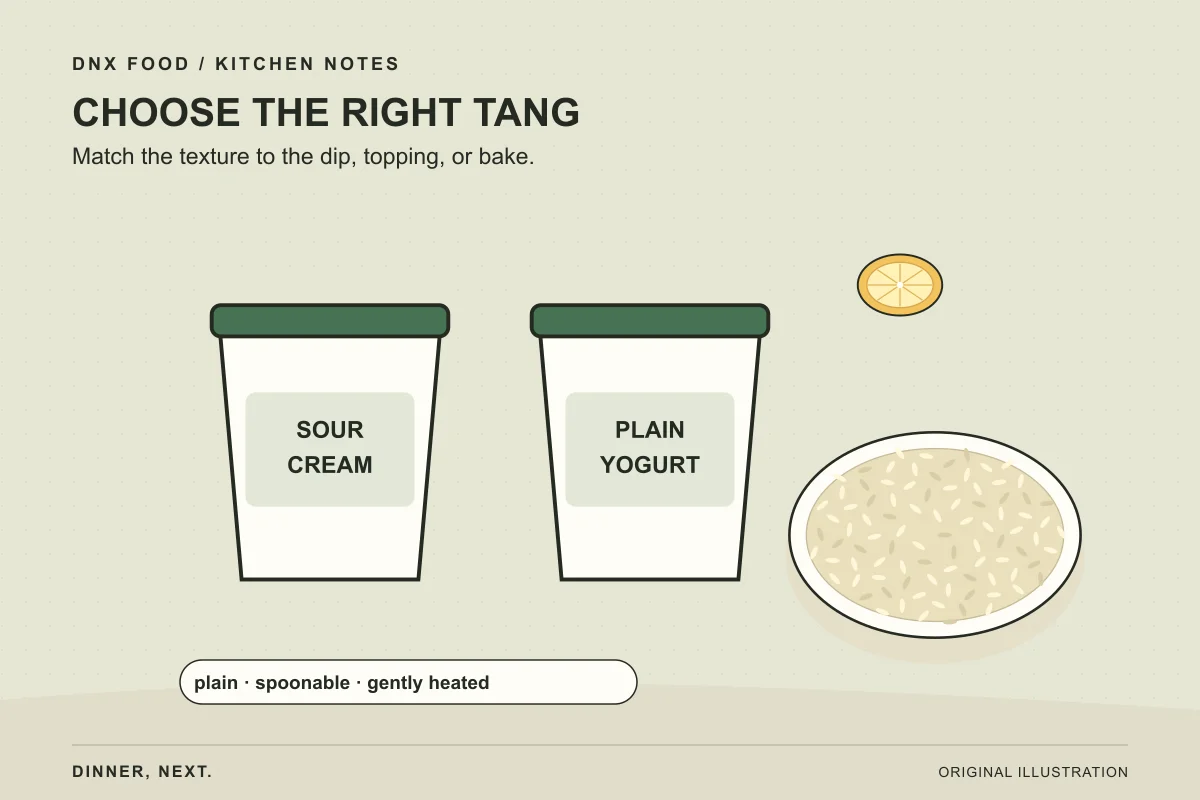
Plain yogurt can add body and an appealing tang to a curry or sauce, but that acidity affects the rest of the seasoning. Hold back part of any lemon or vinegar until the yogurt is combined and you have tasted the finished sauce.
Lower the heat. In a separate bowl, loosen the yogurt with a little warm sauce, then gradually stir it into the pan. Avoid a hard boil. Tempering reduces the temperature jump, though the particular yogurt and sauce still affect whether it stays smooth.
If it becomes grainy, stop increasing the heat in an attempt to fix it. Taste and assess the result. A sauce may remain pleasant to eat with a less polished appearance, but more acid or aggressive boiling can make the texture harder to manage.
Dairy-free choices have different flavors
Unsweetened coconut cream works when coconut belongs in the dish. Check that you have unsweetened cream rather than a sweetened cocktail product. Dilute gradually if the sauce becomes too heavy. The coconut milk curry guide compares coconut products and other curry bases.
Plant cooking creams can be convenient, but read the ingredient list, sweetness information, and heating directions. An oat-based product and a nut-based product can have different flavors and dietary implications. A carton sold as a drink may be much thinner than a cooking cream.
If you are using a replacement because of an allergy or dietary requirement, select the product on that basis first. A generic dairy-free description does not resolve every ingredient or cross-contact concern. Use the product’s own labeling for the relevant decision.
Whipping and desserts need a separate plan
Half-and-half and ordinary milk are unreliable replacements when a recipe asks you to whip heavy cream. Combining milk and butter may restore some richness for cooking, but it does not automatically reproduce cream’s whipping behavior. Choose a product explicitly intended to whip and follow its chilling instructions.
Some coconut products can make a coconut-flavored whipped topping, but texture varies by formulation. Use a recipe developed for that product. For ganache, ice cream, or a set filling, changing fat and water can affect the final structure. Those applications deserve specific recipe guidance rather than the sauce table above.
Common questions
Can I use ordinary milk in soup?
Often you can make a lighter version, but add gradually and assess thickness. It contributes more liquid relative to richness, so you may need less or a different source of body.
Is heavy whipping cream the same as a plant whipping product?
Check the ingredient list and directions. Products intended for similar uses can have different fat sources, sweetness, and handling requirements. Use the instructions for the actual carton.
What if the replacement sauce is too thin?
Pause before adding more dairy. Assess whether you need less water, more solids, or a suitable thickener. Our cornstarch replacement guide helps choose a thickening ingredient when that is the missing function.
Put it to work
Creamy Pantry Pasta
Use starchy pasta water and a flavorful base to make a silky sauce from pantry staples.
Open the dinner blueprint →Browse ingredient substitutions
Illustrations by DNX FOOD. These guides explain adaptable cooking methods; they do not represent documented kitchen testing. How we make our guides · Suggest a correction