Smart swaps
Buttermilk Substitute for Pancakes, Baking, and Dressings
Make a buttermilk substitute with milk and lemon juice or vinegar, or choose plain yogurt. Includes amounts, texture differences, baking limits, and dressing advice.
The useful answer
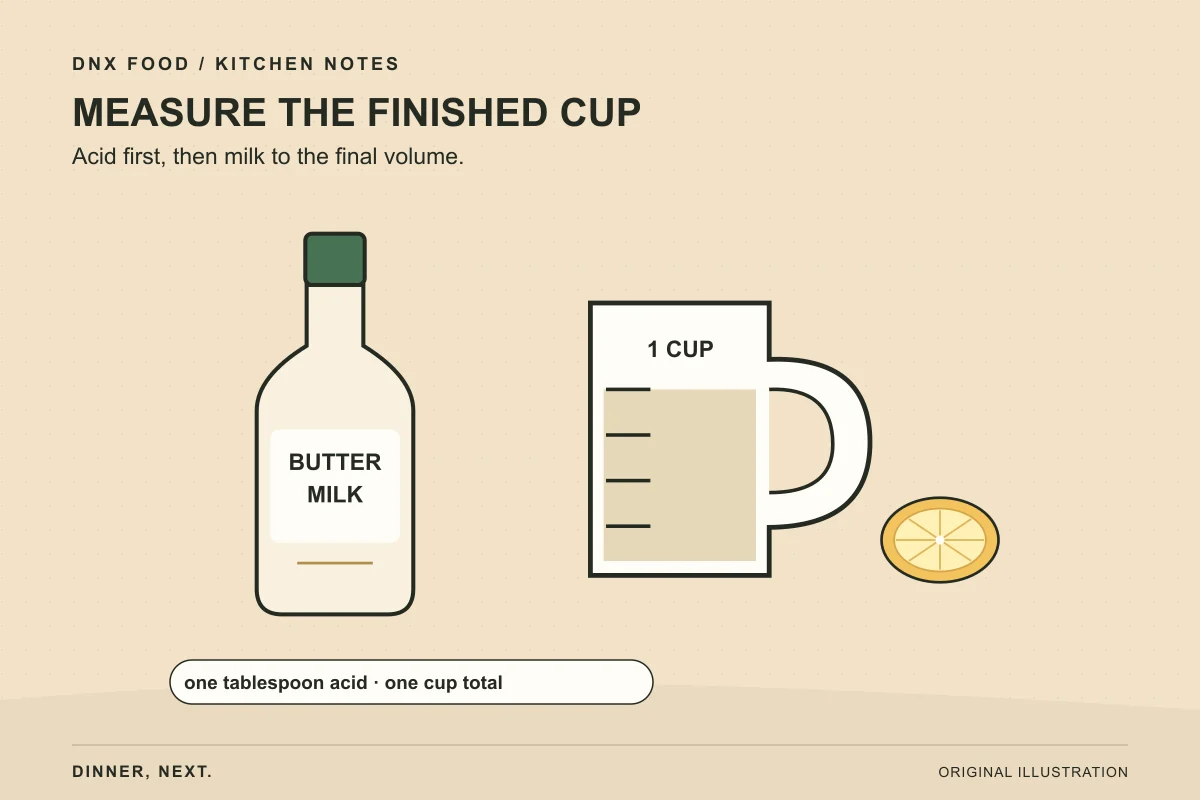
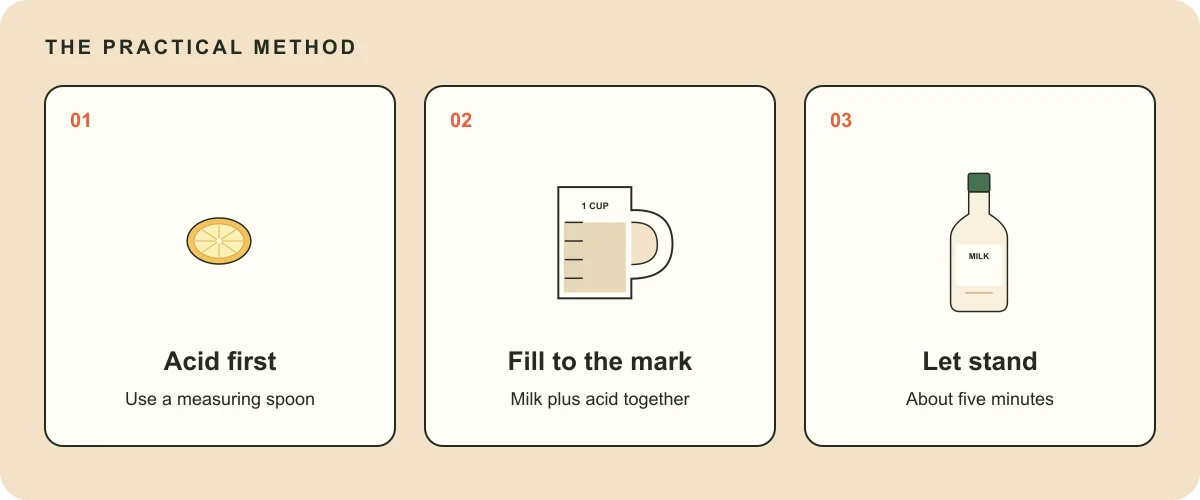
For one US cup, put one tablespoon of lemon juice or white vinegar in a measuring cup and add milk to the one-cup mark. Let stand about five minutes. Plain yogurt is another option, with thickness adjusted to the recipe.
The recipe needs buttermilk, and there is ordinary milk in the refrigerator. A milk-and-acid mixture can be useful, especially when the recipe allows a substitution. It helps to measure the final mixture correctly and notice whether the original recipe expected a thick cultured dairy ingredient or a relatively thin liquid.
The amount below uses US measuring cups and spoons. It is a pantry substitution for a recipe that can accommodate a change. For a bake where buttermilk flavor and texture are central, check the recipe’s own notes before replacing it.
How to make one cup of substitute
Put one tablespoon of lemon juice or white vinegar into a liquid measuring cup. Add milk until the combined liquid reaches one US cup. Stir and let stand for about five minutes, then use as directed by your recipe.
This measurement is supported by Land O’Lakes’ common baking substitutions. The important measuring detail is that the milk and acid together make the requested cup. Adding a tablespoon of acid to a full cup of milk gives you extra liquid.
| Amount the recipe needs | Lemon juice or white vinegar | Add milk until the total reaches |
|---|---|---|
| 1/4 US cup | 3/4 teaspoon | 1/4 US cup |
| 1/2 US cup | 1 1/2 teaspoons | 1/2 US cup |
| 1 US cup | 1 tablespoon | 1 US cup |
| 2 US cups | 2 tablespoons | 2 US cups |
Use level measuring spoons and read the liquid mark at eye level on a flat surface. For a small batch, accuracy is easier if you prepare the amount required instead of trying to estimate a few drops of acid in a bowl of milk.
What to expect from milk and acid
The mixture may look slightly thickened or separated after standing. It may also remain much thinner than the cultured buttermilk you usually buy. That difference matters when batter consistency or a thick dressing is part of the goal.
Stir the mixture before measuring it into the recipe. Do not keep adding lemon juice simply because it does not resemble the bottle you remember. More acid changes the flavor and the formula, and it is not a reliable way to manufacture the original product’s body.
King Arthur’s comparison of buttermilk alternatives is useful when deciding between acidified milk and a yogurt-based option. Our guide uses those ingredient distinctions to help you choose a method, without claiming that we have repeated the publisher’s baking tests.
Plain yogurt gives you another texture option
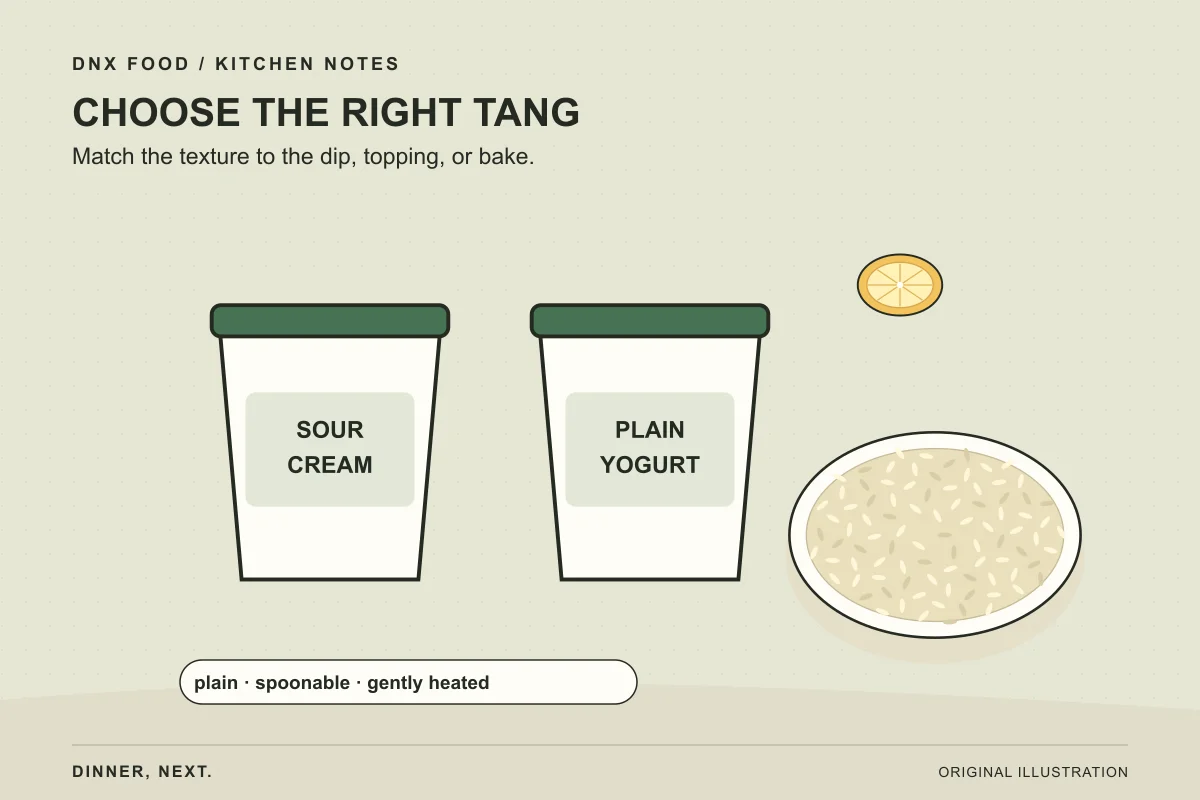
Plain unsweetened yogurt can work when a thicker cultured dairy ingredient fits the recipe. Assess the yogurt before adding it. A loose regular yogurt and a dense strained product may need different handling to reach a similar pouring consistency.
If using a thick yogurt in a recipe that expects pourable buttermilk, loosen a measured amount gradually with suitable milk following the recipe’s guidance. Account for the total volume. Avoid pouring extra liquid directly into finished batter while trying to fix a dairy substitution after the fact.
Keep the flavor plain. A vanilla or sweetened yogurt changes more than consistency. If sour cream is what you have instead, the sour cream substitution guide explains how its thicker role differs from a liquid ingredient.
Pancakes and quick breads need a consistent plan
Prepare the substitute before combining the wet and dry ingredients. Have the pan or oven ready as the recipe directs, then mix and cook on the intended schedule. It is easier to manage one planned substitution than to improvise while the batter waits.
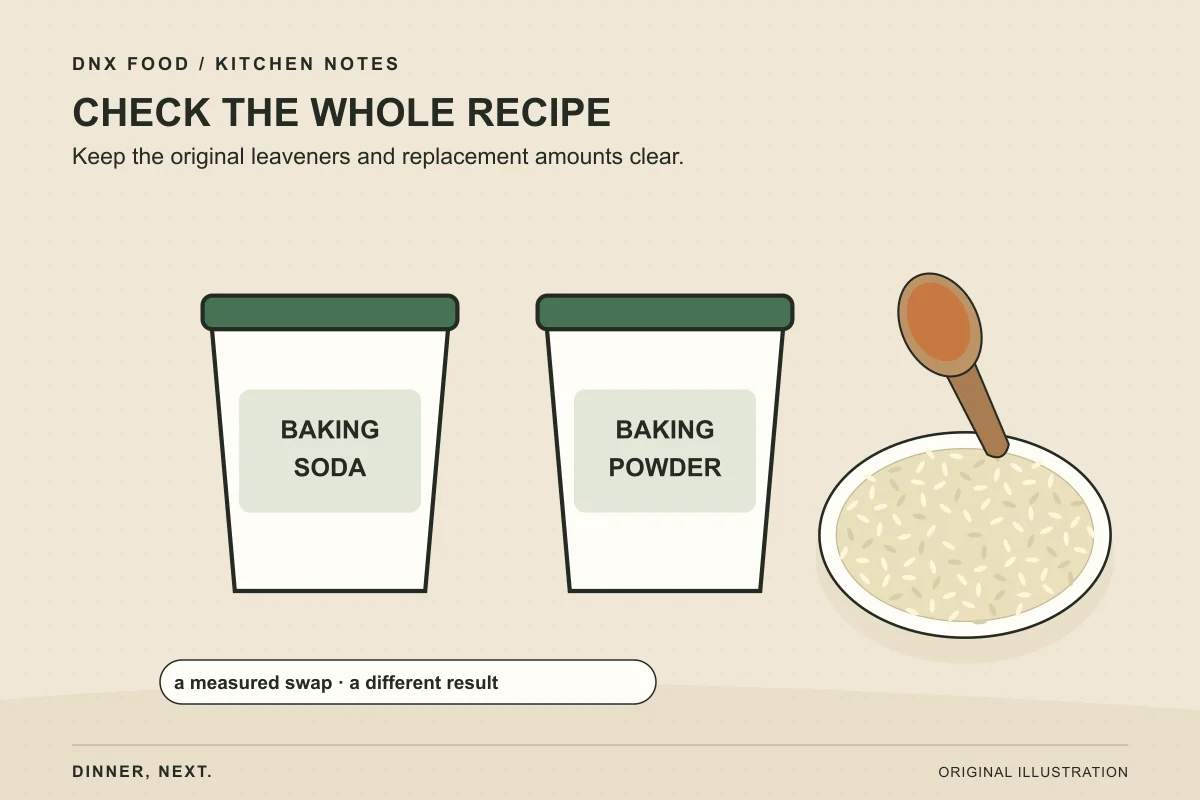
If the recipe contains both baking powder and baking soda, retain those measurements unless it gives a specific substitution instruction. The dairy replacement is already one change. Adjusting leaveners as well can affect the final bake in several ways.
Do not judge a replacement by whether raw batter tastes more or less tangy. Follow the recipe and assess the cooked result. For a family favorite you bake often, note the product and method you used so the next attempt starts from something concrete.
Biscuits and cakes deserve their own recipe notes
In a biscuit dough, a thinner liquid can change handling. In a cake, the dairy sits within a larger balance of fat, sugar, flour, and eggs. A recipe developed for yogurt or ordinary milk may be the better choice when your ingredients differ substantially.
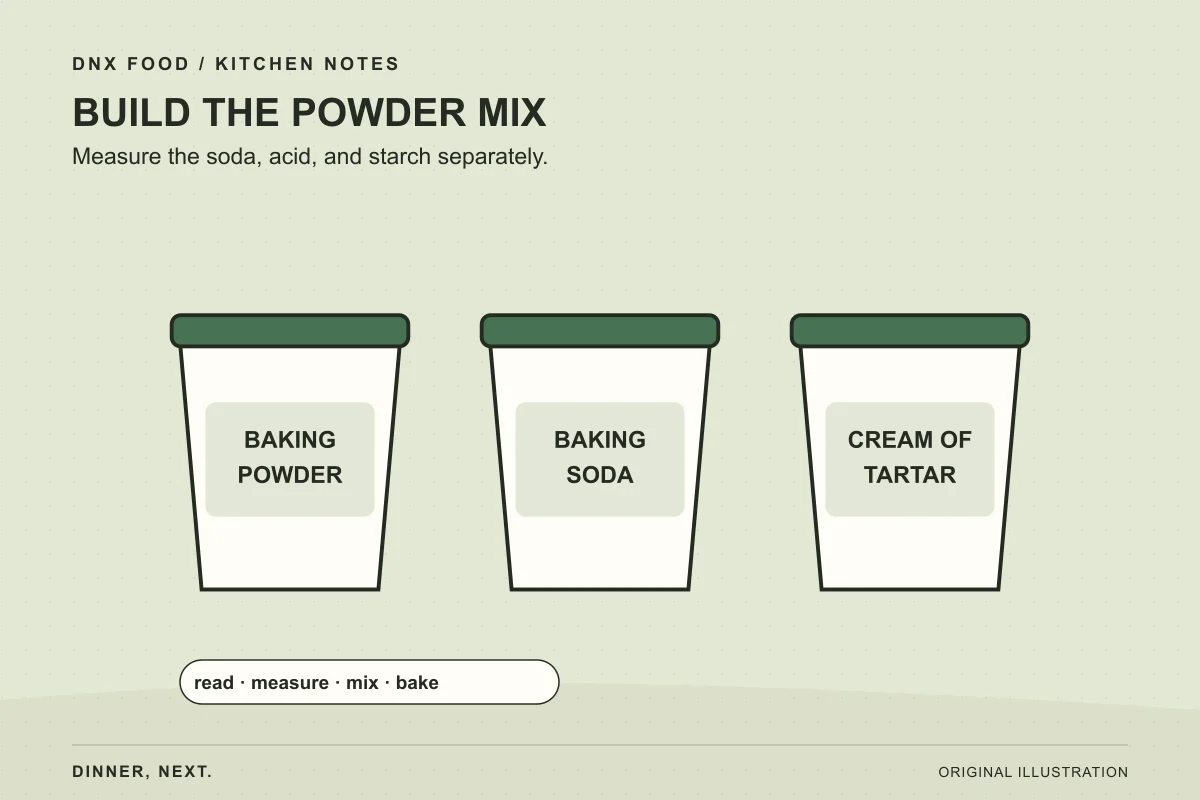
If you also need a leavener replacement, read the baking powder guide or baking soda guide before mixing. Keep the two substitutions visible in your plan rather than assuming that every acidic ingredient and every white powder can replace one another.
Dressings and savory uses are easier to taste as you go
For a cold dressing, the required thickness may matter more than a precise imitation of buttermilk. Plain yogurt loosened gradually can provide a creamy starting point. Add herbs and seasoning, then try it on the vegetables or other food you intend to serve.
Acidified milk may make a much thinner dressing. Decide whether that suits the dish before adding a large amount. If a recipe needs a thick coating for another cooking step, use its own substitution advice, since a pouring dressing and a coating mixture have different requirements.
Common questions
Can I use plain milk alone?
Use a recipe designed for milk when possible. Buttermilk contributes acidity as well as liquid, and that can interact with the leavener. Replacing it with milk while keeping every other ingredient unchanged may alter the result.
Is this a way to use spoiled milk?
Use fresh, properly stored milk for the mixture. Adding acid for a planned substitution does not establish the safety of dairy with an uncertain history. Follow the milk’s storage instructions and applicable food-safety guidance.
Should I make extra and keep it?
For a one-off bake, preparing only the amount needed keeps measuring and storage simple. Keep dairy refrigerated appropriately while you organize the recipe. Follow product instructions for the milk or yogurt you use rather than assigning the mixture a new storage period.
Browse ingredient substitutions
Illustrations by DNX FOOD. These guides explain adaptable cooking methods; they do not represent documented kitchen testing. How we make our guides · Suggest a correction