Smart swaps
Baking Powder Substitute: What to Mix and When to Use It
Replace baking powder with a measured baking soda and cream of tartar mixture. Learn the ratio, mixing timing, baking limits, and options without cream of tartar.
The useful answer
For one teaspoon of baking powder, combine 1/4 teaspoon baking soda, 1/2 teaspoon cream of tartar, and 1/4 teaspoon cornstarch or tapioca starch. Prepare the pan first and bake promptly after mixing the wet batter.
An empty baking powder tin is easiest to handle before the wet and dry ingredients meet. Check the recipe, the amount it needs, and the powders you actually have. If baking soda and cream of tartar are available, you can prepare a small measured replacement. If either is missing too, choose a plan for that specific recipe before mixing.
The purpose is to help a suitable home bake proceed with a clear substitution. Cakes, biscuits, pancakes, and other batters do not all respond identically to a change in leavener. Keep any instructions supplied by the recipe ahead of generic cupboard advice.
The measured replacement
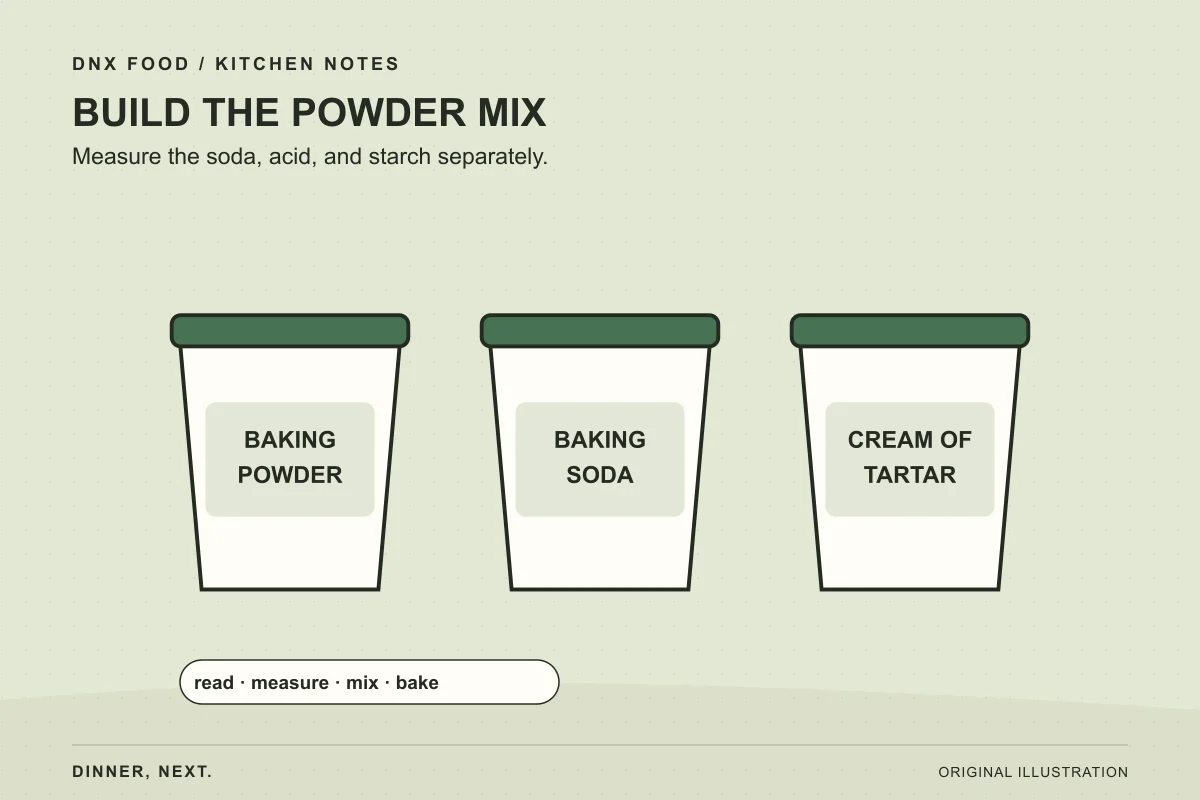
For one teaspoon of baking powder, combine 1/4 teaspoon baking soda, 1/2 teaspoon cream of tartar, and 1/4 teaspoon cornstarch or tapioca starch. Mix the powders thoroughly so the small quantities are distributed evenly.
King Arthur’s leavener substitution guide provides this formulation. The table below scales that same mixture. Use measuring spoons, and keep teaspoons and tablespoons distinct when reading the original recipe.
| Baking powder called for | Baking soda | Cream of tartar | Cornstarch or tapioca starch |
|---|---|---|---|
| 1 teaspoon | 1/4 teaspoon | 1/2 teaspoon | 1/4 teaspoon |
| 2 teaspoons | 1/2 teaspoon | 1 teaspoon | 1/2 teaspoon |
| 3 teaspoons | 3/4 teaspoon | 1 1/2 teaspoons | 3/4 teaspoon |
Make the amount needed for the recipe. Small-batch preparation reduces the chance of returning an unlabeled homemade mixture to a cupboard where someone may mistake it for another powder. Keep the ingredient packets available until the measuring is complete.
Why baking soda needs a partner
Baking soda supplies the alkaline component. Cream of tartar supplies acid in this mixture. The starch is included in the measured formulation. Plain baking soda alone does not supply the same combination as baking powder.
This is why swapping equal spoonfuls can give a disappointing result. A recipe may contain acidic ingredients already, but their presence does not establish that they can support an arbitrary new amount of soda. Their quantity and the rest of the formula matter.
If the recipe calls for baking soda instead, use the separate baking soda substitution guide. Keeping the direction of the substitution clear helps prevent a common mistake when the names look so similar on a shopping list.
Prepare the oven or pan before the batter
Commercial double-acting baking powder and a freshly combined soda-and-acid mixture do not follow exactly the same working schedule. Have the oven preheated, the baking pan prepared, and the ingredients measured before combining the wet batter. Follow the recipe’s instructions for cooking promptly.
For pancakes, have the griddle or skillet ready before you mix. For a cake, avoid completing the batter while you are still searching for the correct pan. A replacement that depends on a prompt move to cooking is easier to handle when the surrounding tasks are already finished.
If the original recipe specifically asks for a long batter rest, overnight refrigeration, or another delay, check whether its author allows this substitute. A formula developed with double-acting baking powder may rely on behavior that the pantry mixture does not reproduce.
What if cream of tartar is missing?
Do not pour lemon juice or vinegar into a dry recipe without accounting for the added liquid and the rest of the formula. An acidic liquid can have a role in a recipe designed around it, but that requires more information than the number of teaspoons of baking powder on the ingredient list.
Look for a recipe developed with baking soda and the acidic ingredient you have, or obtain baking powder before starting. If the recipe author gives a specific conversion, follow that complete instruction, including any liquid adjustment. Avoid combining parts of two unrelated substitution tables.
For background on the ingredient itself, King Arthur explains cream of tartar and its different baking uses. Cream of tartar and cream from the refrigerator have entirely different roles despite sharing a word in their names.
Check whether the recipe uses both leaveners
Some recipes ask for both baking soda and baking powder. Write down each original amount. Replace only the missing baking powder portion with the measured mixture, while retaining the separately specified soda unless the recipe says otherwise.
It helps to keep two small bowls or a written checklist while measuring. The soda inside the replacement belongs to the missing powder portion. The recipe’s original soda remains another ingredient. Treating the mixture as if it replaced every leavener on the page can leave you short or lead to a double addition.
If buttermilk or sour cream is missing as well, check the buttermilk guide or sour cream guide. Multiple changes deserve particular care because the dairy may contribute acidity and affect batter consistency.
Avoid changing the whole formula at once
Keep the flour, sugar, fat, eggs, and pan size as the original recipe specifies when making a permitted leavener substitution. This gives you a better chance of understanding the final result. Changing several ingredients makes troubleshooting much less clear.
Use the recipe’s doneness cues and appropriate cooking guidance rather than assuming the original minute count settles every question. Pan material, batter depth, and the appliance also affect the bake. Record the substitution if it is a recipe you intend to make again.
Common questions
Can cornstarch replace baking powder by itself?
Cornstarch supplies no equivalent leavening action. In the mixture above, it accompanies the soda and acid. The cornstarch substitute guide explains its separate jobs in sauces, coatings, and baking.
Is yeast a useful direct substitute?
Use a recipe developed for yeast. Its method and timing differ, and adding it to a quick batter does not supply a straightforward spoon-for-spoon replacement for baking powder.
What if my baking powder is simply old?
Check the package date and storage history. King Arthur’s freshness guide gives appropriate tests for labeled leaveners. Replace an ineffective product before committing an important bake to it.
Browse ingredient substitutions
Illustrations by DNX FOOD. These guides explain adaptable cooking methods; they do not represent documented kitchen testing. How we make our guides · Suggest a correction