Smart swaps
Baking Soda Substitute: When Baking Powder Can Help
Can baking powder replace baking soda? Learn a cautious starting ratio, why acidity matters, and what to consider for cookies, cakes, and quick breads.
The useful answer
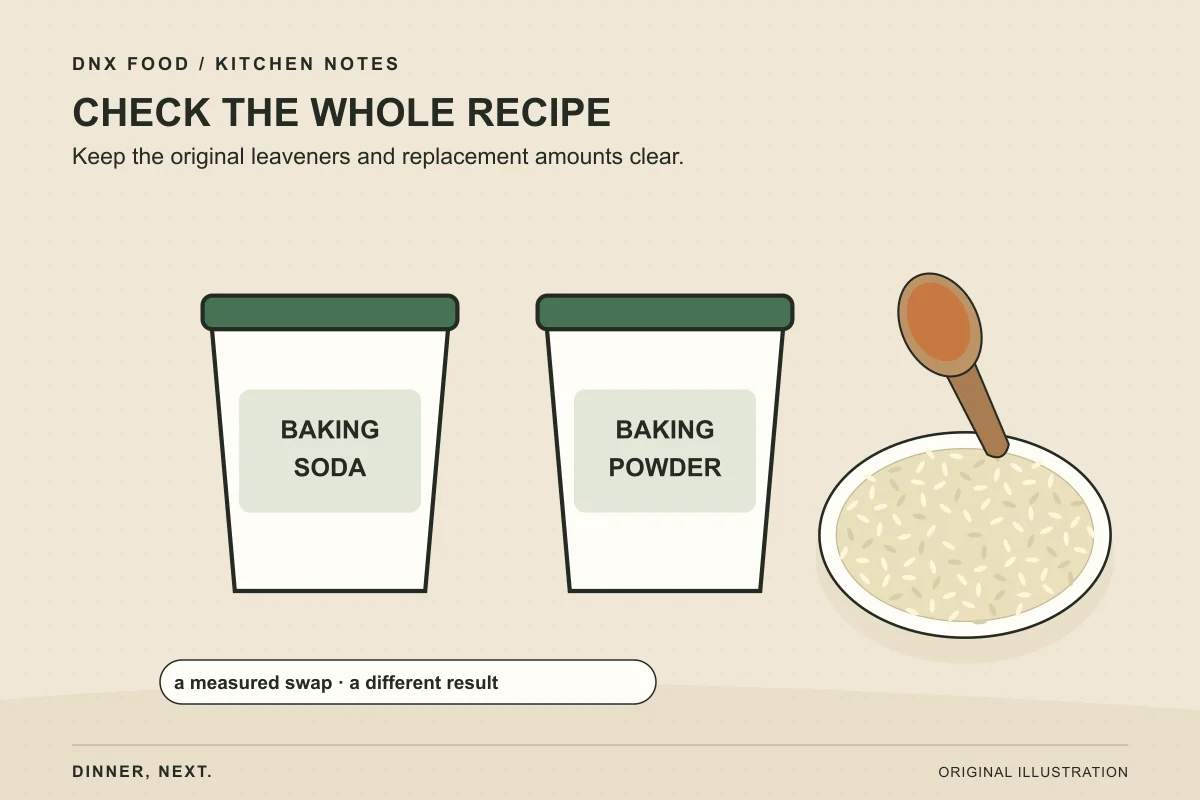
A common emergency starting substitution is three teaspoons of baking powder for one teaspoon of baking soda. Results can change because the mixture brings its own acid and other ingredients. Follow recipe-specific guidance whenever available.
Before replacing baking soda, read the ingredient list all the way through. Does the recipe also contain baking powder? Does it use buttermilk, yogurt, sour cream, or another acidic ingredient? Baking soda sits inside that whole formula, so the best next step depends on more than the empty box.
Baking powder can help in some recipes, using a larger quantity than the missing soda. That is an emergency option with tradeoffs. For a special cake or a familiar cookie whose texture matters, checking the recipe author’s advice or obtaining fresh soda may save more effort than repairing a changed batter.
A common starting ratio
One published substitution is three teaspoons of baking powder for one teaspoon of baking soda. King Arthur’s leavener guide gives this ratio and notes that the larger amount can affect flavor.
| Missing baking soda | Baking powder starting amount | Check before using |
|---|---|---|
| 1/4 teaspoon | 3/4 teaspoon | Other baking powder already in the recipe |
| 1/2 teaspoon | 1 1/2 teaspoons | Recipe notes and acidic ingredients |
| 1 teaspoon | 3 teaspoons | Total quantity and possible flavor changes |
This table scales the same emergency conversion. It does not establish that every recipe will rise, spread, brown, or taste like the original. Measure with level spoons and keep a written note of which ingredient you are replacing.
Acidity is part of the decision
Baking soda is alkaline, and its relationship with acid contributes to how a recipe behaves. Baking powder includes its own acidic component. Bringing that combination into a recipe already designed around soda can change more than the amount of gas produced.
That means the presence of buttermilk does not give you a simple instruction to add or remove acid. Read the complete recipe notes before adjusting the milk, lemon juice, cocoa, or other ingredients. A measured substitution in one recipe does not provide a universal acid correction for another.
If the actual problem is the reverse, use the baking powder substitute guide. Its soda-and-cream-of-tartar mixture addresses missing baking powder. Keeping these two directions on separate pages helps you choose the correct measuring table.
When the recipe already has baking powder
Keep track of the original baking powder amount and the additional amount you would use for the missing soda. Write both down before measuring. The replacement amount belongs to the missing ingredient; it does not automatically replace the rest of the leavener list.
For example, if a recipe asks for a small amount of soda alongside powder, first check whether the author provides a specific all-powder version. That information can account for the formula more precisely than an isolated conversion. If you proceed with a permitted substitution, combine the dry ingredients evenly as directed.
Do not keep adding powder because the batter looks heavy in the bowl. Unbaked appearance is a poor basis for repeated leavener corrections. Once the specified mixture is complete, follow the cooking instructions and assess the finished result.
Cookies can change even if they rise
With cookies, success includes spread, edge texture, color, and flavor. A substitute that gives visible lift may still produce a different cookie. If you want a particular familiar result, choose a cookie recipe developed with the leavener in your cupboard.
Keep the dough portions, baking surface, and oven settings consistent with the recipe. If the recipe allows a test cookie, use that opportunity before loading every tray. Follow any chilling instructions, and do not treat an early result as a reason to add random ingredients to the rest of the dough.
This guide offers ingredient decisions with stated limits. We have not documented a set of cookie tests that would support promising a particular spread or browning result for your formula. Recipe-specific guidance is especially valuable when those characteristics matter.
Cakes, muffins, and quick breads need their original structure
The leavener is only one part of the batter. Flour, eggs, fat, liquid, pan size, and mixing method all contribute to the final bake. Use the recipe’s allowed substitutions and leave the other measurements alone while making one planned change.
Have the oven and pan ready before mixing as the recipe directs. Cook on the intended schedule and follow appropriate doneness cues. A heavy or uneven result may have several causes, so more leavener is not a reliable repair once the batter has been assembled.
If buttermilk or sour cream also needs replacing, consult the buttermilk guide or sour cream guide before starting. You may prefer a recipe built around the products you actually have rather than changing both the liquid and leavening system.
Ingredients that cannot do the same job alone
Cornstarch can be part of a commercial or homemade baking powder mixture, but by itself it does not replace baking soda’s role. Cream of tartar is an acid component and also cannot perform that job alone. Plain salt is seasoning, while yeast requires a different recipe method.
Likewise, adding lemon juice or vinegar supplies an acidic ingredient; it does not supply the missing soda. Start from the full recipe and a supported substitution, rather than combining pantry items because they appear together in another bake.
For other missing ingredients, the substitution reference links the relevant guides. Check one change at a time, with the original recipe still visible while you measure.
Common questions
Can I leave the soda out?
Sometimes the result may still be edible, but its lift, flavor, or texture can change. Use a recipe that permits omission or another formula designed without it when a predictable result is important.
Can I use an old open box?
Use a properly stored food-grade product whose identity and condition you can establish. A box kept for absorbing refrigerator odors is a poor starting ingredient. For labeled baking supplies, follow the package and use an appropriate freshness check before baking.
How do I check the leavener?
King Arthur’s freshness testing guide distinguishes the checks for baking powder and baking soda. Keep the powders labeled and use the test intended for the actual ingredient.
Browse ingredient substitutions
Illustrations by DNX FOOD. These guides explain adaptable cooking methods; they do not represent documented kitchen testing. How we make our guides · Suggest a correction