Smart swaps
Sour Cream Substitute for Baking, Dips, and Dinner
Choose a sour cream substitute for cakes, dips, potatoes, and hot sauces. Compare plain yogurt, Greek yogurt, and dairy-free products with practical limits.
The useful answer
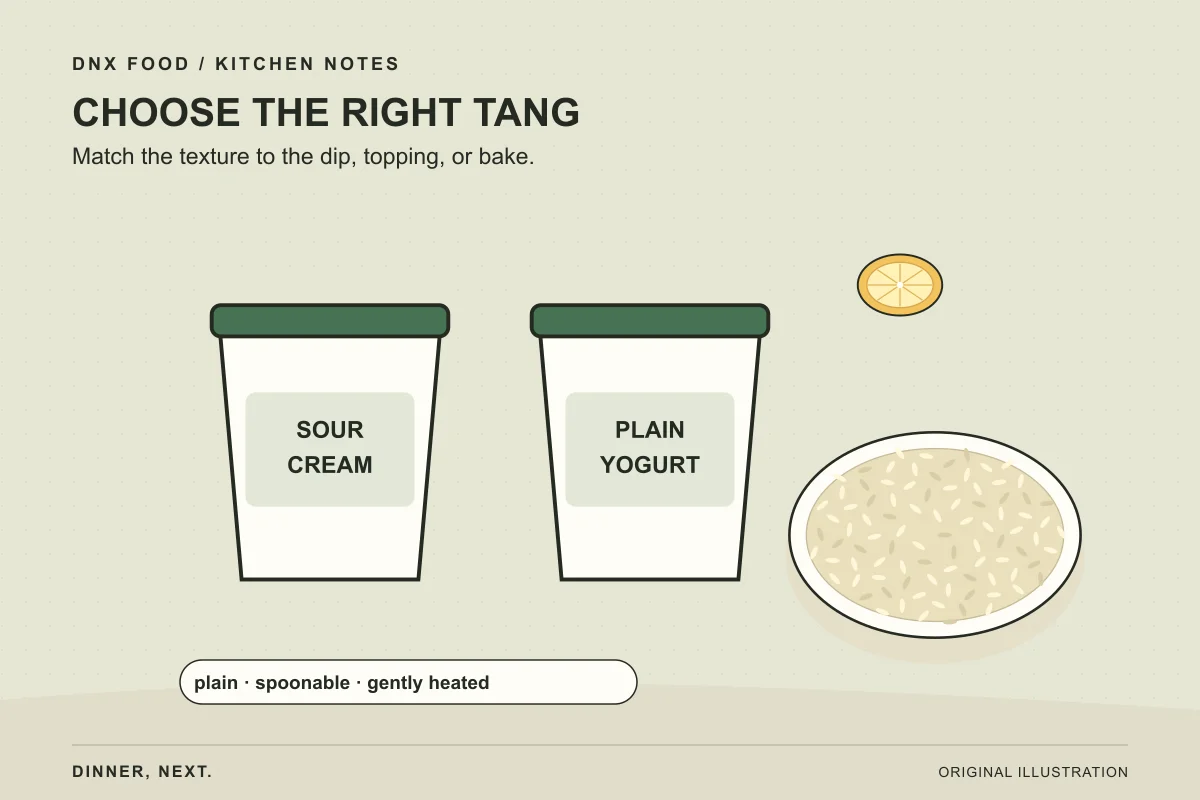
Plain unsweetened yogurt is a useful equal-volume starting substitute for sour cream. Thick yogurt suits dips and toppings; baking also depends on fat and moisture. For hot sauces, introduce yogurt gently near the finish.
You open the refrigerator for sour cream and find plain yogurt instead. That is often enough to finish dinner, but the best adjustment depends on where the sour cream was going. A baked potato needs a spoonable topping. A dip needs enough body to cling. Cake batter needs the balance of moisture, fat, and acidity that its recipe was designed around.
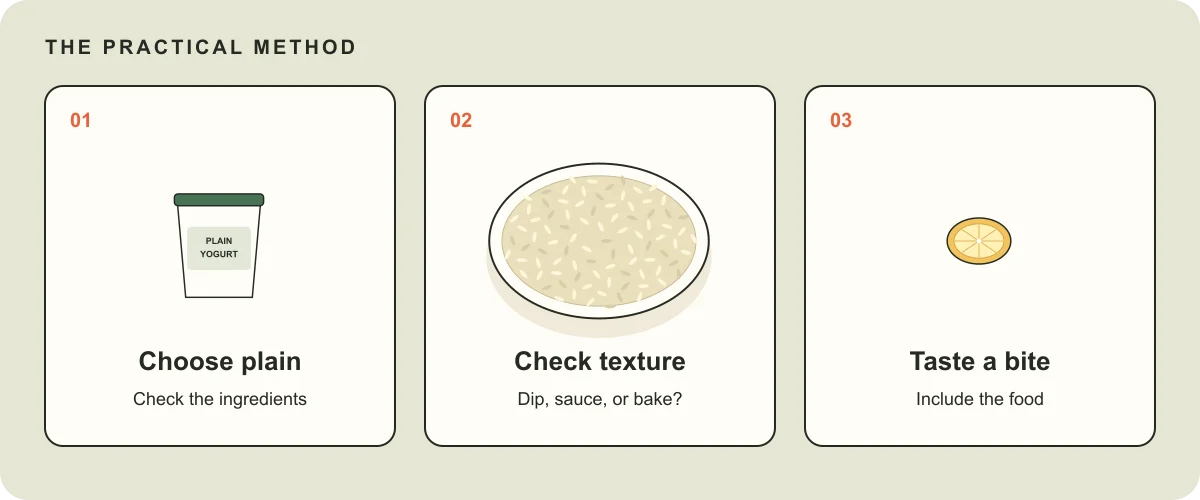
Start with the application, then choose the closest product already in the kitchen. Check sweetness and flavor before measuring. Vanilla yogurt can look almost identical to plain yogurt while sending a savory sauce in a very different direction.
A quick substitution table
| Available ingredient | Starting approach | Good fit | What to check |
|---|---|---|---|
| Plain unsweetened yogurt | Equal volume as a starting point | Many simple bakes, dressings, and toppings | Thickness and fat level |
| Plain Greek-style yogurt | Start with the same volume; loosen only if needed | Dips, potatoes, and bowls | Very thick products may need a little liquid |
| Plain dairy-free sour cream alternative | Follow the label and recipe guidance | Toppings and compatible sauces | Flavor, allergens, and baking suitability |
| Crème fraîche | Consider for toppings or a recipe that allows it | Rich finishes and some sauces | A different tang and richness |
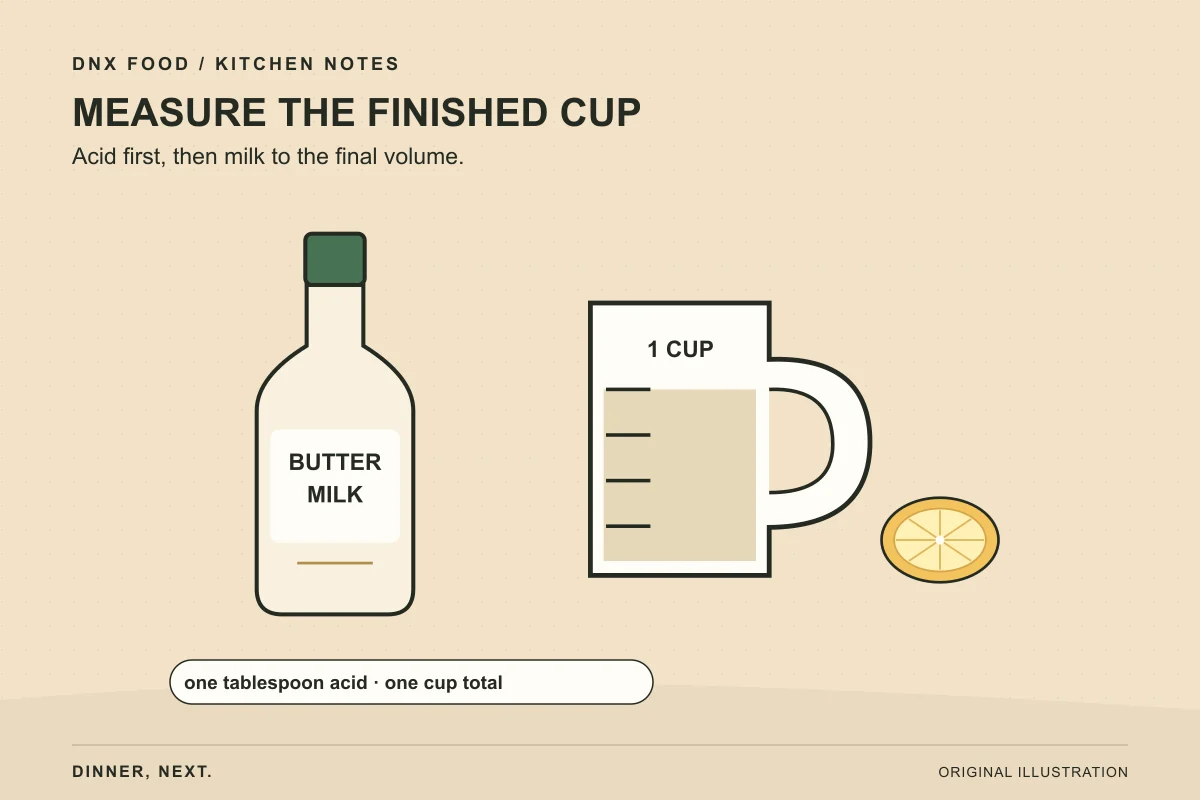
| Buttermilk | Use only with a method allowing thinner liquid | Some dressings and selected bakes | Too runny for a direct dip replacement |
The equal-volume yogurt starting point appears in Land O’Lakes’ baking substitution reference. That gives you a convenient measurement, while the sections below help decide whether the particular texture fits the meal. The examples are adaptable kitchen choices; we have not documented side-by-side baking tests.
For dips, begin with a thick product
Greek-style yogurt is convenient when a dip needs to stay on a carrot stick or cracker. Spoon it into a bowl before adding other ingredients. If liquid has separated, assess whether the thicker portion already gives the consistency you want before stirring every drop back in.
Add herbs, garlic, salt, or another seasoning gradually. Taste on the food you plan to dip, since a concentrated spoonful can seem sharper than the same amount spread over a bite. Hold back some lemon or vinegar until you have tasted the yogurt’s own tang.
If the dip is too thick, loosen a small portion with a little suitable liquid and compare. You can then adjust the rest. Pouring in the full amount of a thin dressing ingredient immediately can leave a bowl that is difficult to thicken without changing its flavor.
For potatoes and rice bowls, taste the whole bite
A topping does not need to imitate sour cream in isolation. Try a spoonful of plain yogurt on the hot potato or with the rice and vegetables. A little oil, fresh herbs, or another compatible finish can make the meal feel complete even when the topping is less rich.
Keep the topping separate until serving if you want a cool contrast. This also makes it easier for each person to choose the amount. The rice bowl guide explains how the base, sauce, and crunchy components work together.
If you are replacing sour cream because a guest avoids dairy, use a product suitable for that requirement and check every other ingredient in the topping. The words plain or cultured do not tell you everything about the formulation. Read the label before making the flavor decision.
For baking, preserve the recipe’s other measurements
Plain yogurt can be a practical option in a simple cake or quick bread that allows ingredient swaps. Start with the specified sour cream volume and leave the rest of the formula alone unless the recipe provides further instructions. Changing the flour, leavener, and dairy at the same time makes the outcome harder to interpret.
Compare the fat level and thickness of the two products. A very thick strained yogurt behaves differently from a loose pouring yogurt. Reduced-fat products may also contain ingredients that change their texture. Choose the closest option or use a recipe developed for your actual yogurt when the bake is important.
Sour cream can also be part of a recipe’s acidic ingredients. If baking soda appears in the formula, avoid casually replacing the dairy with plain milk and assuming the rise will stay the same. Our baking soda substitute guide explains why changing the leavener adds another decision.
For hot sauces, finish gently
Bring the sauce base close to its finished state before introducing yogurt. Lower the heat and mix a little warm sauce into the yogurt in a separate bowl, then gradually combine them. Avoid a hard boil and judge the sauce before adding more acid.
If a sauce turns grainy, stronger heat is unlikely to restore a smooth finish. Stop and assess the texture and flavor. The coconut milk curry guide discusses yogurt handling in a sauce, while the heavy cream guide compares other ways to add richness.
When the replacement is too thin or too sharp
For a cold dip, try a thicker suitable product rather than repeatedly adding dry seasoning. For a hot sauce, assess whether it needs body from the sauce base instead of another spoonful of dairy. A small trial portion helps you avoid changing the full batch unnecessarily.
If it tastes too tangy, taste again with the potato, vegetables, or other food. You may need less topping rather than a sweeter dip. Adding sugar changes the balance, so test a small amount separately before deciding it belongs in dinner.
Common questions
Can I use flavored yogurt?
For a savory dish, choose plain unsweetened yogurt. Fruit, vanilla, sweeteners, and flavorings can remain noticeable after you add herbs or salt. For baking, use the original recipe’s guidance before introducing a flavored product.
Can buttermilk replace sour cream in a dip?
It can help make a pourable dressing, but it will not supply the same spoonable body. Decide whether a dressing works for the meal. The buttermilk guide covers the reverse situation and explains how to judge liquid consistency.
Should I add lemon juice to yogurt?
Taste first. The yogurt may already provide all the tang the finished bite needs. Add acid gradually only when it improves the dish, and keep a portion of the original mixture available while you experiment.
Browse ingredient substitutions
Illustrations by DNX FOOD. These guides explain adaptable cooking methods; they do not represent documented kitchen testing. How we make our guides · Suggest a correction