Smart swaps
Cornstarch Substitute: Choose for Sauce, Coating, or Baking
Choose a cornstarch substitute by its job. Compare flour, potato starch, tapioca, and arrowroot for sauces, coatings, and baking, with clear limits.
The useful answer
For an ordinary cooked gravy, all-purpose flour can replace cornstarch at roughly twice the volume, with a less glossy result and more cooking. Other starches need their own package guidance. Baking and crisp coatings require a separate decision.
The first question is what the cornstarch was supposed to do. A spoonful used to thicken gravy is a different problem from a dusting on tofu or a measured ingredient in a cake. The same substitute can work comfortably in one setting and change the result substantially in another.
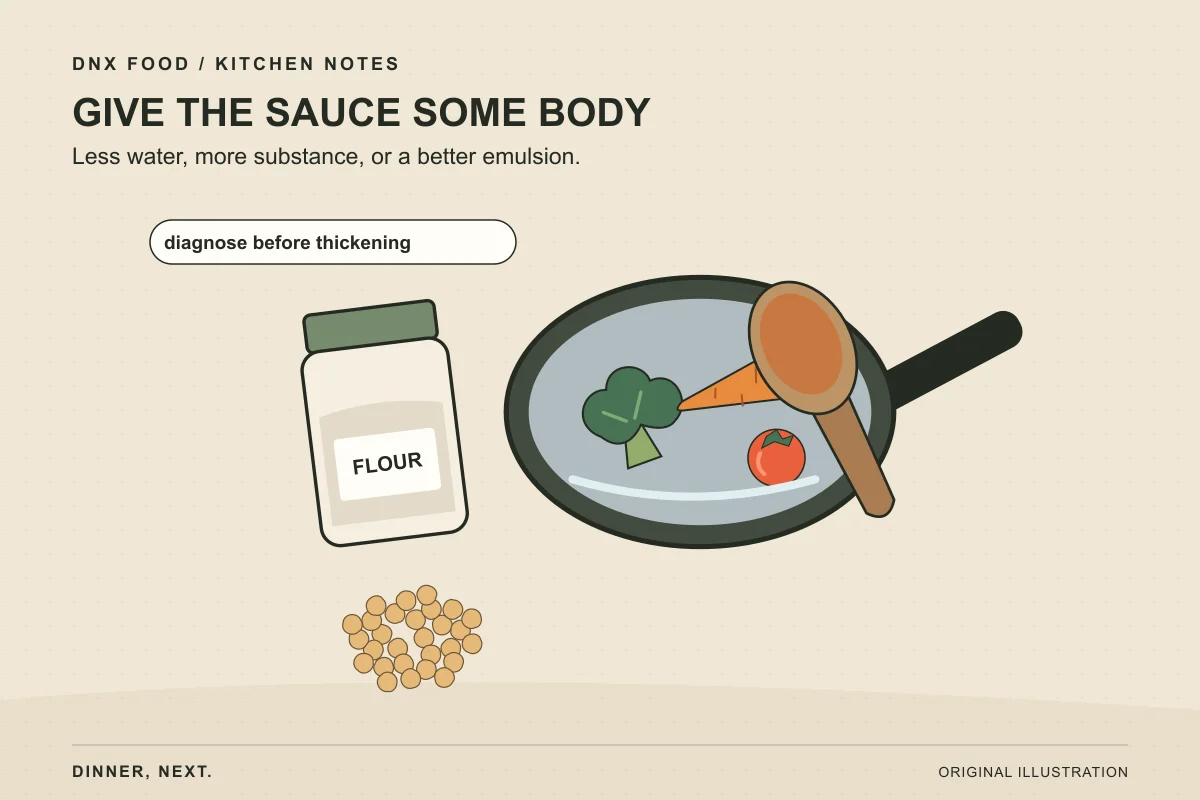
For a thin dinner sauce, you may not need another starch at all. A short reduction or some mashed beans can supply body. If you want that broader troubleshooting approach, start with how to thicken sauce without cornstarch. This page focuses on choosing a replacement ingredient.
Match the substitute to the job
| Alternative | Useful starting direction | Best fit | What to expect |
|---|---|---|---|
| All-purpose flour | Roughly 2 tablespoons for 1 tablespoon cornstarch in ordinary gravy | Opaque gravies and savory sauces | More body, less shine, longer cooking |
| Potato starch | Follow the package’s sauce guidance; add gradually | Sauces where a starch finish is wanted | Product and heat handling matter |
| Tapioca starch | Use the product’s directions for the dish | Some sauces and fruit fillings | Too much can produce a stretchy texture |
| Arrowroot | Follow product guidance; test in a small portion | Some clear sauces | Behavior changes with the sauce and heating |
| Rice flour | Choose a method developed for rice flour | Some coatings and opaque sauces | Fineness and formulation affect texture |
The flour amount is an approximate starting point for flexible sauce cooking. The other entries deliberately avoid a universal ratio because a clear pan sauce, a fruit filling, and a chilled pudding ask different things of a thickener. Follow a recipe developed for the replacement when the final structure matters.
Flour is useful for gravy, with a different finish
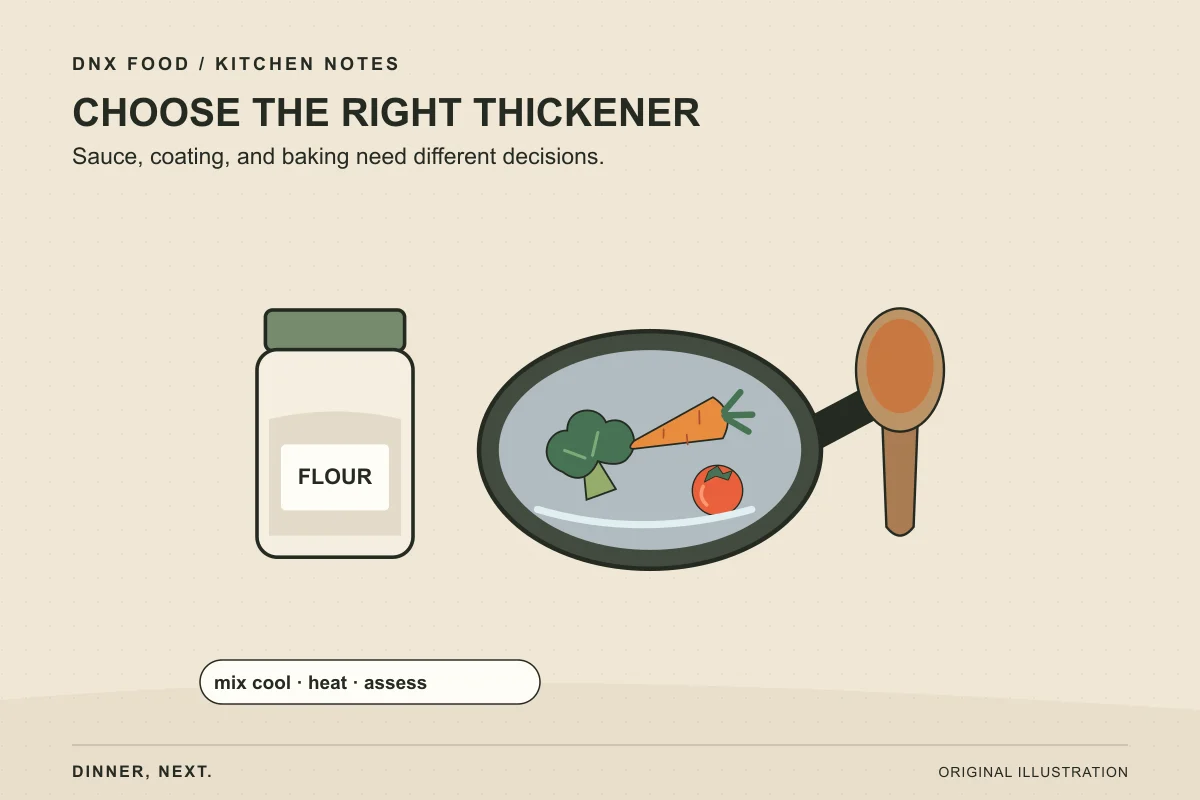
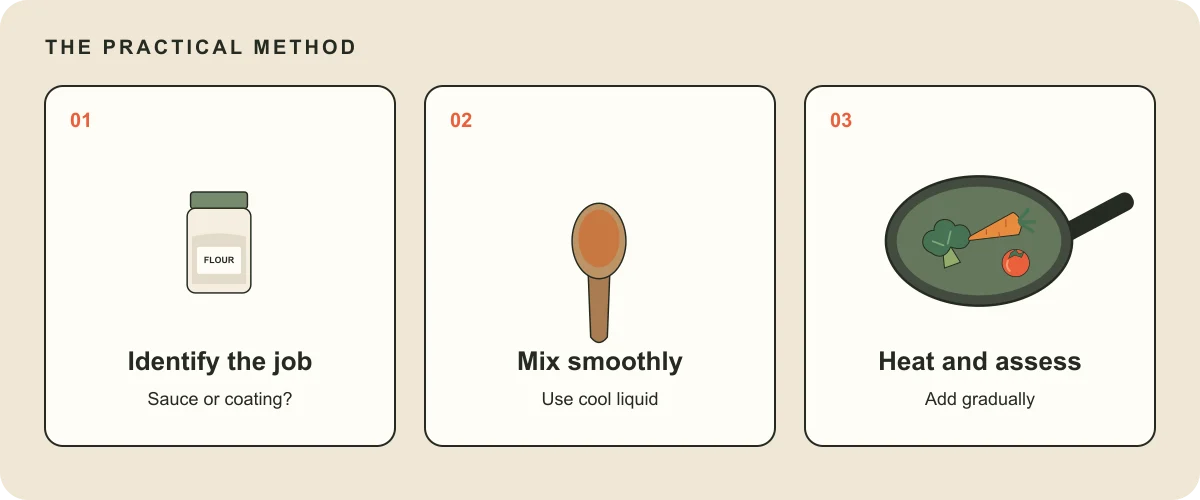
All-purpose flour is a practical pantry option when an opaque sauce is welcome. Mix it smoothly with cool liquid before introducing it to a hot sauce, or use a roux method in which flour cooks with fat before liquid is added. Whisk as you combine the components.
Give the sauce time to cook and lose its raw flour taste. Judge it after the mixture has heated through, rather than adding another spoonful immediately. A sauce can become thicker as it cools, so check a little on a plate before deciding it needs a second addition.
Flour does not reproduce cornstarch’s finish exactly. A pale gravy may become pleasantly substantial, while a clear, glossy stir-fry sauce becomes cloudy. If appearance and texture are central to the dish, another appropriate starch or a different sauce plan may suit it better.
Mix a starch slurry before it reaches the pan
Dry starch dropped into hot liquid can form lumps as the outside hydrates. Instead, disperse the chosen starch in a little cool liquid, following the product’s directions. Stir the slurry again immediately before adding it because starch can settle while you prepare the rest of dinner.
Add only part of the mixture at first. Stir and heat as directed, then assess the sauce before adding the rest. The desired endpoint is usually enough coating for the food, rather than a saucepan that looks thick while still on the stove.
For a worked flour approach and other methods, the existing sauce guide explains how to choose a fix. Land O’Lakes’ ingredient reference is also useful for checking common kitchen substitutions and ingredient differences.
A crisp coating needs its own comparison
When cornstarch dusts tofu or vegetables, the goal is a surface coating rather than thickened liquid. Flour, rice flour, and other starches can produce different crusts. Start with a method intended for the ingredient you have, especially if batter consistency or frying temperature is specified.
Remove excess surface moisture as the chosen method requires, apply an even coating, and avoid piling pieces into the pan. A thick layer of powder can stay dusty while a crowded pan encourages steaming. Changing the starch will not correct a pan overloaded with wet food.
After cooking, sauce only the portion you intend to serve promptly if you want to preserve contrast. A crisp coating left in a wet sauce will soften. For the pan-space issue, read why stir-fry turns watery.
Baking and fillings require more care
Cornstarch in a cookie or cake can affect texture alongside the flour. Replacing that small amount with a different ingredient changes the balance of the formula. Choose a version developed without cornstarch when a predictable baking result matters.
Fruit fillings depend on the fruit’s moisture, the baking method, and whether the dessert is served warm or chilled. Use the filling recipe’s own substitution notes or a tested version using the alternative starch. A tablespoon rule borrowed from gravy does not establish how a pie will set.
Do not replace baking soda or baking powder with cornstarch. They perform different jobs. Cornstarch also should not be substituted casually into preservation formulas where the approved ingredients and method matter.
Check names and ingredient lists
In some countries, cornflour refers to the white starch used for thickening. Elsewhere, corn flour can mean finely ground whole corn. Look at the product description and intended use rather than deciding by the front label alone.
All-purpose wheat flour contains wheat. A starch may be naturally free from an ingredient but processed or packaged in ways relevant to a dietary requirement. Use the actual label and appropriate certified products when needed. The substitution decision begins with what the household can use, then moves to texture.
Common questions
Can I simply use less liquid?
Sometimes. Reduce added liquid cautiously or simmer an appropriate sauce uncovered. Taste first because concentrating an already salty sauce can make it unpleasant. Removing cooked food while managing the liquid can prevent overcooking.
Can mashed beans replace cornstarch?
They can give soup or a rustic sauce body, but they add flavor, color, and solids. They are useful when a smooth glossy finish is not essential. Blend or mash them well and introduce them gradually.
Why did the sauce become too thick?
You may have added more thickener before the first portion finished working. Loosen with small additions of suitable unsalted liquid, heat gently, and taste again with the food before serving.
Put it to work
Any-Vegetable Stir-Fry
A timing-first method that works with almost any mix of firm and tender vegetables.
Open the dinner blueprint →Browse ingredient substitutions
Illustrations by DNX FOOD. These guides explain adaptable cooking methods; they do not represent documented kitchen testing. How we make our guides · Suggest a correction