Smart swaps
Garlic Powder Substitute for Sauces, Rubs, and Dressings
Choose a garlic powder substitute using fresh garlic, dried garlic, or another seasoning. Compare texture, cooking timing, salt, and suitable applications.
The useful answer
Fresh minced garlic or a suitable dried garlic product can replace garlic powder in many savory dishes. Follow the bottle's conversion when supplied. Fresh garlic needs a different cooking stage, while garlic salt also adds salt.
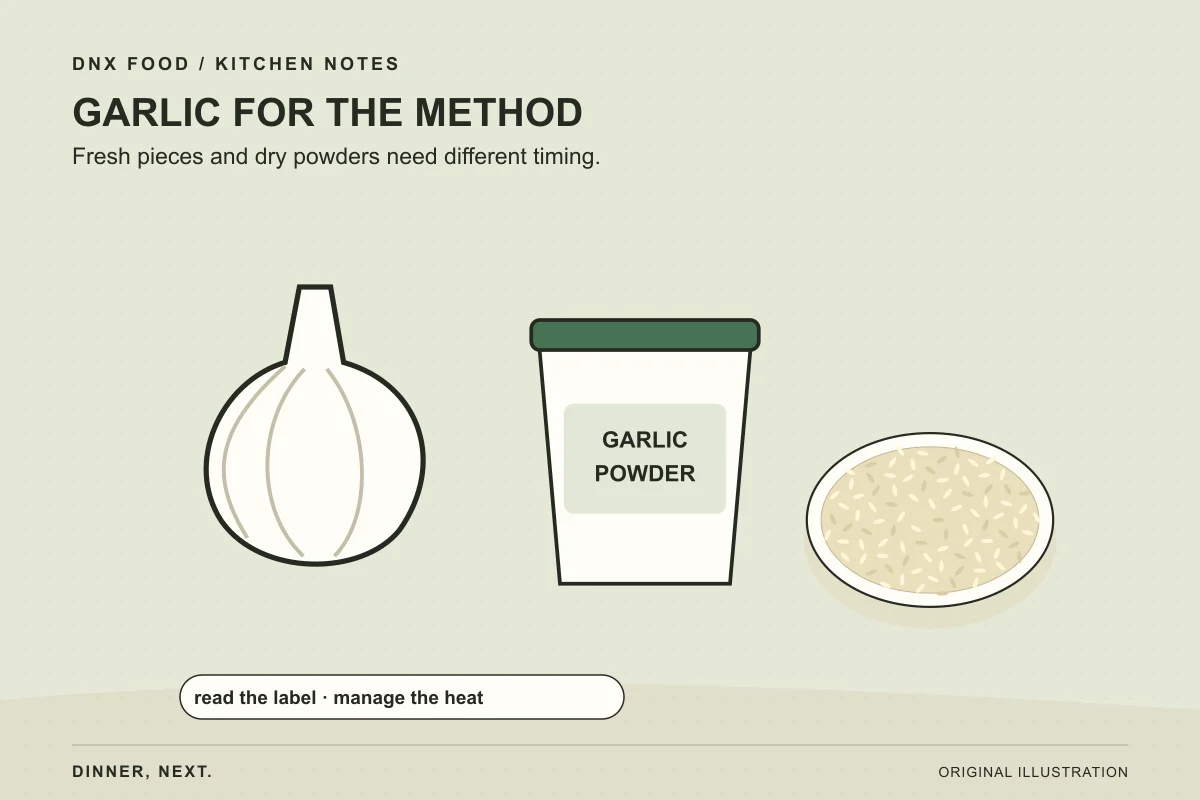
Garlic powder blends smoothly into a dry rub, dressing, or sauce. Fresh garlic is another way to bring garlic flavor, but it also adds moisture, pieces, and a different cooking schedule. The most useful substitute depends on whether the recipe needs a dry seasoning or has room for a fresh aromatic.
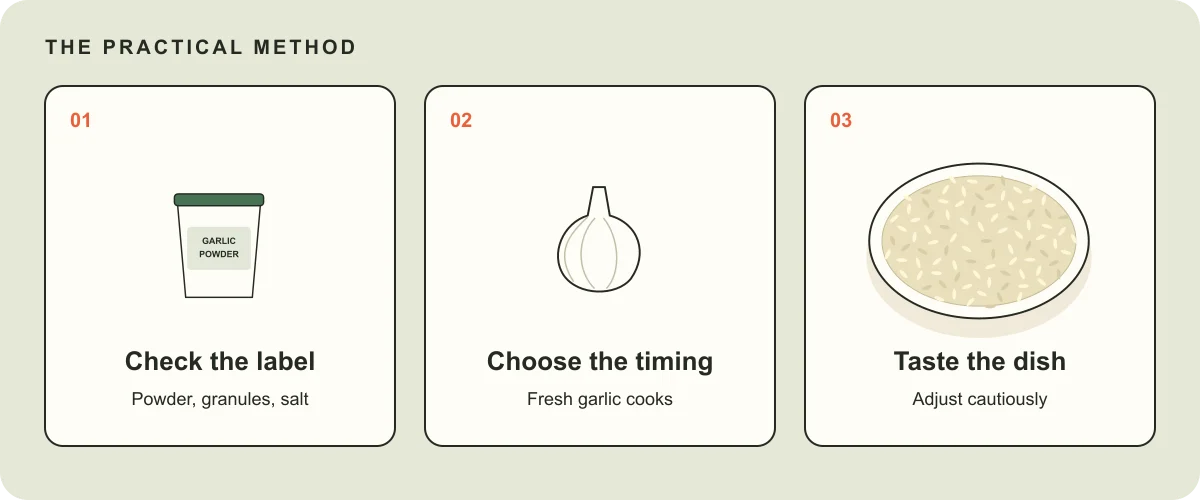
Check the jar before deciding it is empty. Garlic powder, granulated garlic, dried minced garlic, and garlic salt can look like neighboring versions of the same thing, but their texture and composition differ. Choose with the finished dish in mind.
Compare the practical options
| Available ingredient | Useful application | Starting approach | Main difference |
|---|---|---|---|
| Fresh minced garlic | Sauces, soups, and cooked vegetables | Follow the product or recipe conversion; start cautiously | Needs suitable cooking time and adds pieces |
| Granulated garlic | Some rubs and sauces | Follow the bottle’s conversion or test a small portion | Coarser texture than fine powder |
| Dried minced garlic | Sauces and mixtures with time to hydrate | Follow package guidance | Larger particles need different handling |
| Garlic salt | Some salty seasonings | Account for all added salt before using | Much of the product may be salt |
| Another compatible aromatic | A flexible meal when garlic is unavailable | Choose a new flavor direction deliberately | Changes the recipe’s garlic character |
Product guidance varies. McCormick’s substitution FAQ gives one medium clove for 1/4 teaspoon powder, and its organic garlic powder label gives the same starting conversion. Use the current label or recipe instructions for your product rather than treating every clove and powder as identical.
Fresh garlic suits a cooked sauce
Mince the garlic to a texture that fits the dish. A fine mince can distribute through a sauce, while larger pieces remain more noticeable. Introduce it at the appropriate aromatic stage in the recipe instead of adding it automatically at the point where dry powder was listed.
Watch the pan and control the heat. Small fresh pieces can color quickly, especially in a relatively dry skillet. If the recipe adds a wet base next, have it prepared so the garlic is not waiting in hot fat while you chop the remaining ingredients.
Taste the completed sauce before deciding it needs another addition. The amount that seemed modest before cooking may become more noticeable as the meal combines. Keep the other seasoning restrained until you have assessed the full bite.
Dry rubs need a dry-texture decision
Fresh minced garlic can make a dry seasoning mixture clump and change how it adheres. If you need a free-flowing rub, a suitable dried garlic product may be the more convenient direction. Check whether the granules need crushing or time to distribute.
Make a small amount of the blend first rather than converting a whole storage jar. This gives you a chance to assess texture and seasoning on the food the mixture will accompany. Follow the recipe’s cooking method and appropriate doneness guidance for that food.
If garlic is unavailable in any form, choose a compatible seasoning direction. Onion powder or another aromatic may fit the meal, but it supplies a different flavor. Build a deliberate blend instead of promising that a larger amount will reproduce garlic.
Garlic salt requires a separate salt calculation
Read the ingredient list and any stated blend proportions. Garlic salt introduces salty seasoning as well as garlic flavor. Replacing powder with several spoonfuls in pursuit of garlic intensity can make the dish too salty before the aroma is where you want it.
Hold back the original recipe’s added salt while assessing whether the blend fits. Include salty stock, soy sauce, cheese, and other condiments in that decision. The soy sauce substitution guide discusses tasting a representative bite before changing the seasoning.
If the label does not give enough information and the meal needs only garlic flavor, another suitable option may be easier to manage. A plain sauce gives you less room for a strongly salted blend than a large pot with several unseasoned components.
Dressings reveal raw garlic clearly
In a cold dressing, fresh garlic can be more noticeable in both texture and intensity. Use a fine preparation and start with a small amount. Mix the dressing, then taste it with a leaf, cabbage shred, or spoonful of grain.
Check acidity separately. If lemon or vinegar is also missing, choose that replacement with the lemon juice guide or rice vinegar guide. Correcting garlic and acid at the same time with large additions makes it harder to see what improved the dressing.
Avoid assigning a homemade fresh-garlic mixture the storage life of a dry seasoning. Follow the recipe’s storage guidance and appropriate food-safety advice for the actual fresh ingredients and oil used.
Check the product directions before measuring
Clove size, powder fineness, and the dish all influence the practical amount. A manufacturer may give a conversion for one specific product. Treat it as the starting point for that bottle rather than a measurement standard for every brand.
Use measuring spoons for small quantities when the seasoning matters. For an adaptable cooked sauce, reserve part of the planned amount until the rest of the dish is combined. For a recipe with a specified process, follow its instructions rather than repeatedly tasting and adjusting a raw mixture.
Common questions
Can garlic granules replace powder?
Often they can in a suitable recipe, with a different particle size and dispersal. Check the package’s conversion. A cold dip or fine dry rub may make the texture difference more noticeable than a simmered sauce.
Can I use jarred minced garlic?
Follow the jar’s conversion and read the ingredients, since the packing liquid can contribute flavor. Account for the moisture and add it at a cooking stage suited to the product and recipe.
What if garlic is being avoided entirely?
Choose a recipe or flavor direction that fits that requirement. Replacing garlic powder with fresh or dried garlic still supplies garlic. Check blends and packaged sauces as part of the whole ingredient list.
Put it to work
Any-Vegetable Stir-Fry
A timing-first method that works with almost any mix of firm and tender vegetables.
Open the dinner blueprint →Browse ingredient substitutions · Find dinner by ingredient
Our guides draw on the ingredient labels, manufacturer guidance, and food-safety references linked in each article. Original illustrations by DNX FOOD explain the ingredients and methods. Read our editorial and testing policy · Suggest a correction