Smart swaps
Lemon Juice Substitute for Dressings, Sauces, and Baking
Choose a lemon juice substitute by its role. Compare lime, mild vinegar, and orange for dressings and sauces, with limits for baking and preservation.
The useful answer
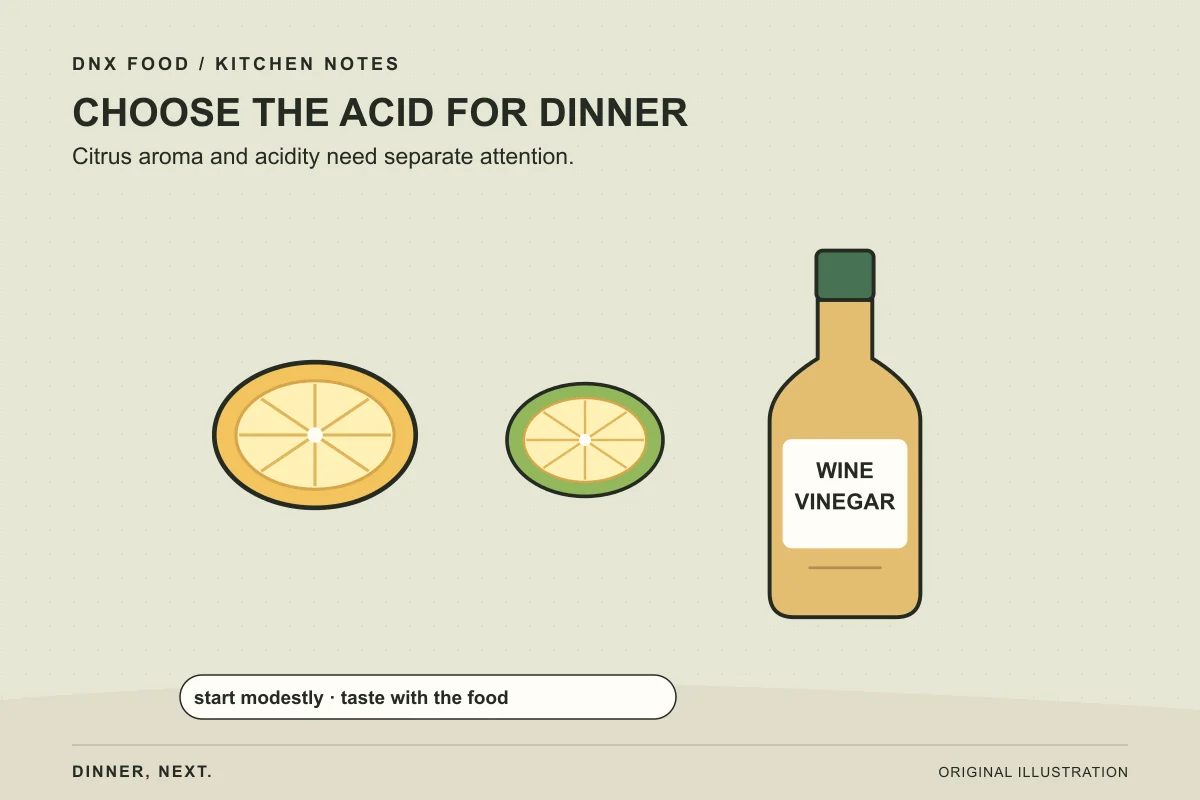
For flexible savory cooking, lime juice is a useful first option. Mild vinegar can provide acidity with a different aroma. Add a smaller amount initially and taste with the food. Baking and preservation require application-specific guidance.
Before replacing lemon juice, decide what the spoonful was doing. A final squeeze over beans supplies brightness and aroma. A salad dressing needs an acidic component balanced with the rest of the mixture. A baking recipe or preservation method may depend on a more specific ingredient relationship.
The easiest substitutions happen in adaptable dinner cooking, where you can taste the sauce with the food and adjust a small portion. Keep a different standard for a formula that depends on the lemon’s acidity or liquid volume. Start with its own substitution instructions.
Choose a direction for tonight’s dish
| Alternative | Starting approach in savory cooking | Useful for | What changes |
|---|---|---|---|
| Lime juice | Begin with a little less than the lemon amount | Beans, bowls, dressings, and finishing | Different citrus aroma |
| White wine vinegar | Start with about half, then taste | Dressings and robust sauces | No lemon fragrance; sharpness varies |
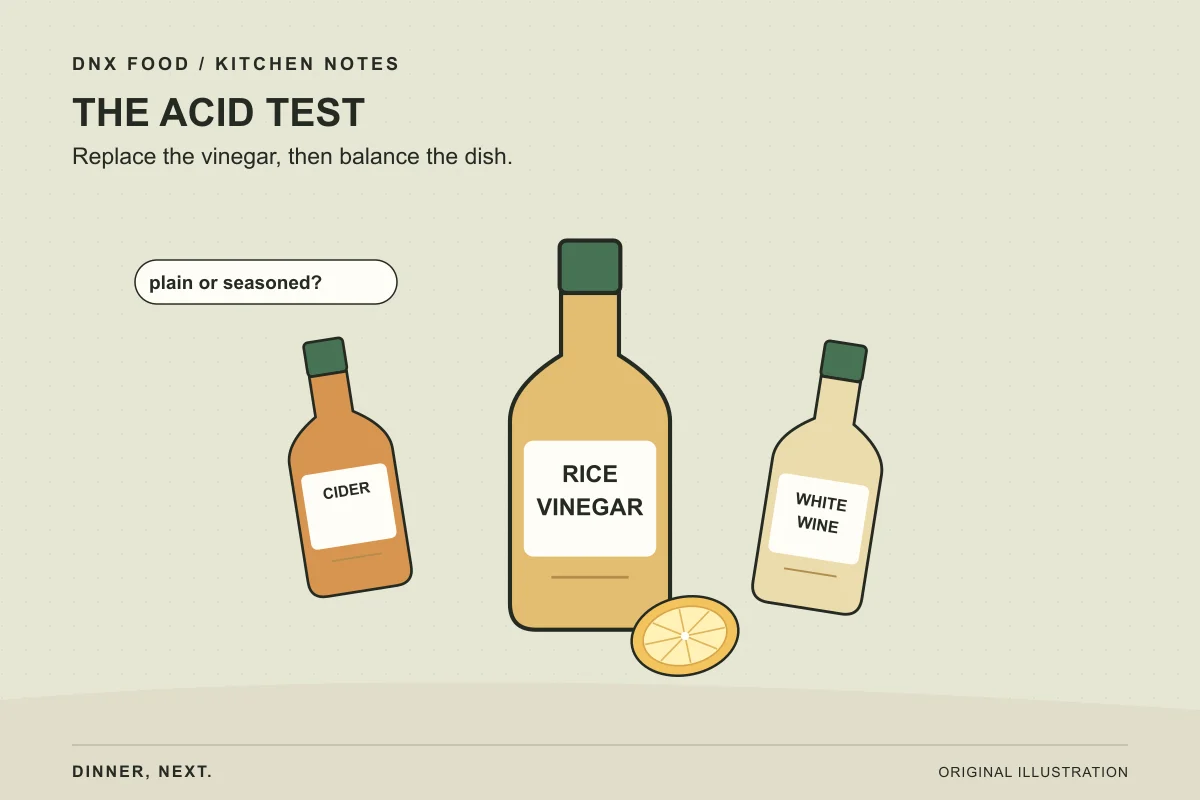
| Plain rice vinegar | Start modestly and assess the full bite | Mild dressings and bowls | A quieter aroma; check plain versus seasoned |
| Cider vinegar | Begin with less and taste | Cabbage dressings and hearty sauces | Adds apple-like flavor |
| Orange juice | Use when sweetness fits | Selected dressings and glazes | Sweeter and often a different acid balance |
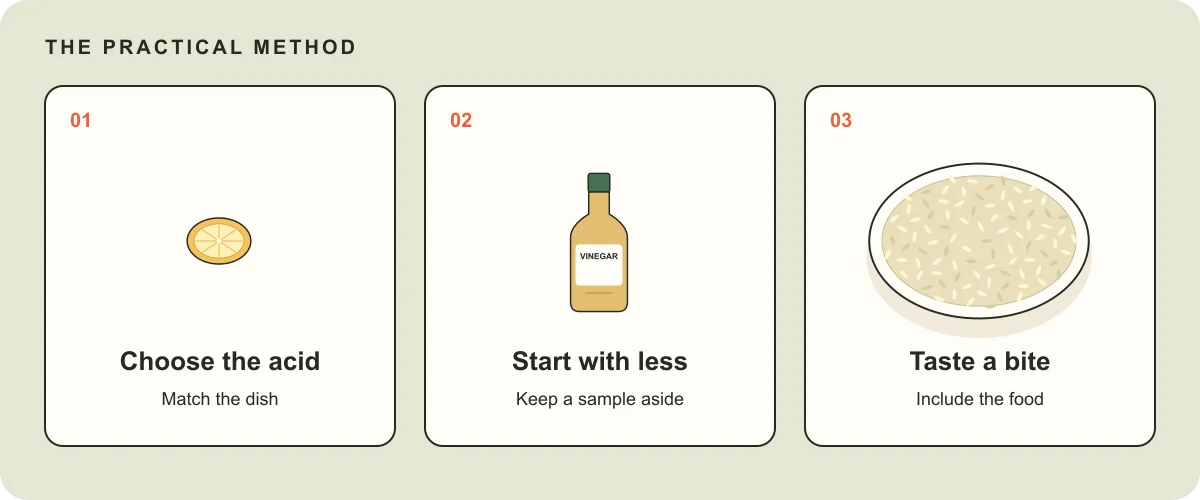
These are tasting directions for immediate-use meals, not acidity equivalents. The exact starting amount depends on the bottle, the food, and the other sauce ingredients. Keep enough unseasoned mixture aside to correct a small trial if it tastes too strong.
Lime is convenient when citrus belongs in the dish
Try lime when a fresh citrus finish fits the meal. Add a little to a portion of the sauce or directly to a representative bite. Notice the aroma as well as the sourness. A sauce for a chickpea bowl has more room to change direction than a dessert built around lemon flavor.
If zest is also in the original recipe, treat it as another ingredient decision. Juice does not supply exactly the same aromatic contribution as grated peel. Decide whether you want the new citrus flavor or whether a different recipe would better suit what is available.
For a savory bowl, combine the acid with a little of the base and topping before tasting. That prevents correcting a dressing that only seemed too sharp because you tried it on a spoon by itself.
Vinegar replaces acidity with a different aroma
White wine, rice, and cider vinegars can all be useful in ordinary dinner sauces. Begin cautiously and notice how each one changes the direction of the dish. A mild vegetable dressing may reveal a vinegar’s flavor more clearly than a strongly seasoned skillet.
Check whether rice vinegar is seasoned. Added sugar and salt change more than the acid component. The rice vinegar guide separates those adjustments and gives examples for bowls and stir-fries.
Avoid correcting a sharp dressing with several large additions at once. Remove a spoonful, loosen or rebalance that sample, then try it with the food. This gives you a comparison while the rest of the dressing remains available.
Dressings and hot sauces need different timing
For a cold dressing, mix the ingredients before coating the whole salad. Taste a leaf, cabbage shred, or spoonful of grain with the dressing. Keep the remaining vegetables undressed until you are happy with the result.
For a hot sauce, taste near the finish before adding more acid. The other ingredients may already be concentrated. A small finishing addition can be enough, especially when tomatoes, yogurt, pickles, or another acidic ingredient is present.
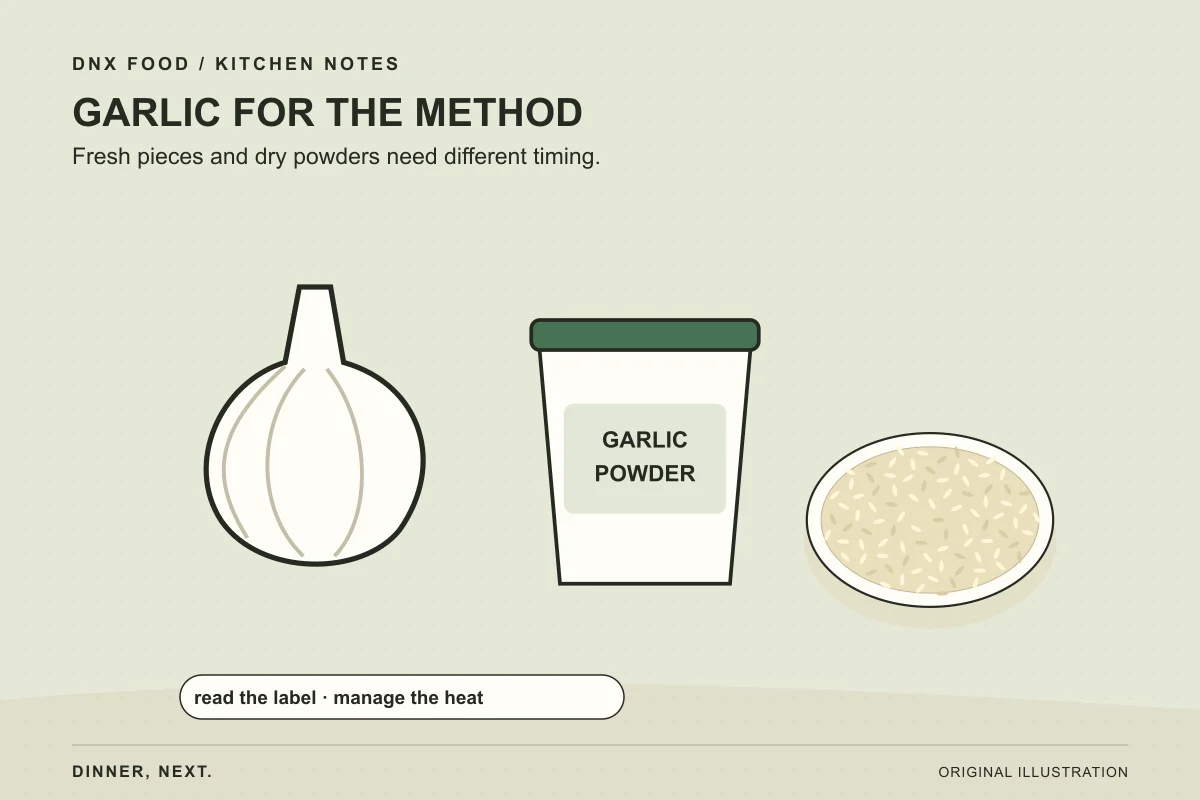
If garlic is also missing, choose its replacement independently. The garlic powder guide explains why fresh garlic can need different timing. Acid balance and garlic intensity are separate things to assess in the completed bite.
Baking asks for recipe-specific guidance
In a baking formula, lemon juice may contribute acidity, liquid, and flavor. Altering one can affect the other ingredients. Use the recipe author’s directions before replacing it with vinegar, orange juice, or a reduced amount of another liquid.
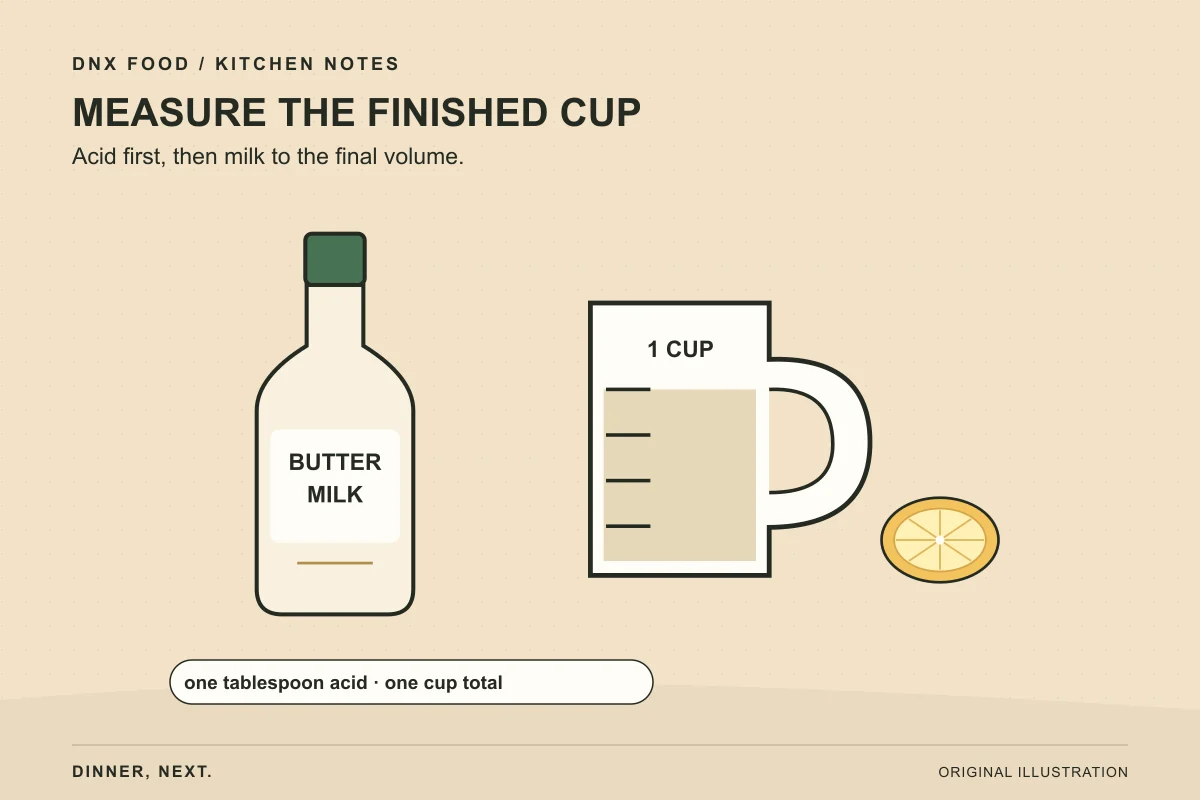
When the lemon juice is being used to make a buttermilk alternative, follow the measured method rather than guessing a splash. The buttermilk substitution guide explains how acid and milk together reach the final volume.
For lemon curd, a set filling, or another dish built around lemon, choose a version designed for the replacement citrus. A general sauce table does not establish the final set or the balance of a dessert.
Preservation follows the tested ingredient list
Keep home canning and shelf-stable preservation outside casual dinner substitutions. Ball’s canning glossary explains that bottled lemon juice has standardized acidity, while freshly squeezed juice varies. Follow a current tested preservation recipe and its specified product.
This also means that the fact a substitute tastes sour does not show that it meets a preservation method’s acidity requirements. Use approved substitutions only where that method explicitly permits them. Do not transfer a dressing ratio into a canning jar.
For a dressing you will serve immediately, taste can guide flavor. For a preserved product, the tested process governs the decision. Know which type of cooking you are doing before choosing the substitute.
Common questions
Can I leave the lemon juice out?
In a flexible savory dish, taste before deciding. Another ingredient may already provide enough acidity. A plain bowl may benefit from a different fresh finish, while a recipe built around lemon needs a more deliberate plan.
Can lemon extract replace lemon juice?
Extract mainly addresses flavor and is used in much smaller amounts. It does not replace the same liquid or acid function. Follow the recipe or product directions for its intended use.
Should I add sugar if the substitute tastes sharp?
Try the sauce with the food first. If it remains harsh, test a correction in a small portion. Adding sugar changes sweetness but does not remove excess acid, so consider dilution with a suitable unseasoned component too.
Browse ingredient substitutions · Find dinner by ingredient
Our guides draw on the ingredient labels, manufacturer guidance, and food-safety references linked in each article. Original illustrations by DNX FOOD explain the ingredients and methods. Read our editorial and testing policy · Suggest a correction